Lovers of exotic varieties will surely appreciate the Shokoladka tomato: it's an unusually colored, delicious new hybrid, developed several years ago. The variety is adapted to Russian conditions, taking into account the peculiarities of our climate. It's a hybrid (F1), so you'll need to buy seeds from the store every year.
Plant characteristics
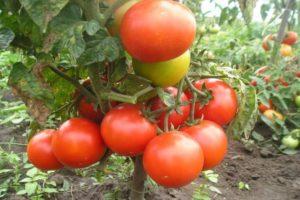
This semi-determinate hybrid grows tall (up to 150 cm). The plant produces a small amount of foliage, but the fruits are numerous and clustered into beautiful clusters, making the bushes attractive during the ripening and ripening period. The plants require staking and training into 2-3 stems.

Reviews from those who have planted Shokoladka F1 tomatoes note the plant's increased resistance to fungal diseases. It is almost unaffected by summer diseases (alternaria, downy mildew, and others), and is resistant to late blight in cooler seasons. Tomato harvests are possible without loss.
Like all elongated tomatoes, they can be susceptible to blossom-end rot due to a calcium deficiency in the soil. However, this problem is easily solved by adding appropriate supplements.
The Chocolate hybrid is an early-ripening tomato (110-120 days from sowing to first fruit). Fruiting is extended, and tomatoes can be harvested over a period of 2.5-3 months. The total yield is approximately 3 kg per bush.
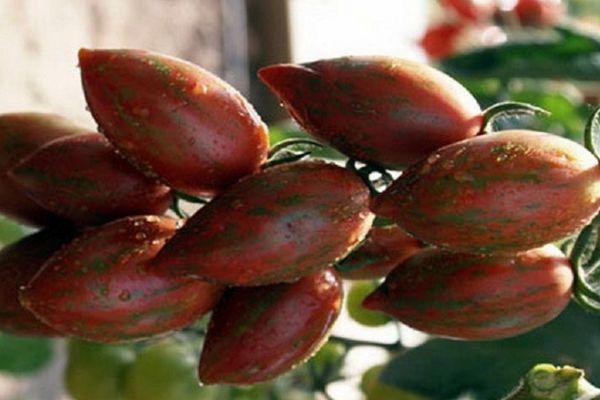
The plant is suitable for growing in greenhouses and open ground, and tolerates temperature fluctuations and hot weather well. The flowers do not fall off, and the fruit sets evenly along the entire length of the cluster. Characteristics and descriptions of the variety. Those who have grown the Shokoladka variety for several seasons note that the fruit can be more sour during excessive rainfall and in cold years. However, in a well-heated area, the berries have excellent flavor.

Description of tomato fruits
A single stem produces 6-7 clusters per season. The branch shape is simple and unbranched, with each branch bearing up to 10-11 equally sized but small fruits. The weight of a single tomato ranges from 30-40 g. The shape is plum-shaped and elongated.
The skin of the Shokoladka tomato is firm and quite thick. The fruits do not crack when ripening, even during heavy rainfall. They are also resistant to heat treatment when canned whole.
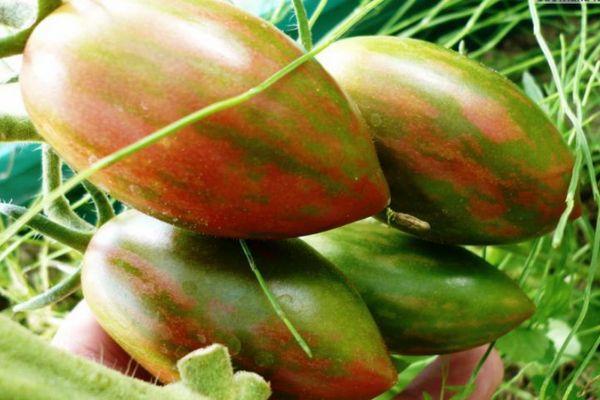
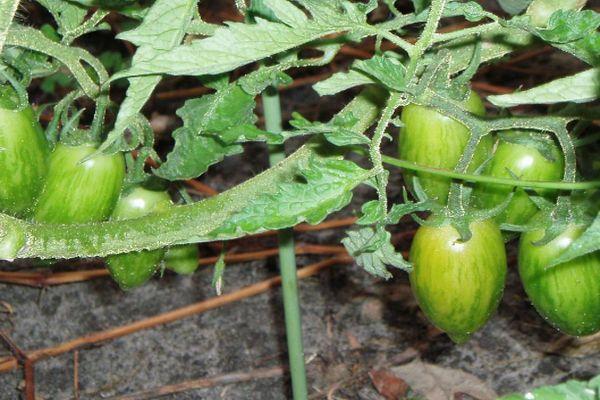
At the technical stage, tomatoes are green and unevenly colored, with a combination of light and dark areas. As they ripen, their exotic bicolor coloring becomes clearly visible. When fully ripe, tomatoes turn reddish-brown, with blurred green stripes and spots.
The flesh is a rich red color, without a light center. The seed chambers (2-3) are large, filled with small seeds. The chamber walls are thick, up to 0.5-0.7 cm. The flesh is firm, juicy, and soft. Chocolate tomatoes have a fairly high dry matter content, imparting a rich aroma and flavor. Sugar content reaches 6-7%, and anyone who grows this variety will appreciate the sweet taste of Chocolate tomatoes.
Children will also love it: the small, fragrant, and sweet berries resemble prunes. Gardeners have noticed that the fruits become slightly sour during cold seasons.
Tomatoes don't keep very long when ripe; they have to be processed or eaten quickly. However, when picked at the blanched stage, they ripen well and gradually without losing their flavor.
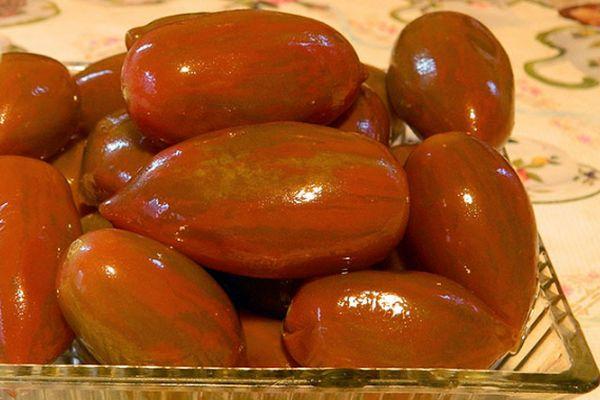
Shokoladka tomatoes are versatile. These exotic tomatoes look beautiful when sliced and add a unique touch to salads. They're a great garnish for appetizers and sandwiches, and the red flesh is perfect for hot dishes. Excess fruit is easy to recycle:
- striped tomatoes look spectacular in a vegetable platter;
- You can make delicious juice from them and process them into puree for ketchup or lecho;
- dense, sweet and small tomatoes are suitable for drying;
- Tomatoes are frozen sliced or whole: adding these vegetables to winter dishes makes them similar to summer options.
Moreover, the red flesh of Shokoladka tomatoes makes a wonderful addition to other preserves. The pleasant aroma and rich color of this ingredient will be especially appropriate in vegetable caviar, borscht dressing, and other dishes.
How to grow tomatoes in the garden?
Sowing should be done so that the seedlings are 2-2.5 months old by the time they are planted in the ground. In this case, the first tomatoes can be harvested around early July. For sowing, use store-bought soil or a mixture of equal parts garden soil, humus, and sand. Before sowing, the substrate should be thoroughly soaked in a hot solution of potassium permanganate directly in the container where the tomatoes will grow.

After the soil has cooled, scatter the seeds over the surface and cover with a thin layer of sand or dry soil (0.5 cm). Cover the container with plastic film with 2-3 holes and place in a warm place. At a soil temperature of 25°C, seedlings will appear in 4-5 days, but in cooler conditions, the process may take up to 7 days.
Prick out the seedlings when they have 2-3 true leaves, spacing them 7-10 cm apart. To grow strong plants, nothing else is required; just water the tomatoes regularly. The boxes are best placed on south-facing windowsills. If there's insufficient light, consider providing supplemental lighting: the seedlings should receive at least 12 hours of daylight.
 You can plant Chocolates in a greenhouse as early as mid-May, but they are planted in open ground only in the first ten days of June, placing 3-4 bushes per 1 m².
One week after planting, tie up the tomatoes, and then remove all side shoots until the first flower cluster appears. Leave one lateral shoot above it.
Semi-determinate tomatoes don't top, but rather fork at a height of about 1.5 meters. Shokoladka tomatoes grown outdoors can be pinched back completely, stopping the shoots from growing tall. This is done to allow the last ovaries to ripen. However, in a greenhouse, the plant grows slightly longer, so one shoot should be removed to allow the other to continue growing.
Related posts:
 Description of the best varieties of black tomatoes for open ground and greenhouses
 TOP 17 recipes for pickled sweet tomatoes for the winter
 Delicious recipes for canned tomatoes with honey for the winter, preparation steps
 Recipes for amazing tomatoes in jelly for the winter, with and without sterilization, you'll lick your fingers
 15 simple recipes for pickling tomatoes in jars for the winter
 11 Best Recipes for Preserving Tomato Slices for Winter
 How to grow cherry tomatoes on a balcony: suitable varieties and planting and care guidelines
 How to make marinated tomatoes in jars for the winter using a Bulgarian recipe