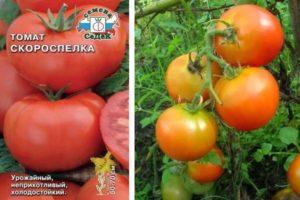
The Garmoshka tomato is suitable for growing outdoors and in greenhouses. Breeders recommend this variety to gardeners due to its high yield. A full description of the plant and its cultivation methods can be found in specialized reference books. Garmoshka is used to make salads, tomato paste, sauces, ketchups, and juices. The fruits can be preserved for the winter by cutting them into wedges. When attempting to jar whole berries, the fruits crack.
Characteristics of tomato
The characteristics and description of the variety are as follows:
- The vegetative period of development from seedlings to the first fruits ranges from 104-110 days.
- The Pomoshka tomatoes have bushes up to 180 cm high. Each tomato cluster contains 2 to 3 berries.
- The plant has simple inflorescences. The stems bear a medium number of leaves, colored in light shades of green.
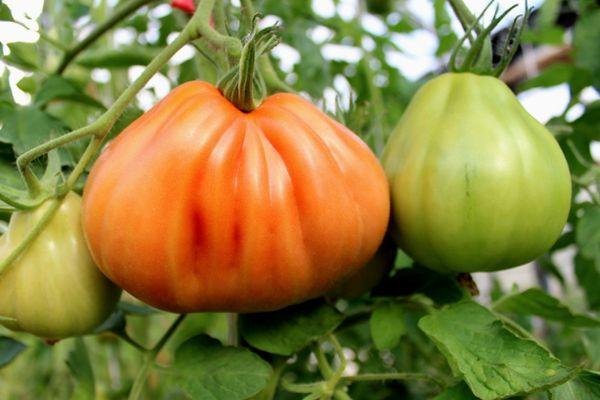
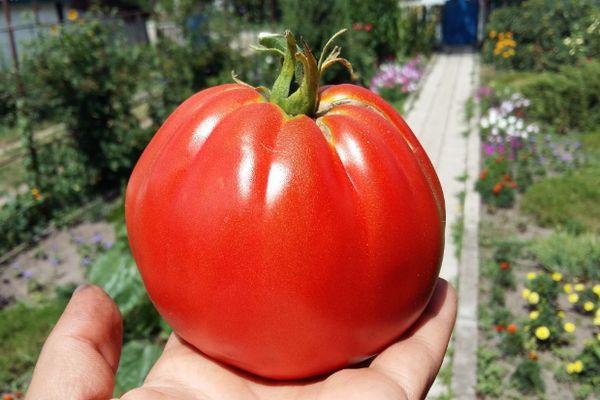
- The description continues with the shape and color of its fruits. They resemble a pear, colored in pink and red tones.
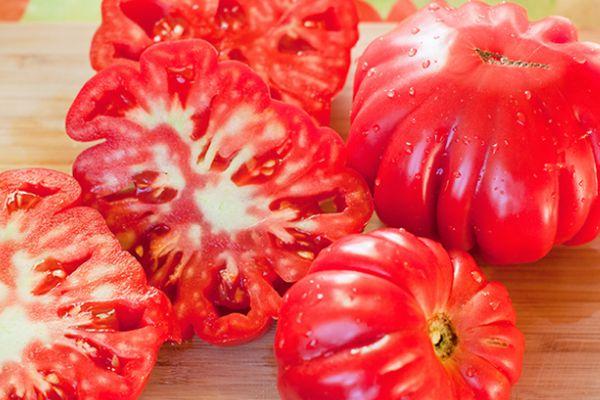
- Description of Garmoshka berries: good taste, high pulp density, large number of seed chambers.
- The weight of the fruit can vary from 0.1 to 0.4 kg.
Farmer reviews indicate that the variety yields 4.5-5.0 kg of berries per bush. With proper cultivation, Garmoshka produces up to 13-15 kg of fruit per square meter of garden bed. Gardeners note the tomato's ability to withstand long-term storage (up to 30 days) in a cool place. Garmoshka's transportability allows it to be transported over long distances. Gardeners also note the possibility of growing tomatoes for seed.
But this plant also has its drawbacks. Gardeners note that Garmoshka is susceptible to various diseases, as the variety has virtually no immunity to diseases of nightshade crops.
Therefore, it is necessary to carry out preventive measures, for example, treating tomato bushes with fungicides.
The plant requires careful shaping. Most often, 2-3 stems are required. The tomato must be protected from inclement weather, otherwise, up to 50% of the harvest can be lost. The variety does not tolerate temperature fluctuations, heat, or sudden frosts.
Another disadvantage of the fruits is their tendency to crack.
Growing the variety in a private garden
Before planting, treat the seeds with a weak solution of potassium permanganate or aloe vera juice. This is necessary to ensure healthy seedlings, as tomato plants have weak immunity to various diseases.
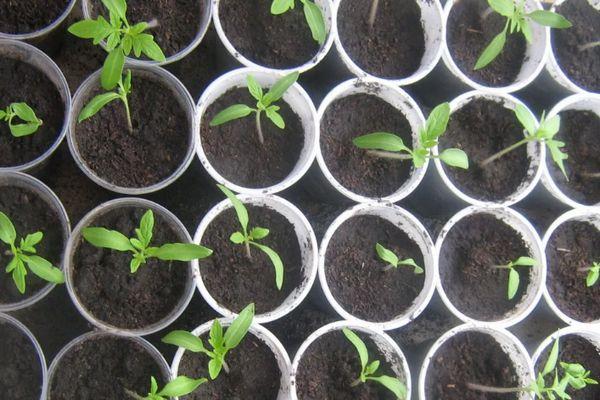
After the preventative treatments, the seeds are planted at a depth of 20 mm in special soil for vegetable crops. Fertilize with organic fertilizers (compost, manure). Once the sprouts emerge, they are moved to a bright location. If sunlight is insufficient, fluorescent lamps are recommended.
Pricking out is done when the seedlings have developed 2-3 leaves. When the plants are 2 months old, they can be transferred to permanent soil in the greenhouse. Before this, the seedlings need to be hardened off for 10-14 days.
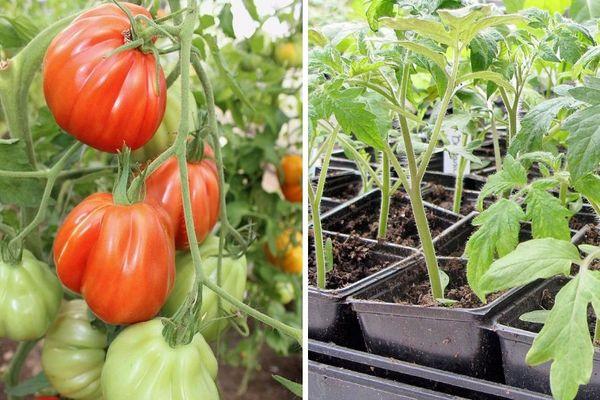
Organic and nitrogen fertilizers are added to the soil in the beds. Bushes are planted in 0.5 x 0.6 m spacings. The soil is loosened 2-3 times a week. This prevents parasites from growing on the plant roots and protects against certain diseases. The seedlings should be covered with plastic for 10 days to protect them from sudden temperature changes.
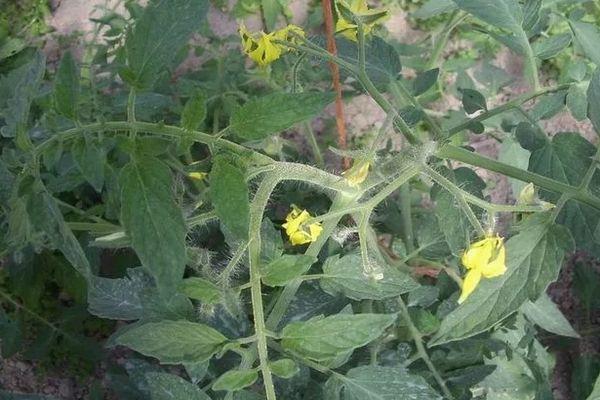
It's recommended to weed the beds regularly (2-3 times a week). Failure to do so will result in late blight infection, which will dramatically reduce the yield. Breeders recommend tying plant branches to sturdy supports and removing excess shoots.
It is recommended to fertilize plants with mineral and organic fertilizers three times per season. Initially, nitrogen and potassium mixtures are applied to promote bush growth. After flowering begins, feed tomatoes with potassium nitrate, manure, and a small amount of nitrogen mixtures. After the first fruits develop on the branches, fertilize with complex fertilizers containing phosphorus, potassium, and nitrogen.
If garden pests (Colorado potato beetles, aphids, and various insect caterpillars) appear, treat the bushes with chemicals that kill the pests and prevent their reappearance. Slugs can be controlled by applying ash to the roots of tomato plants. The same method is used to kill insects that parasitize the root system of plants.
Related posts:
 Description of the best varieties of black tomatoes for open ground and greenhouses
 The best eggplant varieties for growing in a polycarbonate greenhouse: planting and care
 80 Best Eggplant Varieties for Different Regions with Descriptions and Characteristics
 The best grape varieties for growing in the Urals, planting and care rules in summer
 When and how to properly transplant tomato seedlings, the best days in 2025
 How to properly plant peas in a greenhouse and open ground
 How to propagate and grow peas, cultivation technology, and care in open ground
 Kirov-bred tomato varieties for greenhouse and open-ground cultivation