
The Korneevsky tomato is named after the Soviet breeder who registered the variety in the 1980s. These tomatoes are in demand in the food market. People use them for a variety of purposes: winter pickling, salads, lecho, tomato juice, or simply enjoying the delicious taste. It's worth studying the characteristics and description of the variety to ensure a bountiful harvest of Korneevsky tomatoes.
Description of the Korneevsky tomato
The description of the Korneevsky Pink tomato is as follows:
- the plant is mid-season;
- the fruits ripen around mid-summer;
- the height of the bushes reaches 1.3-1.6 m, but there are also exceptions - 2 m in height;
- The Korneevsky tomato is undemanding to the soil, but takes root better in the ground;
- can be grown both in a greenhouse and outdoors;
- In greenhouse conditions, bushes grow smaller than in the garden.
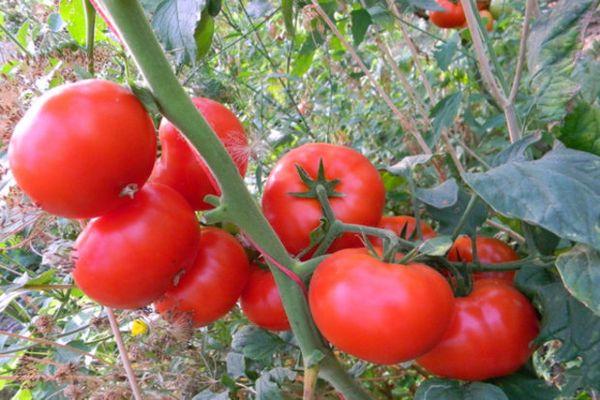
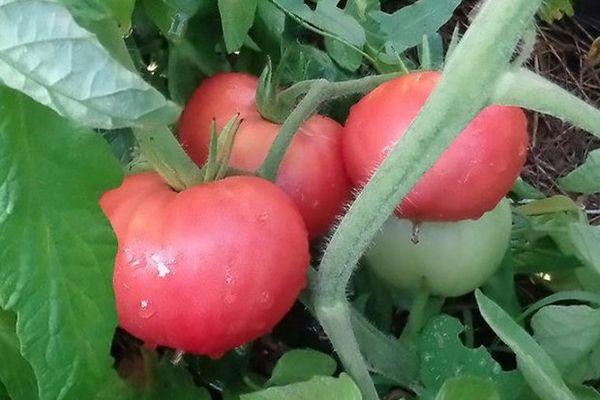
The Korneevsky Pink variety has a light crimson color, a sweet flavor, and an irregular, rectangular shape. Three to four fruits grow on a single cluster, and three to four clusters grow on a single bush. Consequently, a bush can produce 9 to 16 fruits. The tomatoes are large, weighing up to 400 g. However, giant tomatoes, reaching 1.5 kg, are sometimes found.
The leaves of the Korneevsky Pink tomato are light green, smooth on one side and fuzzy on the other. Single inflorescences and a sturdy rhizome complete the description of the Korneevsky Pink tomato. Bushes may have one or two stems (rhizomes), but double roots are preferred, as the large fruits on the lower clusters often cause stems and rhizomes to break.
The Korneevsky variety is indeterminate, meaning it grows tall. The bushes and shoots develop without being limited in growth by the inflorescences.

After the bushes reach a height of 50-70 cm, the branches are tied up, as they may not be able to withstand the weight of the fruit.
The Korneev Memory tomato has its own fruit characteristics. A single plant can produce up to 16 tomatoes, each weighing 300-500 grams. Sometimes, the fruit can reach 1 kg or more. These fruits are found on the lower branches of the plant.
The Korneevsky Rectangular tomato has a flattened shape at the poles, with visible corners. The skin is delicate, thin, and resistant to cracking in the sun. It has a light crimson color and a glossy sheen.
The fleshy pulp has a wonderfully sweet flavor without any tartness. It contains a small number of seeds per chamber. The fruits store well and ripen well if picked green.
This variety is not suitable for making pickles, but it is perfect for tomato juice, salads, and lecho.

Properties of the Korneevsky Pink variety:
- Mid-season. Ripening time from planting to red fruit is 100–110 days.
- Large fruits on the lower branches can damage the root system and break the stem, so the bushes should be tied to a level wooden support.
- High tomato yield - about 8 kg of harvest can be collected from 1 bush.
- This variety is frost-resistant, so it is planted in the northern regions of Russia. The Korneevsky variety grows well both in greenhouses and open ground. It is undemanding to soil conditions.
- According to gardeners, this tomato variety is immune to some types of pests and plant diseases.
It has its pros and cons. The advantages include higher yields and resistance to pests and diseases such as late blight.

The disadvantages include the fact that sprouted seeds can be planted in the ground 30-60 days after planting, and large fruits must be tied up.
Growing tomatoes isn't difficult. It's recommended to plant seeds in late March or early April. Prick out the seedlings only after one or two true leaves appear. Photos and reviews from gardeners can be found online on tomato-growing websites.
How to grow Korneevsky tomato?
Planting in open ground occurs in early June. If the gardener decides to grow the plants in a greenhouse, they can plant as early as late May.
The unpretentious tomato variety Korneevsky Pink is afraid of severe frosts.
When planting in the ground, maintain the required distance between bushes. After weeding, the space should allow the bushes to breathe. The planting pattern in the bed is 30x40 cm.
As for pests, it is best to spray the plants in advance to prevent insects and diseases such as late blight and blossom-end rot from developing due to constant dampness of the bushes.
Plants need to be fed with organic and inorganic fertilizers. Organic fertilizers include compost, manure, and the like. Inorganic fertilizers include fertilizers containing micro- and macrominerals (potassium, copper, and others). To prevent diseases, tomatoes can be treated with a special solution. To do this, dilute 1 tablespoon of hydrogen peroxide in 1 liter of water and spray the plants.
Related posts:
 80 Best Eggplant Varieties for Different Regions with Descriptions and Characteristics
 Description of the best varieties of black tomatoes for open ground and greenhouses
 Rules for growing tomatoes in open ground, choosing a variety, planting and care
 Description and characteristics of the 60 best sea buckthorn varieties, how to choose depending on the region
 50 Best Pumpkin Varieties with Descriptions and Characteristics for Outdoor Planting
 The best grape varieties for growing in the Urals, planting and care rules in summer
 Description of 30 varieties and types of Muscat grapes, planting, cultivation and care
 Description and characteristics of the best indeterminate tomato varieties for greenhouses