
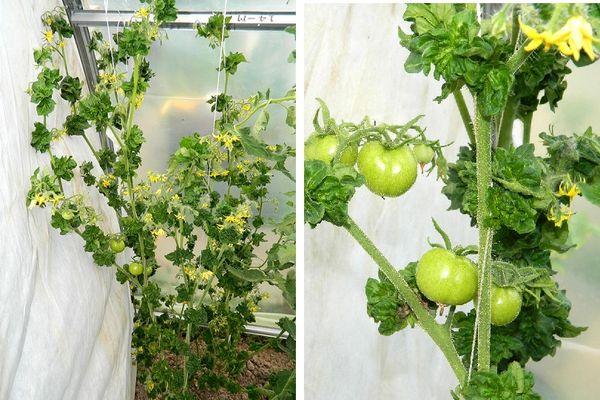
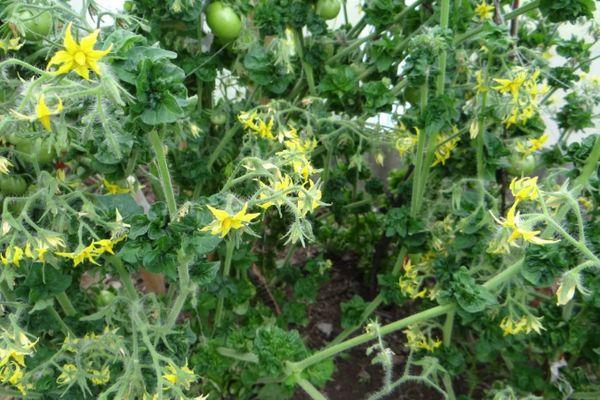
The "Palka" tomato was developed back in 1958 by American breeders. However, it is only just gaining popularity in Russia. The variety has an unusual appearance: the fruits grow directly on the stem, virtually unenclosed by leaves. This variety is sometimes called the "Terry" or "Curly-Leafed" tomato.
Features of the variety
The Palka tomato plant has long stems, usually no more than three in number. The plant is semi-determinate, reaching a height of 1.2 m. The variety description excludes the presence of lateral shoots. The plant has very few stiff, corrugated leaves, which are gathered in bunches on the Palka. This variety does not require pinching.
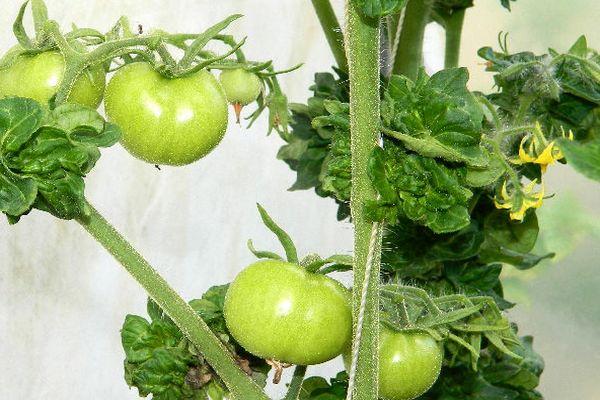
On average, about five clusters form on each stem. Each cluster can produce up to six fruits.
This is a mid-season variety, meaning approximately 120 days pass between seedling emergence and harvesting the first ripe tomatoes. The Palka tomato has a columnar, fairly high yield: up to 1.5 kg of tomatoes can be harvested from a single plant. By planting the plants densely, experienced gardeners can harvest up to 30 kg of tomatoes per square meter.
The characteristics and description of the Palka variety include recommendations for growing these tomatoes in open ground or greenhouses. Yields are consistent and high regardless of planting location.
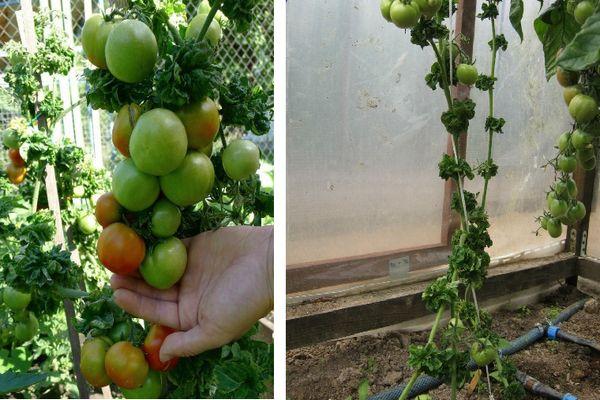
Palka tomatoes are used for all types of processing. They are excellent for transportation due to their long shelf life.
The stick is not a hybrid tomato, so tomato seeds can be used for future seedlings.
The Palka tomato variety demonstrates resistance to many types of diseases that commonly affect tomatoes.
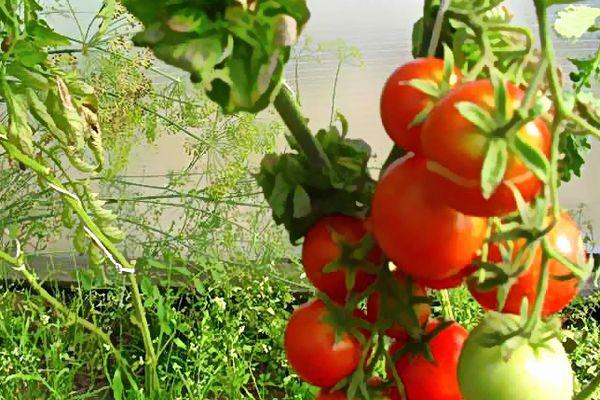
The fruits are round in shape. The flesh inside is firm and dense. The flavor of Palka tomatoes is typical for this vegetable crop; there is a subtle tartness. The ripe fruit is bright red.

A single fruit can weigh up to 50-100 g. A distinctive feature of tomatoes is that they don't fall off even if they become overripe and remain on the vine. They are also resistant to cracking, thanks to their firm, dense skin.
The only weakness of this tomato variety is that it requires repeated staking. If the trunk of the Palka tomato isn't secured to the support in time, it can simply break. However, this cultivation technique is easy to implement and requires only attention and care on the part of the grower.
Features of cultivation
Seeds of the Palka tomato variety are sown in mid-March. The soil for the seedlings should be well fertilized immediately before planting. Young tomato plants should be transplanted to their permanent location exactly 60 days after sowing. Experienced gardeners recommend sowing at night, as this will allow the seedlings to acclimatize better.
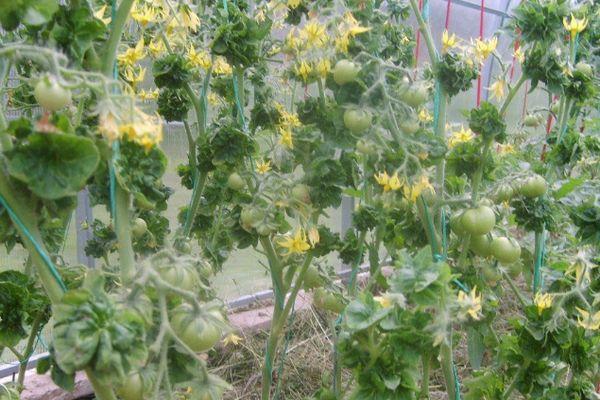
An important part of growing a vegetable crop like tomatoes is timely fertilization. Some vegetable growers recommend applying 4 kg of peat compost mixture, 50 g each of potassium and phosphorus, per 1 m² of soil.
The distance between young tomato plants should be approximately 20 cm. Tomato care includes regular weeding, loosening the soil, and hilling the plants. This should be done at least once every two days.
How to save seeds for future seedlings?
To avoid buying expensive seeds for next year, you can save them using existing tomatoes. For this, it's best to use tomatoes from the second cluster. The seed source is usually the so-called female tomatoes, which have a small indentation on the bottom.
Tomatoes are washed with a weak solution of potassium permanganate to disinfect their surfaces. After this, the tomatoes are left in a dry, dark, warm place for 5 or 6 days to ripen.

Once the fruit has softened, cut it open with a sterile knife and transfer the pulp and seeds to a well-washed container. Cover the container with a piece of cotton cloth and place it in a dark place. After two days, fermentation will begin. If a thin film and bubbles appear on top of the mixture, this is a sign that the seeds are ready to be washed.
Pour warm water into a container and gently rinse the future seeds. Rinse until the water runs clear. Then, transfer the seeds to a clean cloth to absorb the moisture. Dry them on a sheet of paper. Place the seeds in a single layer.
Related posts:
 Is it possible to soak treated cucumber seeds before planting and how to do it correctly?
 Description of the best varieties of black tomatoes for open ground and greenhouses
 How to propagate and grow peas, cultivation technology, and care in open ground
 Carrot care guidelines for outdoor cultivation to ensure a good harvest
 What varieties of tomatoes are best to plant in a polycarbonate greenhouse?
 The best and most productive tomato varieties for greenhouse cultivation in the Urals, with descriptions
 Description and characteristics of the best seeds of pea varieties and types
 Description and characteristics of the most productive varieties and hybrids of corn