
Early maturing hybrid tomato Spring Severa was added to the State Register of Breeding Achievements back in 2011. Developed specifically for the commercial production of early vegetables, this variety boasts several advantages: a consistent yield, calibrated fruits, and a compact plant. Hybrid seeds are now available for purchase for gardening.
General characteristics of the plant
The description of the Vesna Severa F1 variety in the State Register catalog indicates that it is a determinate plant. The main stem stops growing after 5-6 fruit clusters have formed, after which the ovaries begin to fill and the fruits ripen uniformly. Mass harvesting takes place in July, but the first fruits begin to ripen as early as late June.
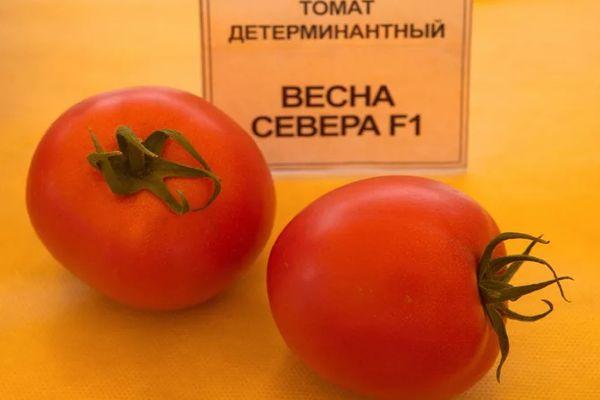
For early harvest, growing tomatoes in greenhouses is recommended. However, in garden plots in central Russia and Siberia, tomato harvests can also be obtained in open ground. The plant is highly resilient to temporary temperature drops, tolerates prolonged rainfall, and is virtually immune to macrosporiosis during hot and humid seasons.
Reviews from domestic gardeners indicate that the variety's yield remains consistently high throughout the summer.
One bush can yield approximately 3.5 kg of marketable produce. When planting 5-6 bushes per square meter, the average yield per unit area is 17-18 kg. To improve yield, it is recommended to remove side shoots that do not produce additional fruit after the first cluster blooms. This allows the plant to direct all its nutrients toward filling and ripening tomatoes on the main stem.
Description of the fruits of the Vesna Severa hybrid
The plant produces 5-6 fruit clusters of complex shapes. Each cluster bears an average of 4-5 fruits of approximately equal weight (no more than 200 g). The berries are rounded, slightly ribbed at the stalk.

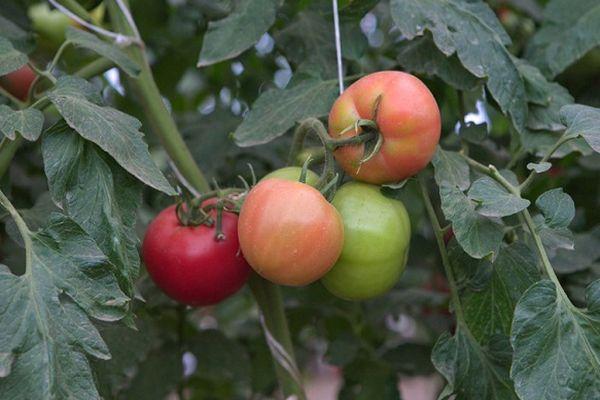
The skin is thick and durable. Vesna Severa tomatoes are resistant to cracking, transport well, and store well for a long time without losing their appearance or flavor. When harvested at the milky stage, the tomatoes ripen easily indoors. Ripe tomatoes are a rich pink with a pearlescent sheen. Commercially ripe tomatoes are pale green with a dark spot at the base.
The flesh is meaty and dense, but not tough. A fully ripe tomato has a tender texture, allowing it to be broken apart by hand. The seed chambers are small, and the seeds are few. The flesh is pink, with a sometimes uncolored area near the stem. The flavor profile is characterized by increased sweetness and a slight tartness.
The Vesna Severa hybrid is intended for salads. The first vegetable harvest occurs in early summer, when there is a shortage, so tomatoes are primarily used in summer appetizers and salads. Sliced tomatoes are perfect for sandwiches, and the pink slices also look elegant when sliced.
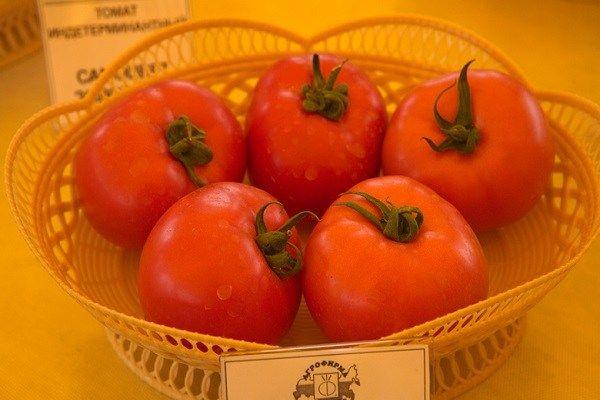
Small, calibrated tomatoes are ideal for whole-fruit canning. Thanks to the firmness of their skin and flesh, canned tomatoes hold their shape well and remain intact during cooking. If desired, fleshy tomatoes can be used to produce thick, light-colored tomato juice and puree. These products are low in acid and suitable for dietary use. They are hypoallergenic and recommended for baby food as a source of numerous vitamins.
How to grow early tomatoes
Early tomato varieties should be sown for seedlings two months before the expected planting date. To harvest in early summer, the plants should be planted in a greenhouse. In central Russia, this can be done as early as mid-May.

Tomatoes are planted in the ground after the spring frosts have passed, around early June. By combining both techniques, you can have fresh vegetables on the table from mid-June to the end of July. After this, you can begin harvesting mid-season tomatoes.
You can sow the seeds in boxes filled 2/3 full with soil made from equal parts garden soil, humus, and fine sand. For every 5 kg of this mixture, it's recommended to add 1 tablespoon of ground chalk or eggshells. Before sowing, heat the soil in the oven or soak it in a hot, dark pink solution of potassium permanganate.

Spread the seeds over the surface of moist soil and cover with dry sand or soil. Plant them no more than 0.5 cm deep. Cover the boxes with plastic wrap and place them in a warm place. Make 2-3 small holes in the plastic wrap for ventilation. Seedlings will appear in 3-5 days, after which the plastic wrap should be removed.
Seedlings are pricked out at the 2-3 true leaf stage using a 10x10 cm spacing. Care consists of timely watering and supplemental lighting, if needed. When planting time approaches, plants are spaced 5-6 per 1 m².
Related posts:
 Description of the best varieties of black tomatoes for open ground and greenhouses
 Delicious recipes for canned tomatoes with honey for the winter, preparation steps
 TOP 17 recipes for pickled sweet tomatoes for the winter
 80 Best Eggplant Varieties for Different Regions with Descriptions and Characteristics
 Step-by-step technology for growing tomatoes on the balcony, the best varieties with descriptions
 15 simple recipes for pickling tomatoes in jars for the winter
 11 Best Recipes for Preserving Tomato Slices for Winter
 How to grow cherry tomatoes on a balcony: suitable varieties and planting and care guidelines