
Siberian breeders have once again delighted consumers with a new nightshade hybrid: the Vesna F1 tomato. It's easy to care for and highly adaptable to soil and weather conditions.
The Vesna tomato variety is grown in greenhouses, hotbeds, and outdoors. It thrives in virtually all regions and produces a bountiful harvest. Any vegetable grower strives to grow a plant with not only large fruits but also excellent flavor. This is precisely what the Vesna variety delivers. The tomatoes have a distinct flavor, with a hint of acidity, and the flesh is sweet and juicy.
Feedback received from gardeners with experience growing the Vesna variety has been only positive.
The main advantages of the variety
The bush is small, reaching a maximum height of 50-60 cm. The growing season lasts approximately 90-100 days. The plant has a sturdy trunk and a powerful root system that extends 1.5-2 m into the ground, which helps the tomato retain its leaves and fruit during periods of extreme weather conditions.
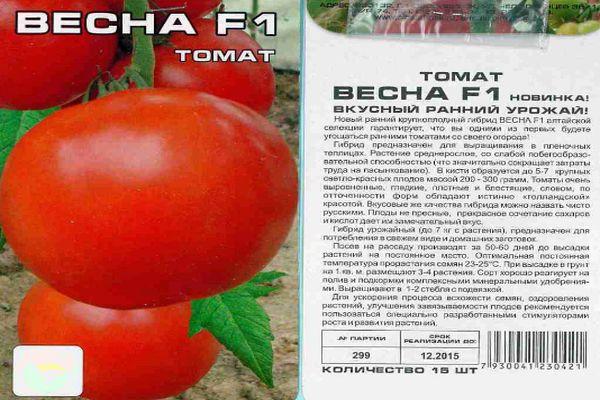
The Vesna tomato has a typical inflorescence. The first cluster forms after the sixth or seventh leaf. Fruits are produced 5-7 per cluster. The bush requires staking and additional support, especially during the ripening period, when the fruit begins to gain weight.
The leaves are slightly elongated and have a distinct corrugated pattern, dark green in color, and do not fill the bush very densely. The Vesna tomato yield is high and consistent. Up to 5 kg of fruit can be harvested from a single plant over the summer.
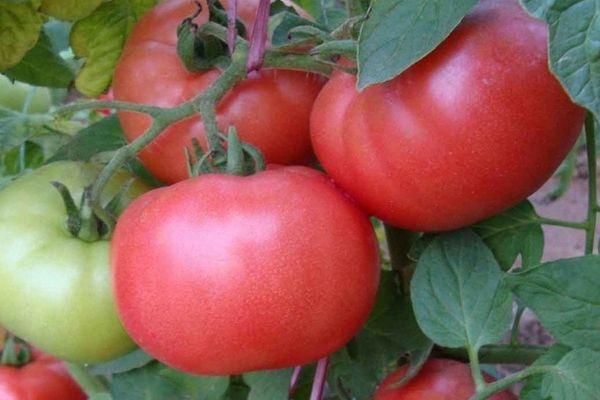
Description of the tomato fruits Spring:
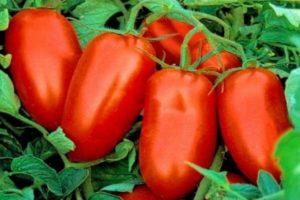
- The tomatoes have a beautiful, even red color.
- Their skin is dense and smooth, firmly protecting the flesh from sunlight and cracking.
- Tomatoes weigh from 150 to 200 g.
- The fruits are round in shape with slight ribbing.
- The pulp has 4 chambers filled with small seeds.
- The fruit's flavor is not bland, but rich with a subtle spicy aftertaste. Vesna tomatoes are ideal for preparing tomato products and eating fresh.
- The harvest is stored for a long time.
- The tomato is suitable for long-distance transportation without losing its marketable appearance.
- Tomatoes can be picked from the vine when they're ripe. It's important for the fruits to reach a light, milky color. This allows them to ripen perfectly in a warm room.
The variety's distinctive features include strong immunity to tobacco mosaic and late blight. Vesna tomatoes are easy to care for. Knowing basic farming practices is sufficient to grow these tomatoes. If you follow all these guidelines correctly, the plant will reward you with abundant, high-quality harvests until autumn.
Growing rules
Typically, the manufacturer provides the variety's characteristics and description on the seed packaging. It also includes a schedule for sowing the seeds and planting them outdoors.
Tomato seeds for seedlings are sown in the spring. The optimal time for planting is considered to be the second half of March. Before planting, the seeds should be treated with a weak potassium permanganate solution. The seeds are immersed in the solution for 30 minutes, then allowed to dry thoroughly. Special growth stimulants can be used to stimulate growth.
The soil for seedlings is prepared from the following components:
- coarse river sand;
- turf soil;
- peat.
Mix all ingredients and moisten. A shallow container is suitable for growing seedlings. Lightly compact the soil and make holes 1.5-2 cm deep. Cover with soil, but do not compact it.
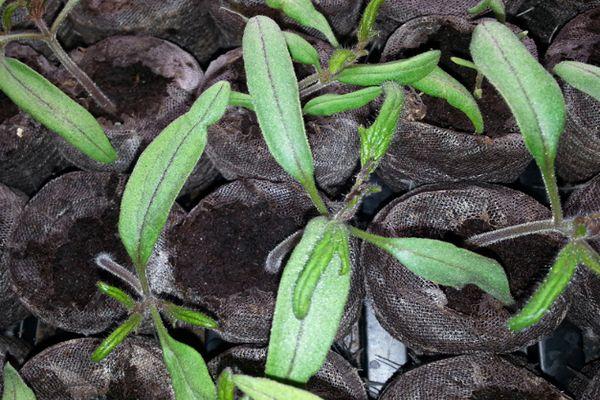
It's important to water immediately and cover the container with plastic wrap. Keep the seedlings in a room where the temperature is no lower than 22°C to 25°C. Remove the plastic wrap when the first shoots appear. Water the seedlings with warm, settled water from a spray bottle. It's important not to overwater the soil or allow moisture to stagnate.
When the sprouts have two leaves, they are pricked out. The seedlings can be transplanted directly into peat pots.
Before planting, seedlings can be hardened off. To do this, take the plant outside for an hour in the morning and evening. This process begins 15 days before planting.
The seedlings are ready for planting when they have 6-7 leaves and one inflorescence. The beds should be fertilized before planting. Some gardeners use complex mineral fertilizers, while others prefer regular compost.
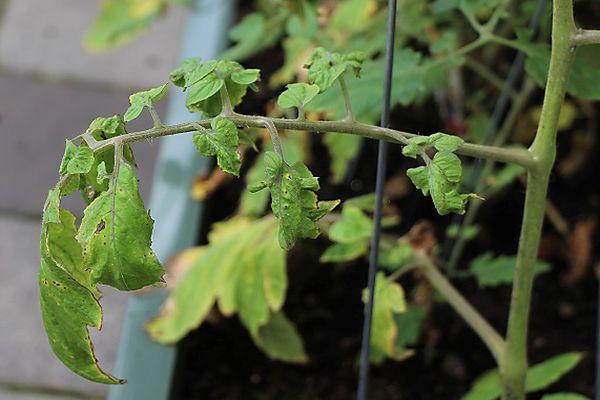
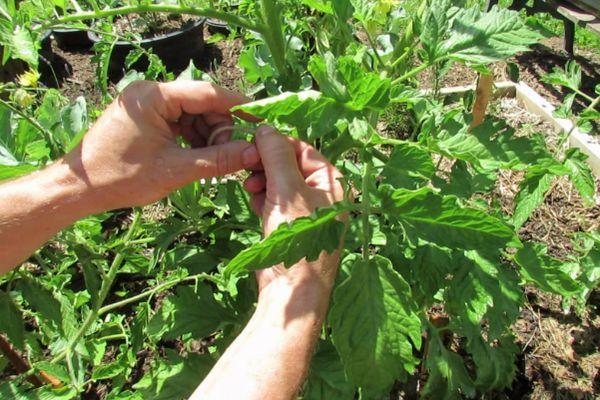
Plant the bushes at a rate of 3-4 plants per square meter. Mulch the holes immediately with fine sawdust or straw. Initially, water the beds only with settled water. After one week, feed the seedlings with mineral fertilizer. During cultivation, side shoots should be removed and the bush trained to 1-2 stems.
It is worth spraying the plant against pests and fungi only before the tomatoes appear.
Related posts:
 The best grape varieties for growing in the Urals, planting and care rules in summer
 The best eggplant varieties for growing in a polycarbonate greenhouse: planting and care
 When is the best time to plant tomato seedlings in 2025 and when to sow seeds?
 80 Best Eggplant Varieties for Different Regions with Descriptions and Characteristics
 Descriptions of the 20 best cherry varieties for the Moscow region, their planting and care
 Description of the early-ripening tomato Vesna Severa F1 and the rules for growing it using seedlings
 Description and characteristics of the best seeds of pea varieties and types
 Growing and caring for broccoli in open ground and greenhouses
Take a look Also
There's an error in the description of Vesna F1, a tomato plant over two meters tall. It was grown outdoors. Exactly four months passed from sowing the seeds to the first ripe tomatoes, without any violations of agricultural practices. It's not early. But it's a very good tomato, tasty (even though it's a hybrid), very productive, with a long fruiting period, and sets fruit in hot weather. I have over a hundred varieties in my collection, but I planted this one first, again, and it's very good in every way!