
- Characteristics of culture
- Varietal diversity
- How cabbage grows
- Ripening times and harvesting rules
- Planting methods: pros and cons
- Seedling method
- Growing broccoli from seeds
- Growing seedlings
- Let's decide on the time
- Preparing the soil and container for seedlings
- Preparing the seeds
- Scheme and technology of sowing seed material
- Conditions for growth
- Care and hardening of seedlings
- Rules for picking
- Planting seedlings in open ground
- Deadlines
- Choosing a location
- Optimal bush placement scheme
- How to care for broccoli in the open ground
- Pinching out stepsons
- Should I pick off the lower leaves?
- Watering, weeding and loosening
- Hilling up bushes
- Fertilization
- Preventive treatment
- Caring for broccoli in a greenhouse
- When to sow and plant seedlings in a greenhouse
- Preparing the beds
- Landing plan and technology
- How to water and fertilize bushes
- Is it possible to grow cabbage at home?
- Pests and diseases of broccoli: control methods
- Aphid
- Cabbage fly
- Cruciferous flea beetle
- Cabbage white butterfly
- Cabbage moth
- Snails and slugs
- Blackleg
- Kila
- Belle
- Alternaria
- Peronosporosis
- White rot
- Dry rot
- Mosaic
- Vascular bacteriosis
- Fusarium wilt
Broccoli is growing in popularity. Growing and caring for it outdoors yields good results. Growing it is simple. To ensure a good harvest, you need to choose the right variety and plant it correctly at the right time. Broccoli is very healthy. It's quick to prepare, and the florets can be frozen for the winter.
Characteristics of culture
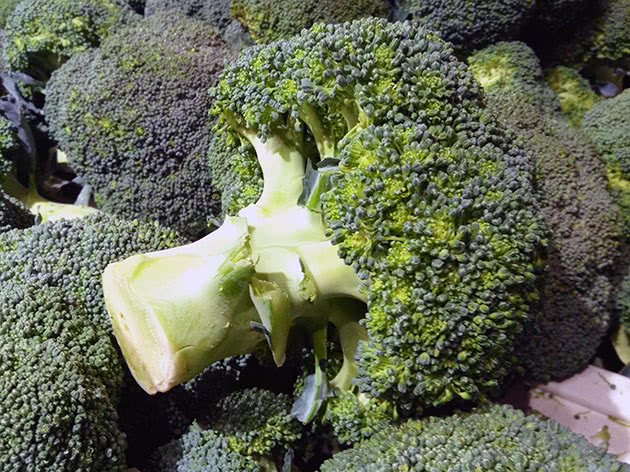
Broccoli is an ancient vegetable crop. It has become particularly popular due to its beneficial properties. Two varieties are grown in gardens:
- Calabrese;
- asparagus.
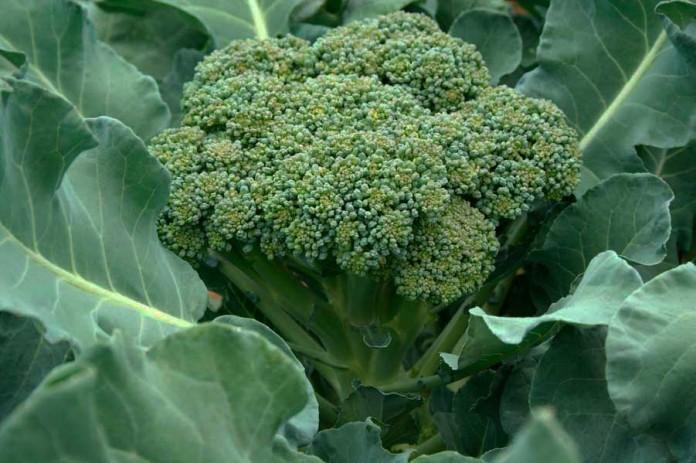
The first variety has a large, dense inflorescence on a thick stem. The second variety has smaller, more numerous heads. The inflorescences and stems are edible. They have a flavor reminiscent of asparagus.
Varietal diversity
When choosing seeds, consider their ripening period. This determines the time of planting and harvest. Early-ripening varieties are suitable for summer consumption:
- Batavia F1 (65 days);
- Fiesta (70 days);
- Curly head (80-90 days).
Batavia will delight you with a harvest of large (1-1.5 kg) dark green heads. Fiesta's are smaller—300 g—but very firm and juicy. These varieties have no side shoots, while the Kudryavaya Golova variety has many. The main head weighs 400-600 g. The harvest of early-ripening varieties doesn't store well, remaining marketable for 7-14 days.
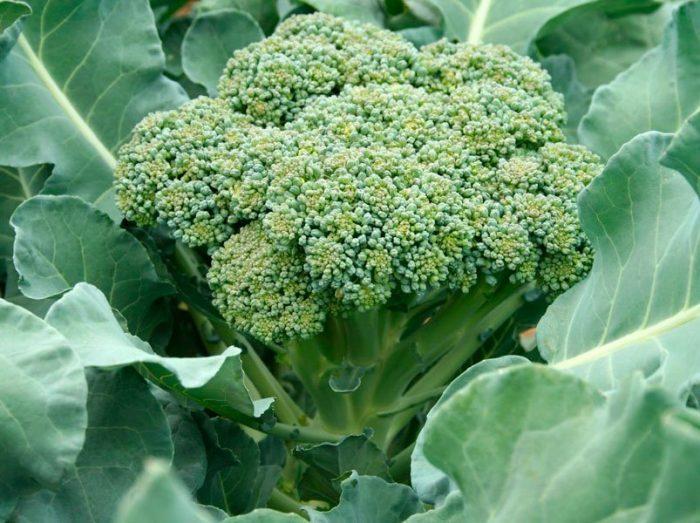
Mid-season broccoli varieties Suitable for freezing. From germination to harvest, it takes 110 days. Popular cabbage varieties among gardeners:
- Vitamin. The head weighs 200-300 g, is green, and produces a moderate number of lateral shoots.
- Arcadia F The head is lumpy, light green in color, weighs 450 g. Lateral heads are formed, weighing about 70 g.
- Calabrese. A blue-green head weighing 400 g.
Mid-season broccoli varieties have a shelf life of no more than 2 weeks. They are suitable for quick freezing and canning. Late varieties of cabbage are stored better and longer.:
- Monterey F1, single head, dark green, weighing 1.9 kg;
- Atlantic, forms small heads weighing 200-400 g;
- Greenia forms small heads weighing 300 g.
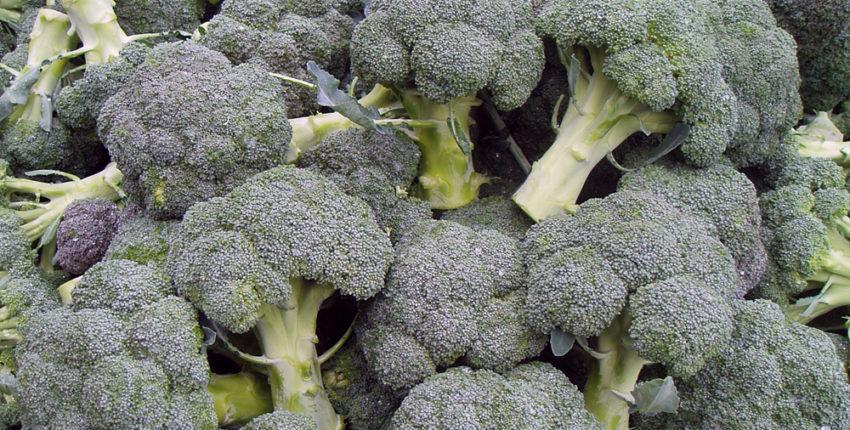 From germination to harvesting of late varieties of broccoli takes 120-140 days. Late-ripening varieties have firmer heads. They are used for freezing and other processing. The most productive cabbage varieties are listed in the table.
| Variety (hybrid) | Productivity |
| Lord F1 | 4 kg/m² |
| Tone | 5.5-6.5 kg/m² |
| Monaco F1 | 4.5 kg/m² |
How cabbage grows
All broccoli varieties are cold-hardy. In spring, seedlings can easily withstand frosts (-2°C), and in autumn, cabbage plants continue to grow even after nighttime temperatures drop to -5°C. In summer, broccoli doesn't like the heat, growing well at 20-22°C.
At temperatures above 30°C, heads form poorly. The crop doesn't thrive in overly fertile soil. Cabbage can become overweight, which will impact yield. Many strong side shoots form, but the heads develop small. Broccoli also dislikes:
- shadow;
- irregular watering;
- acidic soils;
- soil crust.
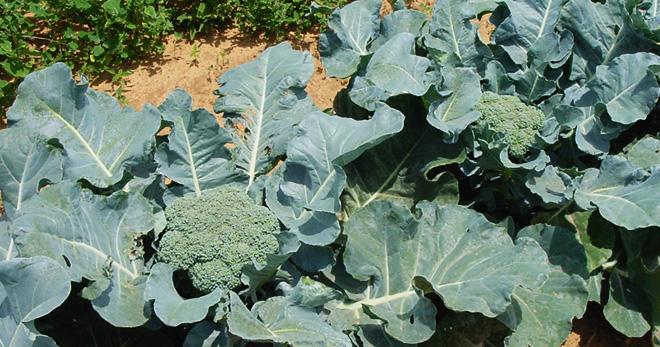
Ripening times and harvesting rules
Overgrown broccoli heads are not suitable for eating. Therefore, it is recommended to harvest them promptly. Asparagus varieties of cabbage have a longer fruiting period. The last heads are picked before the first frost.
Gardeners determine when to harvest by the appearance of the inflorescences. The central head forms first and is cut off along with the stem. After a few days, new shoots appear on the side shoots. These are picked off every 2-3 days.
Planting methods: pros and cons
Gardeners grow broccoli by direct sowing and by using seedlings. Each method has its pros and cons. The planting time and harvest time depend on the chosen method.
Seedling method
Broccoli is grown from seedlings in two situations: when an early harvest is desired and when a late-ripening cabbage variety has been chosen. When planting late-ripening cabbage seeds in the ground, the head may not form.

Cabbage seedlings grow well in a greenhouse or hothouse. At home, they stretch out. Certain conditions are required for normal growth:
- lighting;
- air temperature;
- soil and air humidity.

Growing broccoli from seeds
Early broccoli varieties can be sown directly into the ground. Planting time depends on weather conditions and soil readiness. Seeds are typically sown directly into the ground in May or June. In temperate climates, this method won't produce an early harvest of broccoli. The heads will not form until August.
Growing seedlings
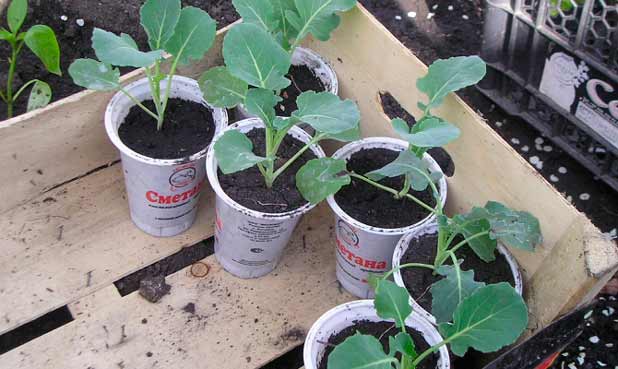
Seedlings are planted in the ground at 45-55 days of age. This parameter is used as a guide when determining planting dates.
Let's decide on the time
The seeds of early varieties are sown first. Planting begins in March. The seedlings are transplanted into the ground in May, and the first harvest is collected in June. Plantings are made at two-week intervals in March and April. mid-season and late-season cabbage varietiesBroccoli is harvested throughout the summer using this seedling growing method.
Preparing the soil and container for seedlings
Suitable plastic containers are 25 cm high, 50 cm long, and at least 30 cm wide. Fill them with loose, fertile soil. It should be alkaline or neutral. Acidic soil is not suitable for broccoli.
Typically, take garden soil from the onion bed. Mix it with compost or humus in a 1:1 ratio. Add 10 tablespoons of ash per bucket of the mixture. Disinfect the soil:
- heat in the oven (200 °C, 15 minutes);
- watered with a solution of potassium permanganate;
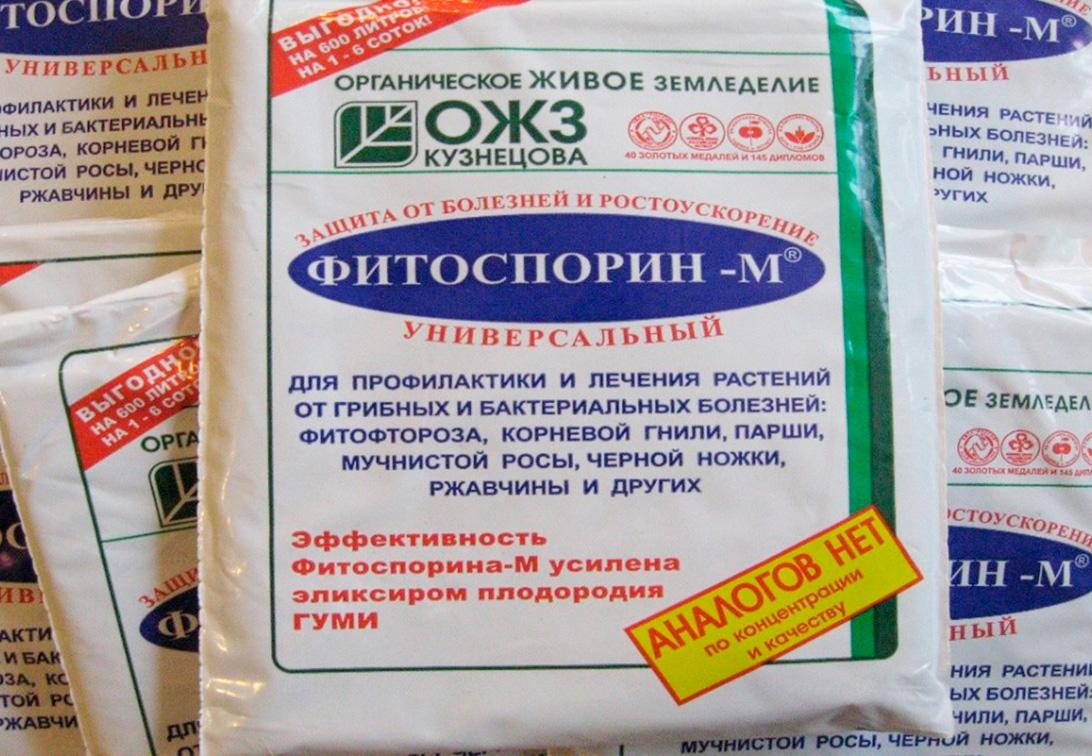
- treated with Fitosporin.
Preparing the seeds
Prepare a 3% salt solution. Place the broccoli seeds in it. Discard any that float to the surface. Rinse the remaining seeds and use them for planting, but disinfect them first:
- place in a solution of potassium permanganate for 20 minutes;
- Keep in hot water (60°C) for 25 minutes.
To speed up germination, soak them in an ash infusion for 24 hours. To prepare it, add 1 tablespoon of ash to 1 cup of water.
Scheme and technology of sowing seed material
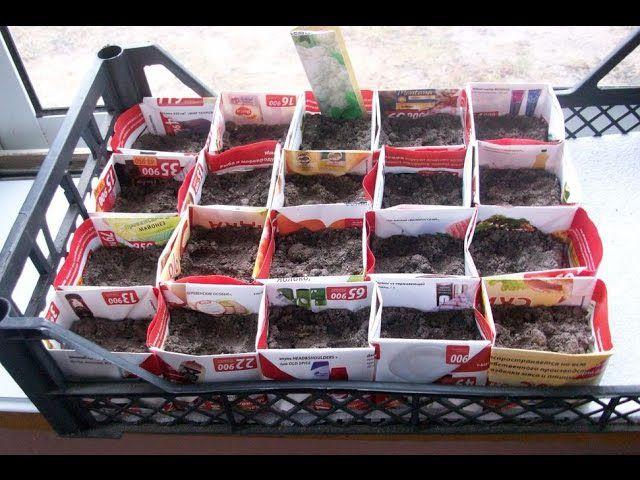
The soil in the container is watered generously the day before. On the day of planting, furrows 1.5 cm deep every 3-4 cm. The seeds are placed in these furrows at 3 cm intervals. They are then sprinkled with peat, humus, or vermicompost. The container is covered with plastic wrap and placed in a warm location.
Conditions for growth
After germination, create comfortable conditions for broccoli seedling growth. Temperature is essential for normal development:
- during the day no higher than +20 °C;
- at night about +10 °
It's easier to create these conditions on a glassed-in balcony. To prevent the seedlings from stretching, they need light. In March and April, natural light is insufficient for seedlings, so the seedling tray is placed under a grow light. The optimal distance from the cabbage seedlings to the grow light is 20 cm.
Care and hardening of seedlings
Let the water sit for 1-2 days; it should be warm. Don't allow the soil to dry out, but don't overwater the broccoli seedlings either. Overwatering can cause blackleg.

Rules for picking
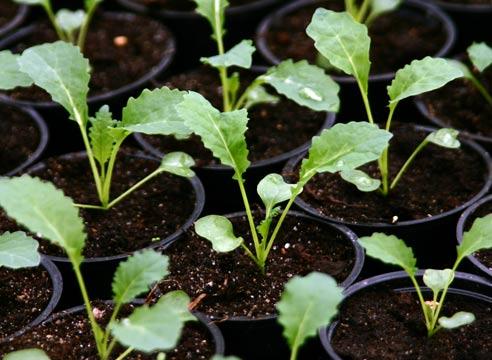
At the age of 14 days, broccoli seedlings are transplanted. The seedlings are transplanted into individual cups. Fill them with soil of the same composition as in the seedling tray. The seedlings tolerate transplanting well. The transplanting process follows a simple procedure:
- the seedlings are watered well the day before;
- Using a plastic spoon or fork, remove the seedling from the soil, keeping a lump of soil around the root;
- make a depression in the glass;
- the end of the long root is pinched (⅓ of the length);
- The seedling is placed in a hole, the roots are covered with soil, and watered.
For several days, the seedlings are not watered and are protected from the sun. After 5 days, they are fertilized:
- water - 10 l;
- nitroammophoska - 1 tbsp. l.
Planting seedlings in open ground
Growing broccoli in the garden has its own unique features. Seedlings are transplanted into the soil when they have 4-6 leaves. By this time, they will reach 10-15 cm in height. Over-seeding is not recommended, as it reduces survival.
Deadlines
Before transplanting, seedlings are hardened off. They are placed on the balcony and covered with a covering material at night. Five to seven days is sufficient. They are planted in the ground in May or June. If there is a risk of frost, they are covered with plastic, covering material, or boxes.
Choosing a location
Broccoli grows best in full sun. In shade or partial shade, the heads are small and develop late. Good predecessors to broccoli include carrots, onions, cucumbers, potatoes, and beets.
Optimal bush placement scheme
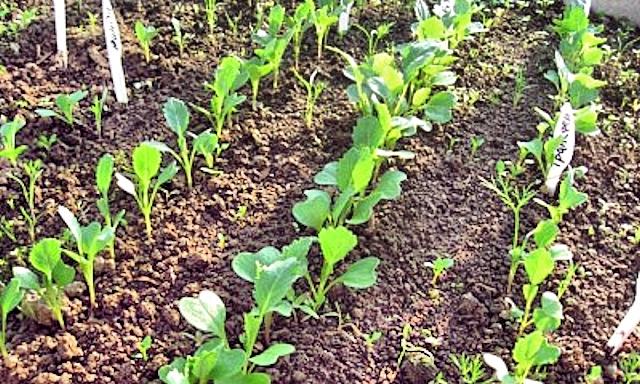
The seedlings are planted in holes spaced 35 x 60 cm apart. The seedlings are buried deep to the cotyledons. The soil is watered and mulched. The seedlings are protected from the sun for about 5 days and not watered. The cover is removed when the seedlings have become more vigorous and the leaves have firmed up.
How to care for broccoli in the open ground
The basic care rules are the same as for other cabbage varieties. They include:
- soil cultivation (loosening, weeding);
- watering;
- top dressing;
- pest control;
- disease prevention.
Pinching out stepsons
Broccoli doesn't need side shoots. New florets form on them. They're smaller than the central head, but there are plenty of them. Broccoli heads are harvested from garden plants throughout the summer.
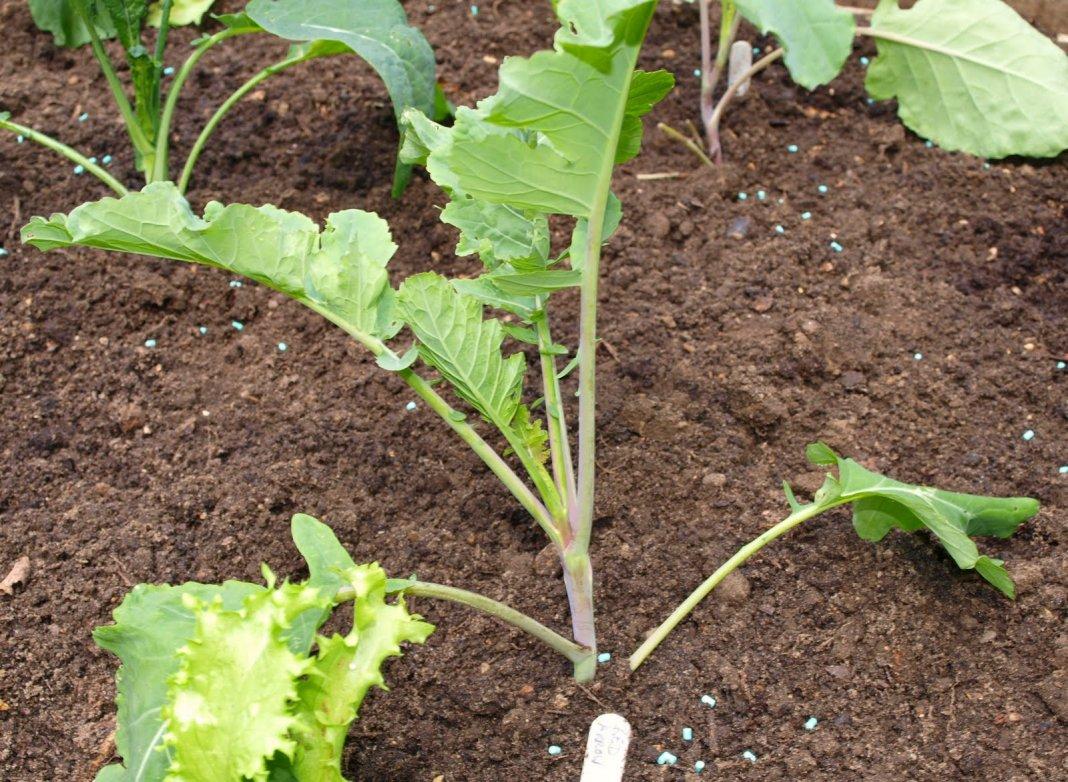
Should I pick off the lower leaves?
Experienced gardeners advise against picking broccoli leaves. This ensures continued head formation. Damaged or dry broccoli is an exception.

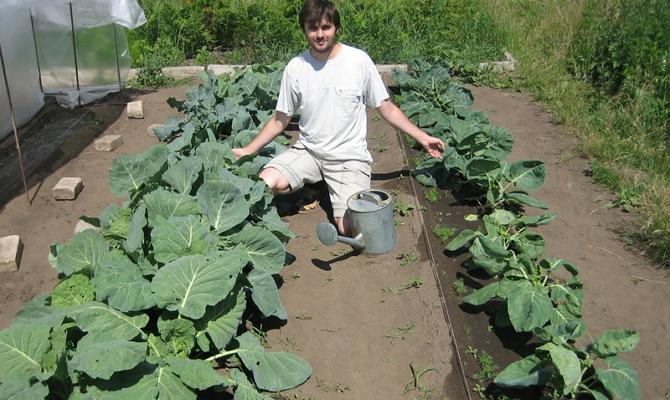
Watering, weeding and loosening
Water broccoli once every 2-3 days.Less frequently in rainy weather. If it's hot, moisten the soil morning and evening. Sprinkle the bushes with a sprinkler. The soil should be kept constantly moist at a depth of 20 cm.
Hilling up bushes
The soil is loosened the day after watering. The bushes are hilled at least twice:
- 3 weeks after transplantation;
- 2 weeks after the first.
Fertilization
The first feeding is done after rooting. Broccoli responds well to a mullein infusion. It is diluted with water at a ratio of 1:10. After two weeks, the cabbage is watered with mullein a second time. When the first florets appear, the broccoli is fed a third time. To obtain large heads, add the following to 10 liters of water:
- 40 g superphosphate;
- 20 g ammonium sodium sulfate;
- 10 g potassium sulfate.
After cutting off the central head, asparagus varieties are fertilized again with the same composition, stimulating the growth of lateral shoots and the formation of new inflorescences.
If you follow the correct fertilizing schedule, you won't have to wonder why your cabbage leaves are turning red. Your cabbage will have enough nutrients.
Preventive treatment
Since broccoli's immune system is weakened after transplanting, it's best to spray it with Fitosporin and Baktofit. This treatment protects young broccoli from fungal diseases and bacterial rot. To protect against pests, the bed is sprinkled with ash.

Caring for broccoli in a greenhouse
The following broccoli varieties are grown in the greenhouse: Tonus, Lazar, Caesar, and Vitaminnaya. The seeds are treated with a potassium permanganate solution before sowing.
When to sow and plant seedlings in a greenhouse
In an unheated polycarbonate greenhouse, the soil warms up in April. Seedlings can be grown indoors and transplanted into the greenhouse at 40 days old. However, sowing seeds is easier.
Preparing the beds
For every 1 m², add 1 bucket of humus, 2 tablespoons of superphosphate, 1 tablespoon of potassium sulfate, and 1 tablespoon of urea. To prevent fungal diseases, add ash at a rate of 0.5 l/m². For acidic soil, add chalk at a rate of 100-300 g/m².
Landing plan and technology
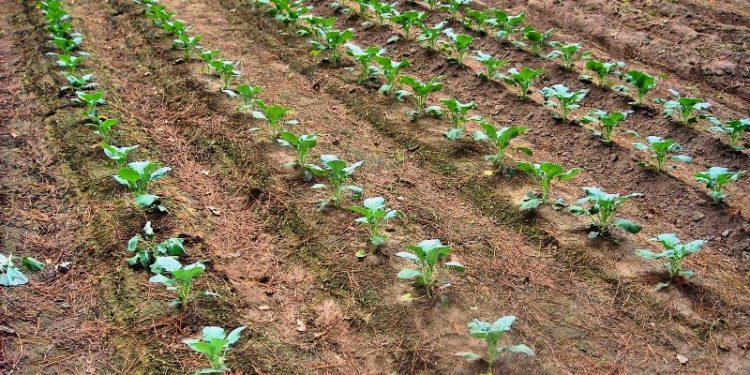
Broccoli is planted in rows. Holes are made 30 cm apart, leaving 60 cm between rows. The seedlings are planted deep to the cotyledons and watered. When planting seeds, place three seeds in each hole. Cover with a 1.5 cm layer of compost. Once the seedlings emerge, leave only one.
How to water and fertilize bushes
The fertilizing schedule in the greenhouse is the same as in the garden. Water the cabbage regularly. Don't allow the top layer of soil to dry out. Loosen the soil after each watering.
Is it possible to grow cabbage at home?
Growing broccoli on a balcony is challenging, but possible. Enthusiasts plant the Tonus and Vitaminnaya varieties. In March, the seeds are sown for seedlings. The cabbage is transplanted into large pots with a diameter of 40 cm. Use loose, humus-rich soil.
Expanded clay is poured onto the bottom, with several holes made in it. The pots are placed in a deep tray, which is constantly topped up with water. The cabbage is fed with Flora fertilizer. Once the head reaches 7 cm in diameter, it is cut off. Care continues, and the inflorescences are harvested as they form.
Pests and diseases of broccoli: control methods
Broccoli has dangerous pests. It's susceptible to fungal and viral diseases. Understanding the pests and disease symptoms will help you begin treatment early.
Aphid
A dangerous, rapidly reproducing insect. Aphids and their larvae damage young seedlings and crops. The cabbage variety parasitizes broccoli; it does not migrate. The eggs overwinter. The larvae emerge in April-May. A single female can produce up to 16 generations of pests during her lifetime.

To prevent aphid infestations, clear the garden of plant debris and dig it up in the fall. If insects appear, use chemicals:
- "Engio";
- Flexi;
- "William."
Cabbage leaves can be washed every other day with an infusion of ash and soap. The plants should be hilled up, and the soil sprinkled with ash.
Cabbage fly
Cabbage fly larvae cause damage. They hatch from eggs laid by female cabbage flies during the spring and summer. The larvae are small (8 mm) white worms that feed on roots. The insects first emerge when lilacs bloom (April and May).

The second mass flight occurs between June 15th and 20th. These insects resemble common flies in appearance. The only distinguishing feature is their color. It's ash-gray and small in size—0.5-0.6 mm in spring, up to 0.7 mm in summer. A single female lays up to 100 eggs per season. She lays her eggs in the ground near a stem.
In the spring, after the sprouts emerge, the gardener's main goal is to repel female cabbage lice from the cabbage patch. For this, try these tried-and-true methods:
- in autumn, destroy the remains of leaves and cabbage stalks, and dig up the soil;
- in the spring, do not plant seedlings in an area where cabbage grew last summer;
- After watering, the soil around the stems is sprinkled with a mixture of tobacco and ash (1:1);
- cover the ground around the stem with any dense material (film, cardboard, non-woven material);
- During periods of mass summer, the soil is moved away from the stems, and new soil is raked in from between the rows.

White covering material effectively protects broccoli from cabbage root flies. Gardeners throw it over the cabbage bed. Black material is also used to cover the soil from insects.
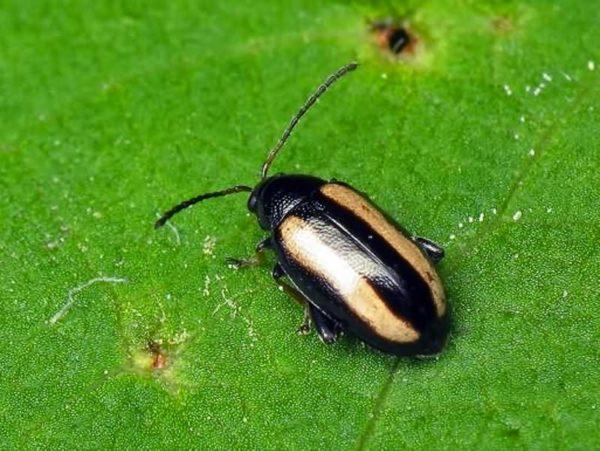
Cruciferous flea beetle
Adult beetles overwinter. In the spring, they begin feeding actively. They can completely destroy seedlings and young broccoli transplants. The insect is especially active in hot weather. The larvae of the cruciferous flea beetle also cause damage, parasitizing the roots.
Cabbage planted in April and July is resistant to flea beetles. By the time the insects are active, the cabbage has already hardened. Other measures to protect young seedlings:
- abundant, regular watering;
- aromatic neighbors - garlic, coriander, dill;
- white covering material.
Ash and slaked lime help against fleas. Sprinkle the beds with them after each watering.
Cabbage white butterfly
In the south, the first white butterflies begin to flutter in April; in temperate climates, they appear in May. When examining cabbage leaves, you can see egg clutches. They are located on the underside. After two weeks, yellow-green caterpillars with a black pattern emerge.
They eat leaves and pupate. New cabbage white butterflies emerge from the pupae in July and August. Various methods of control are used in gardens:
- put out sweet baits (water, sugar, a little yeast);
- valerian and marigolds are planted along the ridge;
- spray with an aqueous solution of valerian (water - 3 l, valerian extract - 40 ml);
- treated with ash infusion (water - 10 l, ash - 0.5 l, soap shavings - 2 tbsp).
Effective products against caterpillars include "Bitoxibacillin," "Lepidocid," and "Iskra-M." The simplest method of control is mechanical. Caterpillars are collected by hand, dropped into a jar of water, and then destroyed.

Cabbage moth
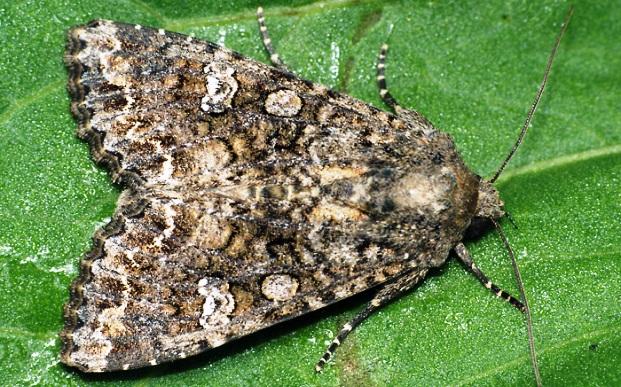
These butterflies fly at night. They have brown-gray wings with a dark pattern. They emerge in April and fly until late summer. Egg clutches can be found on the undersides of leaves and on the ground. Two generations of these pests appear in the garden per season.
At different stages of development, the color of the caterpillars changes:
- green;
- gray-green;
- brown.
Caterpillars eat leaves, burrow into stems and heads of cabbage, and fill them with excrement. To control them, use the microbiological product "Lepidocid":
- take 1 liter of water, dissolve 4 tablets in it;
- In the evening, spray the broccoli bushes;
- 1 liter of the preparation is applied to a bed with an area of 10 m².
Snails and slugs
These pests love to feast on tender cabbage leaves. They are destroyed mechanically. Bait (watermelon or melon rinds, burdock leaves) or damp rags are placed in the garden bed. The bed is sprinkled with dry mustard.
Blackleg
The root collar of broccoli seedlings softens and darkens. The roots fail to develop. The disease is incurable. Infected plants are pulled out and destroyed. To prevent the spread of infection, the bed is watered with a solution of potassium permanganate or Planriz.
Kila
Cabbage growing in acidic soil suffers. Overwatering triggers clubroot. Affected plants wilt, and the leaves turn yellow. To prevent clubroot, add crushed eggshells to the soil.
Belle
The initial symptom is a white, paint-like coating. Over time, the leaves become distorted, swollen, and turn brown. There is no cure for cabbage white spot. Diseased plants are destroyed, and healthy ones are treated with copper-containing preparations.
Alternaria
Leaves become covered with brown necrotic spots. The disease is caused by fungi and is spread by insects and wind. Outbreaks are triggered by dry, hot weather. The following medications are used for treatment:
- Abiga Peak;
- "Bravo";
- "Cuproxate".
Peronosporosis
This disease is more commonly known as powdery mildew. It begins with the appearance of a white coating on the undersides of leaves. Affected plants are treated with dry ash. In severe cases, spray with Topaz.
White rot
White rot affects broccoli grown in acidic soil and overfed with nitrogen fertilizers. The disease most often appears during cold weather, causing shoots to rot. Affected plants are sprayed with copper-containing products.
Dry rot
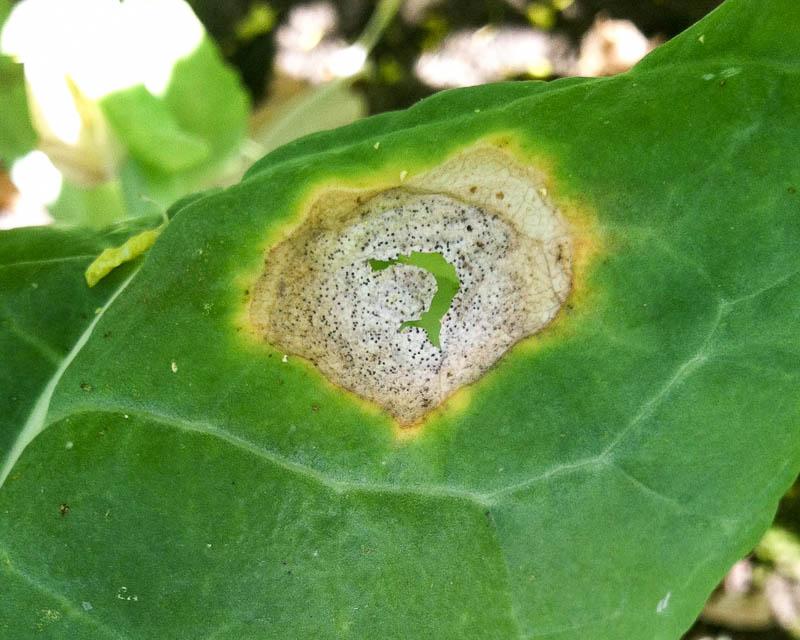
Light spots covered with black dots are appearing on broccoli leaves. Growth is stunted, and spots appear on the stem. Broccoli is treated with ash and Topaz.
Mosaic
The leaves first become spotted, then deformed. A dark green border appears. The disease is caused by viruses. It is incurable. Infected cabbage plants are destroyed. The soil is disinfected with a solution of potassium permanganate or Fitosporin.
Vascular bacteriosis
Leaves develop yellow edges. They become stiff and die. Affected plants are treated with the following medications:
- Planriz;
- Trichodermin.
Fusarium wilt
The leaves become deformed and change color. They turn yellow-green and fall off. The affected cabbage is removed. The soil is treated with a fungicide solution.
With proper care, broccoli is disease-free. Asparagus varieties of cabbage produce heads by the end of September. Broccoli stops fruiting after the first frost.
Related posts:
 Delicious recipes for preparing broccoli at home for the winter and storage
 How to properly freeze broccoli at home for the winter in the freezer
 Description of the best cabbage varieties for 2025 for different regions
 50 Best Broccoli Varieties with Names and Descriptions
 Planting, growing, and caring for cauliflower in open ground and greenhouses
 Reasons why broccoli doesn't form heads and starts to bloom, and what can be done about it
 Description and characteristics of the best varieties of late cabbage, planting and care technology
 Description of the best early cabbage varieties, cultivation and care in open ground
My family loves broccoli too, but this year's harvest wasn't great. Now I understand why: irregular watering and an overly hot spot in the garden. I'll follow your advice from now on.