
The Coral Reef F1 tomato can be planted both outdoors and indoors. This modern hybrid is easy to care for, making it a favorite among gardeners.
Characteristics of fruits
This indeterminate hybrid is tall and can reach 2 meters or more in greenhouse conditions. Vigorous bushes require staking. The Coral Reef variety is recommended to be grown in 1-2 trunks, especially in greenhouses. When tied to a common trellis and trained into a single stem, dense planting can be achieved, spacing plants 50 cm apart.
This variety is an early-ripening one. It takes 90-95 days from sowing to harvesting the first ripe fruits. The harvest is extended, with the bushes bearing fruit from early July until frost. In an unheated greenhouse, fruiting continues until stable cold weather sets in.
The plant is low-maintenance. To obtain an average yield (up to 18-19 kg per square meter), tomatoes only require timely watering and 2-3 fertilizing sessions per season. A minor inconvenience is the need to pinch off side shoots and remove leaves from the lower part of the stem.

The bush has medium foliage. Excess foliage is removed to ensure better ventilation, increase the flow of nutrients and water to the developing ovaries, and provide them with sunlight. As a result, the fruits fill out and ripen evenly, allowing for a larger harvest.
Coral Reef is resistant to fungal diseases. Even in cold summers, the fruits are not affected by late blight. The variety's characteristics note resistance to fusarium wilt and alternaria.
Characteristics of Coral Reef Fruits
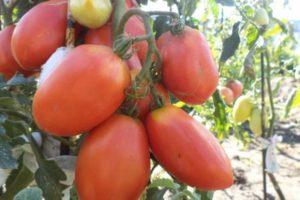
Coral tomatoes, as they're called by gardeners, are a type of beef tomato. This description means they produce large (over 250 g) and fleshy fruits. The multi-celled nature of each cluster, with 5-6 tomatoes, typical of modern varieties, ensures the Coral Reef's high yield.
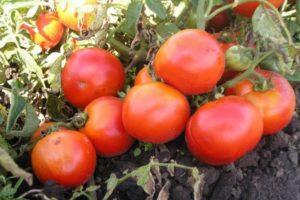
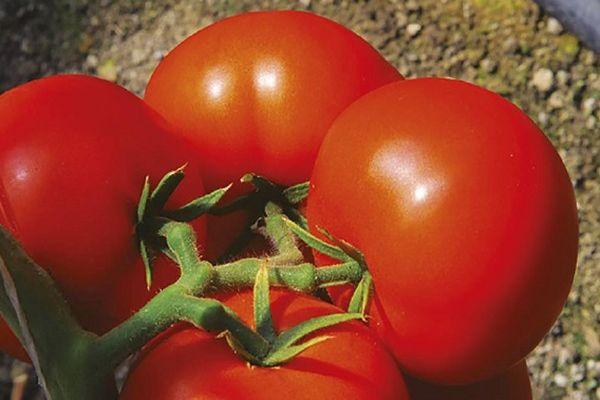
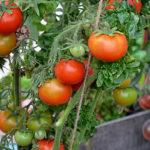
The fruits are round, without ribbing, and slightly flattened in height. Unripe tomatoes lack a dark spot near the stem; their color is uniform, light green. Ripe tomatoes have a rich red skin.
The Coral Reef tomato's skin is thick, making it resistant to cracking and rotting. It's easy to transport even when fully ripe. The tough skin is easy to remove for cooking.
The flesh is distinguished by its almost complete absence of seed chambers. The Coral Reef variety lacks the pale stem in the center of the fruit; the flesh is uniformly colored a deep pink. The consistency is dense and juicy.
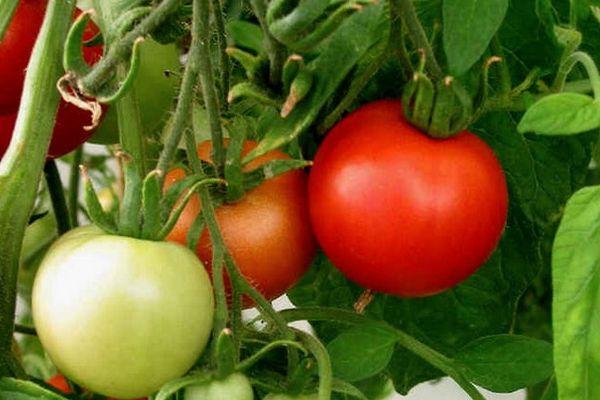
The Coral Reef tomato has excellent flavor, as evidenced by reviews from gardeners who have already grown this variety. The fruit has a low sugar content, with a sweet and sour flavor. The tomato aroma is pronounced.
Uses: Universal. Tomatoes are suitable for eating fresh or processing into juice or puree, and they make a great addition to hot dishes. Large tomatoes should not be salted or pickled whole.
How to get a good harvest?
In central Russia, Coral Reef tomatoes are grown exclusively from seedlings. Seeds should be sown no earlier than 50-60 days before planting. Use seed trays with pre-steamed soil.
The soil can be disinfected with a hot (over 70°C) dark pink solution of potassium permanganate. After treatment, the soil should be cooled to room temperature. Sow by scattering the seeds over the surface of the moist soil. Sprinkle with dry sand and cover with glass or plastic.
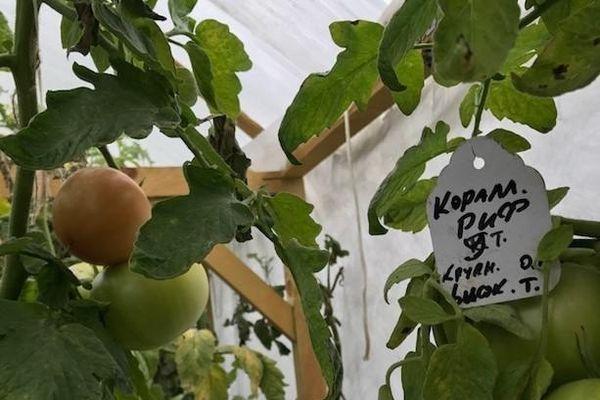
Seedlings emerge in 4-5 days, after which the glass is removed. As the seedlings develop 1-2 true leaves, the tomatoes are transplanted into individual 7-cm diameter pots. Further care for the seedlings consists of regular watering. The pots need to be moved away from each other from time to time so that the tomato leaves do not close together.
You can plant the seedlings in the greenhouse once the room has warmed up and the soil temperature no longer drops below 15°C at night. Plant the bushes in a 50x80 cm pattern and tie them to a trellis.
Plant tomatoes outdoors after the last frost, around early June. Form beds in one row (50x80 cm) or two rows (50x50 cm). Leave at least 80 cm between adjacent double-row plantings. Trellis are more convenient for growing tall tomatoes outdoors.
Apply the first fertilizer one week after replanting (with a complex fertilizer containing nitrogen, phosphorus, and potassium). Repeat the application after two weeks, using a phosphorus-potassium mixture.
Related posts:
 Top 11 Coral Peony Varieties and How to Grow Them
 Description of the best varieties of black tomatoes for open ground and greenhouses
 What varieties of tomatoes are best to plant in a polycarbonate greenhouse?
 16 Best Quick Pickled Tomato Recipes for the Winter
 The best tomato varieties for growing in the Leningrad region for greenhouses and open ground
 Characteristics and description of the Bull's Heart tomato variety, yield and cultivation
 13 Best Recipes for Pickling Sweet Tomatoes for Winter
 Description of the best tomato varieties for open ground in the central zone