
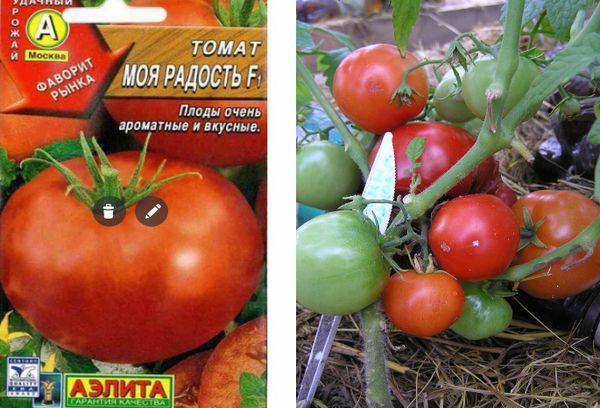
Breeders have developed a high-yielding hybrid tomato, Moya Radosh F1. It will be appreciated by major juice and tomato paste producers. It's worth knowing what other advantages this variety offers.
What is the My Joy tomato?
Characteristics and description of the variety:
- Early-ripening determinate tomatoes, "My Joy," ripen in 90-100 days. The bushes grow up to 1 m.
- Due to its growth and the formation of a large number of clusters with fruits, the plant needs to be tied to a support.
- To obtain a bountiful harvest, the bushes need to be side-sonned.
- If this is not done, then all the plant’s strength will go towards the formation of the foliage.
- The first inflorescence appears between the 6th and 7th leaves, and the following ones appear after 1-2 leaves.
- To avoid confusing the inflorescence with the stepson, you need to look closely at the stem: the inflorescence grows from the main stem, and the stepson appears directly above the leaf.
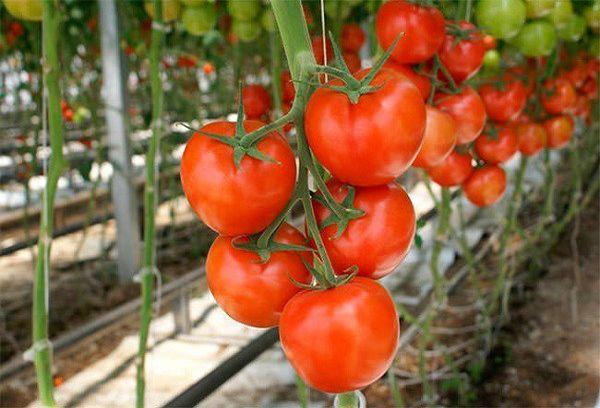
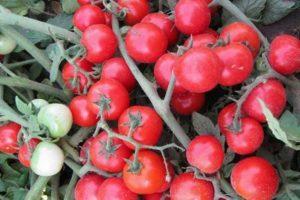
Unripe tomatoes are green on the ovaries, while ripe tomatoes are bright red. They are round in shape, with smooth, firm skin. The average fruit weight is 85-150 g, but in some cases, they can reach 200-300 g.
The tomatoes are sweet and juicy. They ripen evenly in the garden. Up to 5 kg of fruit can be harvested per square meter in open ground, and up to 14 kg in a greenhouse.
The tomatoes' structure allows for long-term storage and transportation over long distances. They are used both fresh and canned. The hybrid variety is resistant to diseases such as fusarium, tobacco mosaic, and alternaria. The plant tolerates high temperatures well, which can also be considered an advantage.
How are tomatoes grown?
To get a good harvest, you need to know the ins and outs of tomato growing. To ensure healthy seedlings and a bountiful harvest, follow these guidelines:
- The seeds are planted in the soil to a depth of 1-2 cm. They are covered with a thin layer of soil and sprayed with water. To retain moisture and create greenhouse-like conditions, the soil is covered with plastic or glass. The soil for sowing should be loose and contain peat, sand, and a little ash. A ready-made substrate is available. Planting takes place in late March, 50-60 days before the expected planting date.
- When the seedlings emerge, remove the film and wait until the first leaves form. After this, the plants are transplanted into separate containers and placed in a bright location. At this stage, tomatoes require artificial lighting: 16 to 18 hours per day.
- Two weeks before planting, harden off the plants. This is done by taking them outside daily, briefly at first, and gradually increasing the time.
- The seedlings are planted in pre-loosened soil, maintaining a distance between the seedlings.
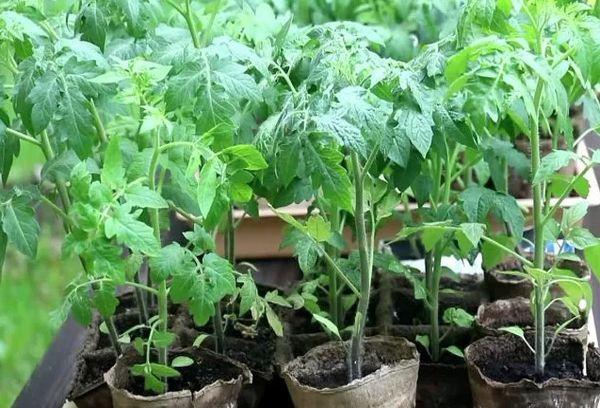
During the initial stage, water the plant once every 7-10 days, applying only to the roots. The soil should be moist, but not soggy. Overwatering can kill the plant.
To retain moisture in the roots, the soil is frequently loosened and hilled. Mulching is a good method. Plant leaves or straw can be used as a cover to protect the top layer of soil from drying out. Tomatoes should not be watered for two weeks before harvest.
Fertilizers are an essential element in crop production. Tomatoes are fed 3-4 times during the growing season. You can't overfeed them.
Reviews from those who have planted this variety are positive. Vegetable growers enjoy growing it because it's easy to grow, disease-resistant, and grows in all weather conditions. The fruits are delicious and aromatic. The yield is high.
Take a look Also
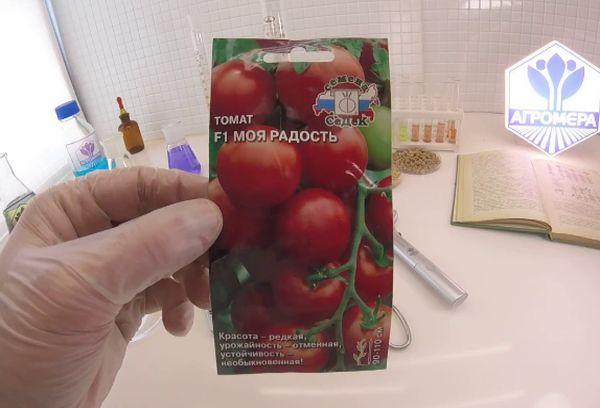
One gardener noted that she planted her own seeds collected last season, but received a very meager harvest, as the seeds of hybrid varieties are not suitable for replanting. After that, she grew tomatoes only from seeds from the cultivar's producers.
Related posts:
 Description of the best varieties of black tomatoes for open ground and greenhouses
 What varieties of tomatoes are best to plant in a polycarbonate greenhouse?
 Which tomato varieties are best for open ground?
 How to properly plant peas in a greenhouse and open ground
 Description of the best tomato varieties for open ground in the central zone
 Description of varieties of sowing peas and cultivation, to which family they belong
 The best tomato varieties for growing in the Leningrad region for greenhouses and open ground
 How to propagate and grow peas, cultivation technology, and care in open ground