
The late-ripening Citrus Garden tomato can be successfully grown even in the harsh conditions of the Urals and Siberia. Despite the late setting of its first fruits, the beautiful tomatoes ripen right on the vine. Unripe tomatoes can be picked before frost, then they ripen indoors with virtually no loss.
Plant characteristics
The bush is classified as indeterminate, meaning it has unlimited growth. In greenhouse conditions, the plant can grow to 2-2.2 m; in open ground, it must be pinched at approximately 1.5 m. With a relatively thin stem, the bush forms 3-4 branched and multi-locular clusters. Despite abundant flowering (up to 50 flowers per cluster), fruit set is only partial. Even then, the clusters consist of 20-25 tomatoes of approximately equal size.
This type of load requires tying to a trellis or other support. Many gardeners also tie up heavy clusters. It's easier to train the bushes into 1-2 stems, and promptly remove actively growing side shoots. This will ensure sufficient sunlight reaches the fruit, helping them ripen faster and acquire all their beneficial qualities.
The plant is highly resistant to late blight. This fungal disease does not affect the Citrus Garden tomato, even when night temperatures drop in the second half of summer. To prevent the disease during the rainy season, it's best to remove all lower leaves before they turn yellow.
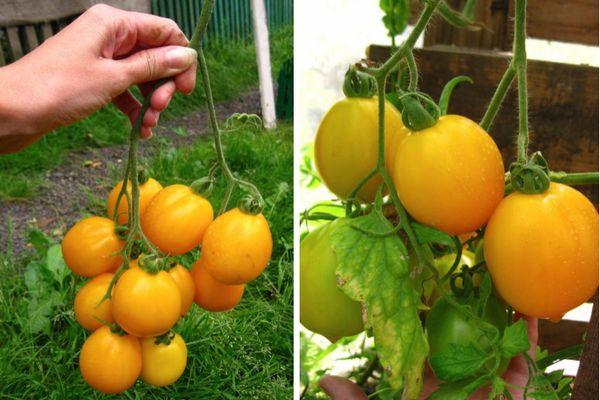
Golden fruits of the Citrus Garden
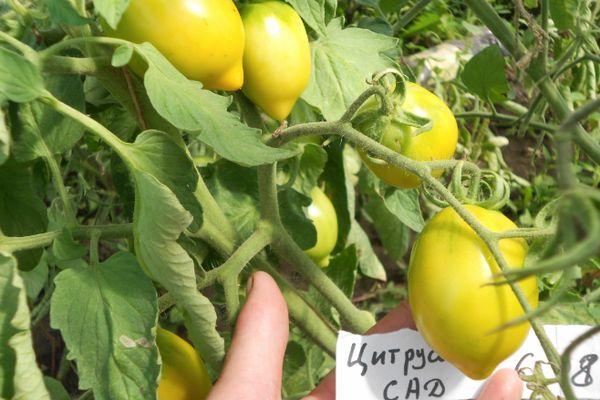
These unusual, decorative, and delicious tomatoes are heart- or egg-shaped, with a distinct protrusion at the top. They resemble lemons in appearance, and their bright yellow color enhances the resemblance, making them a decorative and eye-catching plant.

Fruit characteristics:
- The average length of a tomato is 6-7 cm.
- The ovaries that form on the upper brushes may be slightly smaller.
- The average weight is 70-100 g, and the total weight of the brush reaches 2-2.5 kg.
- The skin of tomatoes is thick and elastic, not prone to cracking, so the yield of commercial products approaches 97%.
- Tomatoes are easy to transport and can be stored ripe for up to 5 days.

When picked at the blanched stage of ripeness, they ripen well in room conditions, and in a cool pantry, ripening can be extended for 1-2 months, resulting in fresh tomatoes for the table until late autumn.
The flesh is firm, with rich juice. Seed chambers are few in number: usually only two. They are located closer to the center of the fruit. The outer walls of the tomato are thick and fleshy. The taste is excellent; gardeners describe the tomatoes as sweet and sour, with a delicate aroma.
This variety is versatile. By the time these tomatoes ripen, there's plenty of fresh salad vegetables available, but the attractive golden slices will grace both salads and sliced food. These small, firm tomatoes are often preserved for future use. Combining the Citrus Garden tomato with red varieties makes for decorative and delicious marinades. The fleshy walls of these small fruits are ideal for drying.
Tomatoes are rarely processed into juice and puree. Although hypoallergenic, pale-colored products look unusual. However, for baby or dietary nutrition, Citrus Garden tomatoes are much healthier than traditional red varieties.
How to care for a citrus garden?
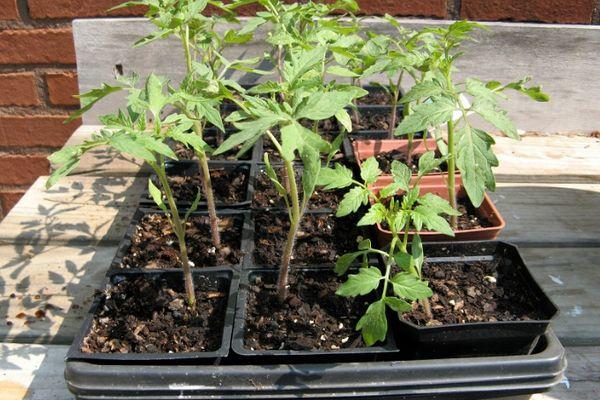
Sowing should be done 90 days before planting. Open-ground seedlings should be hardened off for 2-3 weeks, gradually increasing their time outdoors. They can be planted in garden beds only after the last frost has passed. Tomatoes can be planted in greenhouses as early as mid-May.

To maximize yield per unit area, tomatoes are trained into a single stem, with four plants per square meter. After one or two fruit clusters have formed, a second stem can be left, later pinched above the first two clusters. This stem will require its own support for tying.
In mid-August, the top of the main stem will need to be cut off. By this time, the bush will have 3-5 clusters with 20-25 fruits each, so the plant will require a lot of nutrients for their growth and ripening. In northern regions, the ovaries that would otherwise form at the top of the bush do not have time to gain the required weight, so further growth of the bush is not advisable. In a greenhouse, fruiting can be extended by about 1 month.
Experienced gardeners recommend removing unformed and malformed ovaries from each cluster. This will allow the tomato plant to focus all its energy on filling and ripening full-bodied, well-developed fruits. Removing the lower leaves will allow you to get ripe tomatoes in mid-August, and the ovaries left on the bush will have time to reach milky or blanched ripeness before frost.
Related posts:
 The best grape varieties for growing in the Urals, planting and care rules in summer
 Beginner's Guide to Growing Grapes in Open Ground in Central Russia
 80 Best Eggplant Varieties for Different Regions with Descriptions and Characteristics
 The best eggplant varieties for growing in a polycarbonate greenhouse: planting and care
 Description of the best varieties of black tomatoes for open ground and greenhouses
 Timeframes and methods for preserving grapes for the winter at home
 What varieties of tomatoes are best to plant in a polycarbonate greenhouse?
 Yield of the cluster tomato 'True Friends' and reviews of the variety
We live in Southern Siberia, and this tomato variety has been our favorite for three years now. The bushes have never been sick, the harvest is substantial, and with the bioactivator BioGrow More than abundant. We eat plenty, and there's enough for canning; the orange, lemon-colored tomatoes look beautiful in the jars.