
The Canary tomato is extremely popular among gardeners in northern latitudes and areas with limited daylight hours or consistently rainy climates. A distinctive feature of this variety is its ability to grow and bear fruit in low-light conditions. This hybrid was grown in Novosibirsk and is intended for greenhouse cultivation. In warmer climates, it can also be planted in open beds.
Main characteristics of the variety
Tomatoes have a medium ripening period. Depending on the climate zone, this period lasts 110-120 days. Plants are limited in height, reaching 200 cm in greenhouses and 160 cm in open beds. Therefore, individual supports or trellises are essential for this variety.

The trunk is strong and flexible. The root system is well developed, wide, and deep. The crown is sparse, and the foliage is medium-sized and dark green. Thinning is not required, as the fruit receives sufficient light.
Characteristics of Canary tomatoes:
- shape - correct, spherical;
- average weight - 600 g, individual specimens reach 800 g;
- color - red, uniform;
- the peel is dense and shiny;
- pulp - fleshy, sugary;
- taste - rich, without sour aftertaste;
- Storage quality: average.
Gardeners' reviews indicate that the variety's yield is worthy of praise. With proper cultivation and care, a single bush can yield up to 10 kg per season.

In cooking, the fruits are used to make juice, adjika, ketchup, and lecho. Fresh tomatoes are served sliced or in salads. Due to their gigantic size, they are not suitable for canning. However, they do preserve well in barrels when pickled.
The manufacturer's description of the variety's immunity properties is accurate. The plants are resistant to virtually all types of fungal and infectious diseases.
Advantages and disadvantages of the variety
The main advantage of Canary tomatoes is that they tolerate low temperatures well, which are not uncommon in Siberia and the Urals even in summer.


In addition, tomatoes have the following advantages:
- large size, which immediately arouses interest in the product;
- good resistance to pests and infections;
- undemanding to lighting conditions;
- long-term storage possibility;
- wide range of culinary applications;
- friendly ripening;
- long fruiting period;
- high taste qualities.
Gardeners note that growing this variety requires some effort. The tall and heavy bushes require strong and stable structures for support. Because the plant and fruit are large, frequent fertilization is necessary.
Growing and caring for plants
Seeds should be planted as early as early March. For seedlings, use commercial peat pellets or wooden boxes filled with fertile soil. Drainage material is placed at the bottom of the containers to regulate humidity.

The soil itself is made from garden soil, peat, and organic fertilizer. Before planting, the seeds are soaked in a nutrient solution until they sprout. They are buried 1 cm into the soil and immediately watered with a spray bottle. Seedlings typically appear within a week.
The seedlings should be grown for at least two months. They require 10 hours of natural light per day. If this is insufficient, use lamps. The room temperature should be maintained between 19 and 21°C.
A week before replanting, the plants should be hardened off. Each cycle lasts 2 hours with a gradual decrease in temperature.
The seedlings are planted in pre-prepared holes filled with a fertile mixture of peat, fertilizer, and wood ash. Once the seedlings have established themselves, a strong rope is tied to the base of each bush. The bush will wrap around this rope and grow. Water the plants daily for the first week, then as needed once a hard crust forms on the soil.

To ensure a good harvest, tomatoes require constant care. Fertilize tomatoes at least twice a month, alternating between organic, mineral, and combined fertilizers. Regular loosening and mulching of the soil maintains aeration of the root system. Protecting the seedlings from pests is a comprehensive approach: by adding copper sulfate to the soil around the bushes and spraying the upper parts of the plants with insecticides.
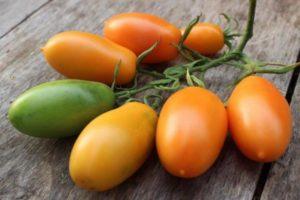
With proper care and good weather, you can expect the first harvest by the end of June or the beginning of July.
Related posts:
 80 Best Eggplant Varieties for Different Regions with Descriptions and Characteristics
 The best eggplant varieties for growing in a polycarbonate greenhouse: planting and care
 Description and characteristics of the best seeds of pea varieties and types
 The best grape varieties for growing in the Urals, planting and care rules in summer
 Description of the Velika grape variety, cultivation and care tips
 Descriptions of the 20 best cherry varieties for the Moscow region, their planting and care
 Description of 30 varieties and types of Muscat grapes, planting, cultivation and care
 The ripening time of grape vines by variety, how to speed up the process, and what to treat the plant with