
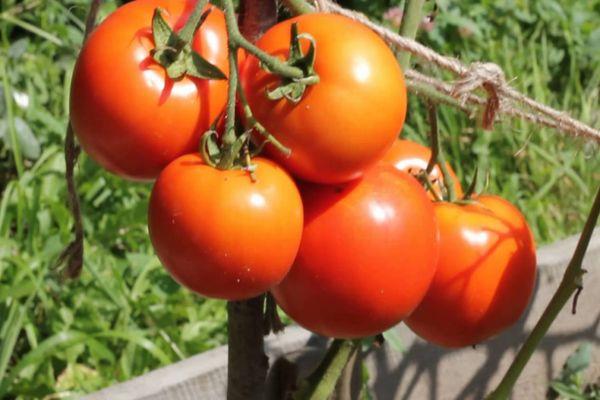
The Cypress tomato often looks like an ornamental plant. However, this variety of tomato, in addition to its remarkable appearance, possesses more important qualities: high yield and excellent taste.
Description of the Cypress tomato
This tomato variety is considered mid-early, as the period between planting seedlings and receiving the first harvest is about 100-105 days.
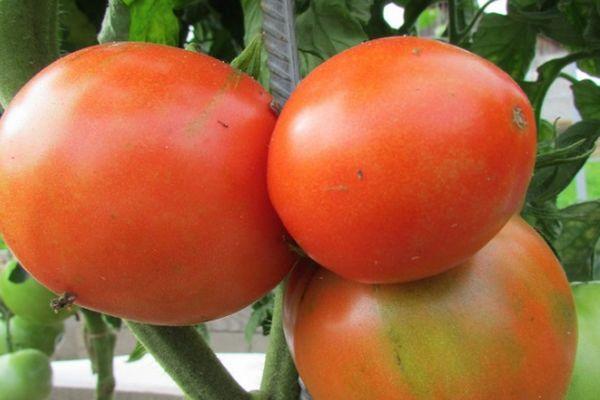
The characteristics and description of the tomato are reduced to the following features:
- the bush is medium-sized, reaching a height of 80-95 cm;
- well adapted not only to unprotected soil, but also to greenhouse shelters;
- has complex resistance to various pests;
- the fruits are not very large, weighing from 85 to 120 g;
- on average 3-4 chambers, about 5% are dry substances;
- With proper care, one bush can yield up to 8 kg;
- The fruits can be harvested earlier than the due date, as they ripen well on their own and are easily stored and transported.
Cypress tomatoes were bred in Russia quite recently. They received state registration in 2013, when they were approved as a variety for open ground and greenhouses. Reviews from those who have tried this variety are almost universally positive. Based on this variety's properties, Cypress tomatoes are best grown in open ground in southern regions, while in temperate climates they should be covered with plastic.
The most favorable climatic conditions for growing this tomato variety are found in the Belgorod, Voronezh, and Astrakhan regions, as well as Crimea and Kuban.
Advantages and disadvantages
Since this tomato variety was recently bred, its description will be updated with newly discovered characteristics. However, its high yield is already among its undeniable advantages. Although this variety is considered low-growing, with a planting density of 3-4 plants per square meter, yields can reach 25 kg.
Take a look Also

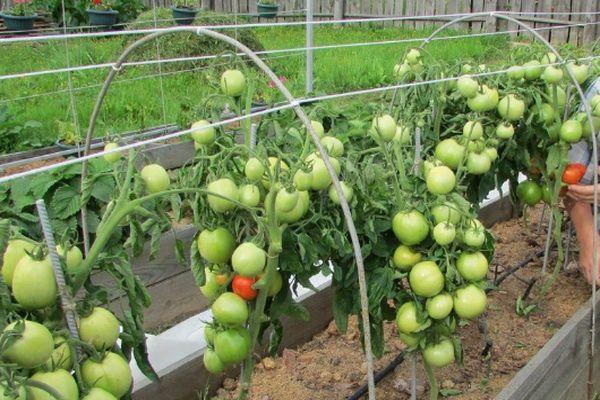
Other undoubted advantages include the fact that the tomato is a fairly strong plant and therefore is less susceptible to diseases, and is tolerant of moisture deficiency.
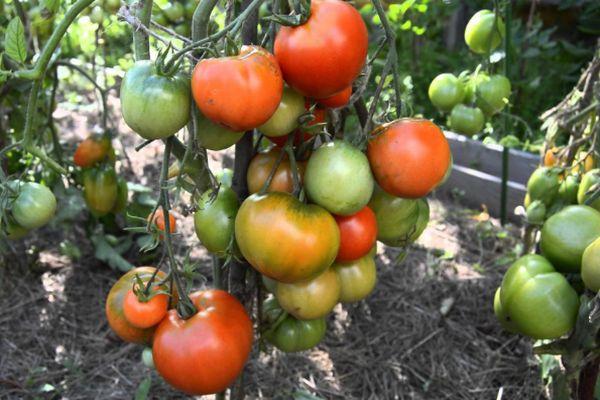
The Cypress tomato's most important advantage is its excellent taste. Thanks to its optimal balance of sugars and acids, this variety has proven itself to be an excellent choice not only for canning but also for barrel pickling.
Diseases and pests
As preventative measures to reduce the risk of disease, it is necessary to carry out timely watering, ventilation of the greenhouse, and application of fertilizers.
In rare cases, tobacco mosaic and brown spot diseases have been detected during cultivation of the Cypress variety.
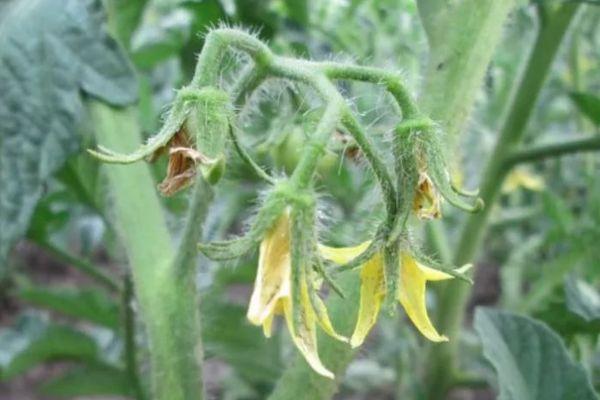
If you're affected by mosaic, cut off all affected shoots and wash the cut areas with a weak solution of potassium permanganate. For brown spot, use "Zaslon" (Barrier) followed by reducing humidity and increasing air circulation.
When growing in a greenhouse, there is a high risk of greenhouse whitefly, which can be controlled with chemicals, including Confidor.
In open ground, the appearance of mole crickets is possible; thorough weeding of the soil and treatment of the insects' habitats with a water-pepper solution will help in the fight against them.
You can get rid of spider mites by washing them off with soapy water.
Despite the fact that the variety is young and not well studied, Cypress tomatoes definitely deserve the attention of gardeners.
Related posts:
 80 Best Eggplant Varieties for Different Regions with Descriptions and Characteristics
 Description of the best varieties of black tomatoes for open ground and greenhouses
 Description and characteristics of the 60 best sea buckthorn varieties, how to choose depending on the region
 Description and characteristics of 45 of the best varieties of garden blueberries
 Description of the 90 best varieties of beans for open ground with names
 Description of 30 varieties and types of Muscat grapes, planting, cultivation and care
 Description and characteristics of the best seeds of pea varieties and types
 Descriptions of the 20 best cherry varieties for the Moscow region, their planting and care
