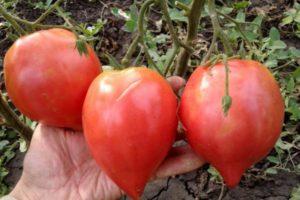
The Mikron NK tomato is designed for indoor propagation. This variety is most often grown in pots on a windowsill. This allows for productive tomatoes, even in winter. This tomato is eaten fresh or added to salads.
Plant characteristics and cultivation
The characteristics and description of the Mikron NK variety are as follows:
- Fruit ripening occurs 100-110 days after sowing the seeds.
- The tomato bushes grow to a height of no more than 10-13 cm. They are resistant to temperature fluctuations and cold. Plant growth is not dependent on daylight hours.
- Tomato fruits are colored red or yellow.
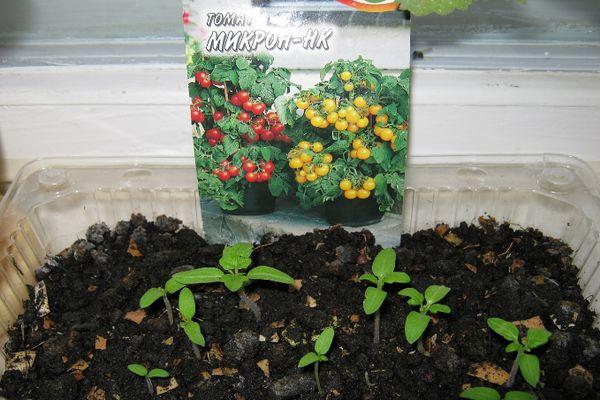
Micron NK tomatoes are grown using seedlings. To do this, select the appropriate soil. Mix and place the following ingredients in pots or other containers (such as boxes):
- Chernozem and compost - 1000 g each.
- Peat - 0.1 kg.
- Fine sand - 200 g.
60-120 minutes before planting, soak the soil in boiling water with potassium permanganate. Place the seeds in the soil at a depth of 15-20 mm. Cover the growing seedlings with plastic wrap for the first 24 hours. After this time, remove the plastic wrap and move the seed container to a well-lit windowsill. The first shoots will appear in approximately 4-5 days.

The room temperature should be between 22 and 25°C during the day. At night, the temperature is maintained at 16 to 17°C.
After the first shoots appear, the room temperature is reduced to +19…+20°C.
It's recommended to ventilate the room occasionally. Maintaining the right humidity level for the seedlings is essential; otherwise, the soil will become overwatered, leading to the development of a disease called "black leg."
How to care for tomato bushes
Growing Mikron NK and getting a good harvest is only possible by following all agricultural technology requirements.

To achieve this, it's recommended to water the plants regularly and on a timely basis. Water the plants twice every 7-8 days. Adjust the amount of water so that the liquid only reaches the soil and doesn't wet the leaves. Once the tomato plants begin to bloom, watering should be temporarily stopped. Resume watering once the ovaries have set. It's recommended to use boiled water, which should be cooled before use. If possible, consider using drip irrigation.

Lighting plays a major role in plant growth. It's best if the windowsill where the tomato plants are placed faces south. In this case, caring for the plants involves periodically rotating the containers 180°. This should be done once every two days.
This procedure is necessary to eliminate stem deformation and ensure uniform growth of the bushes. Since this tomato variety is not sensitive to light, there is no need for artificial light sources (lamps).
Plants should be fed from the moment the seedlings are grown. Seedlings are pricked out after they have developed 1-2 leaves. Approximately 21 days after this, the plants are fed. For this, use a complex fertilizer containing nitrogen, potassium, and phosphorus. If these are not available, it is recommended to use organic fertilizers, such as manure, chicken manure, humus, or peat. Fertilizers should be applied 2 days after watering.

Most often, tomatoes pollinate themselves, but in some cases, the bushes require human assistance. This is achieved by gently shaking the plants. The pollen falls into the air and then settles on the tomato plant, resulting in pollination.
If signs of any disease appear, treat the bushes with Fitosporin. If garden pests are infested, it's recommended to use traditional methods to eliminate them, such as spraying the plant leaves with a soapy solution.
Related posts:
 Characteristics and description of the Sprut tomato variety, yield and cultivation
 Description of the best varieties of black tomatoes for open ground and greenhouses
 Methods for planting and propagating cherries at home
 Description of blight-resistant tomato varieties for open ground and greenhouses
 Description of the best Dutch tomato varieties for greenhouses and open ground
 Growing and caring for hazelnuts in open ground, rules for planting hazelnuts
 Characteristics and description of the Japanese Truffle tomato variety, cultivation
 Description and characteristics of the best indeterminate tomato varieties for greenhouses