
The Yaponka tomato belongs to a group of hybrids intended for greenhouse cultivation. However, many gardeners have learned to grow this plant outdoors. This is not a Japanese tomato variety, as it was first cultivated in the Nizhny Novgorod region. It is eaten fresh and used to make sauces, soups, salads, and juices. Some people preserve Yaponka berries for the winter.
Technical data of the hybrid
The characteristics and description of the Japanese tomato variety are as follows:
- The hybrid's vegetation period from the time of sowing seedlings until harvesting lasts for 110-115 days.
- The height of the plant's bush ranges from 170 to 190 cm when grown outdoors. If grown in a greenhouse, the tomato bush reaches a height of 2-2.2 m. The stems bear a medium number of dark green leaves. The bush itself is quite slender, with little lateral growth.
- The hybrid has a single cluster. It produces 4-5 fruits when grown outdoors. In greenhouses, it produces 7-9 fruits per cluster.
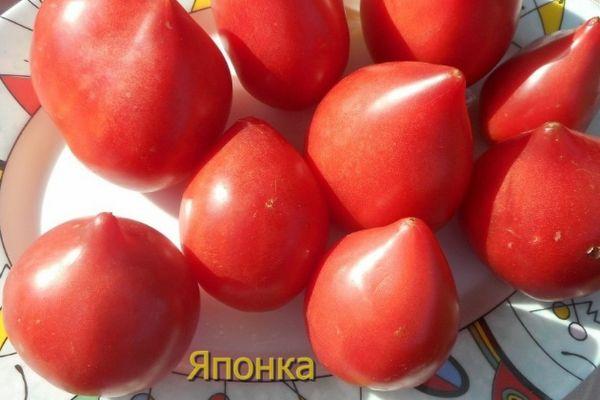
- The shape of the Japanese berry resembles a heart with a pointed tip. The average fruit weight ranges from 0.3 to 0.5 kg. Ripe berries are red with a raspberry tint. They taste sweet due to their high sucrose content.
- Tomatoes have thin but dense skin.
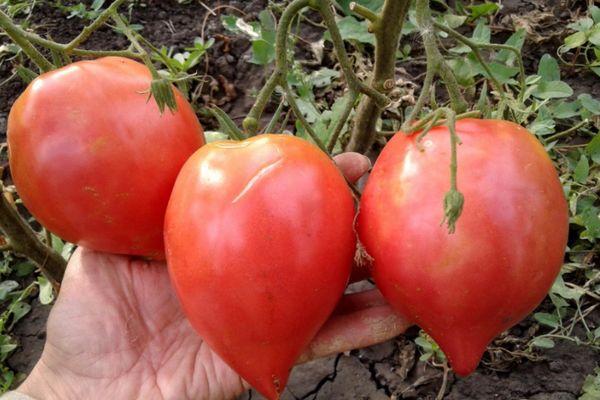
Reviews from farmers growing this hybrid indicate that the variety yields between 3 and 5 kg of berries per bush. Gardeners note that the plant is immune to most nightshade diseases. The resulting fruits can be used to produce seeds for the next harvest, but only if the farmer follows all the proper growing practices.
The hybrid's disadvantages include its high cost and limited availability of seeds, as seed farms do not propagate the seeds. Seeds are only available from collectors.
When growing a hybrid, its bushes are trained into 1-2 stems. Due to the bush's height and the large fruits produced on the branches, the tomato branches may break. To prevent this, the stems are tied to trellises or supports. Another drawback of the hybrid is the need to remove side shoots.
Japanese japonica is grown outdoors only in southern Russia. In the central and northern regions, the hybrid is grown in greenhouses and hotbeds. The plant is quite easy to grow, so even a novice gardener can reap a bountiful harvest.
Obtaining seedlings
Planting of seeds in special soil is carried out after February 15th. The planting material is treated with aloe juice to disinfect the seeds from fungi and bacteria. The seeds should be soaked in the juice for at least 15 hours. Do not rinse the seeds before planting them in the soil.
The soil should be loosened and slightly moist. The seeds are planted 20 mm deep. It is advisable to sow the seeds in individual pots. Water the seeds with warm water and then cover them with plastic wrap. The first shoots appear in 5-7 days.
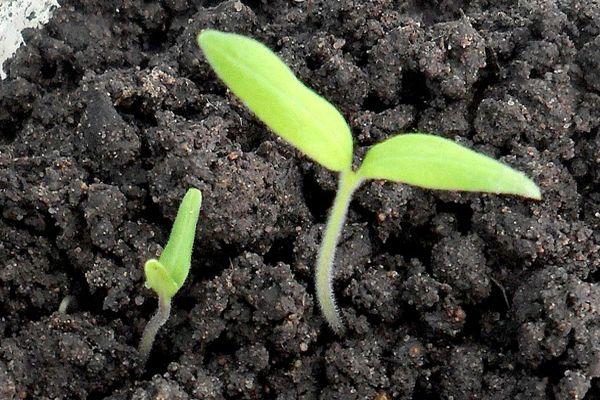
After this, the container with the seedlings is placed under fluorescent lamps, and the room temperature is maintained at +14…+16°C. Seven to nine days after the sprouts emerge, the temperature is increased by 4-5°C.
The soil under the seedlings should be moistened with warm water as it dries. Fertilize the plants 2-3 times using mineral fertilizers. When the seedlings are 2 months old, they are transplanted to their permanent location in the greenhouse. The planting ratio is 3-4 seedlings per 1 m² of bed.
Caring for growing bushes
To maintain the desired humidity and temperature in the greenhouse, it is ventilated daily. To improve root aeration, the soil in the beds is mulched or raked. This process accelerates plant growth and eliminates the risk of fungal diseases.
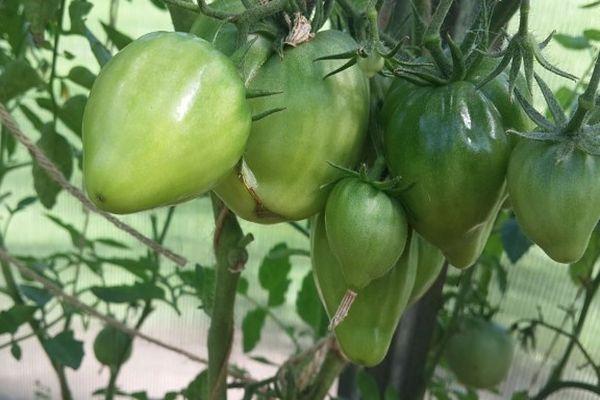
Water the tomatoes as the soil dries out. If the weather is hot, increase the frequency of watering. For spraying, use warm, sun-settled water. It is best to water early in the morning before the sun rises.

Fertilize growing tomato plants once every 15 days. Use mineral and organic fertilizers. Before flowering, apply mixtures containing a high amount of nitrogen. After flowers appear, increase the potassium content. When the first fruits appear on the tomato plants, feed them with fertilizers containing a high proportion of phosphorus and potassium.
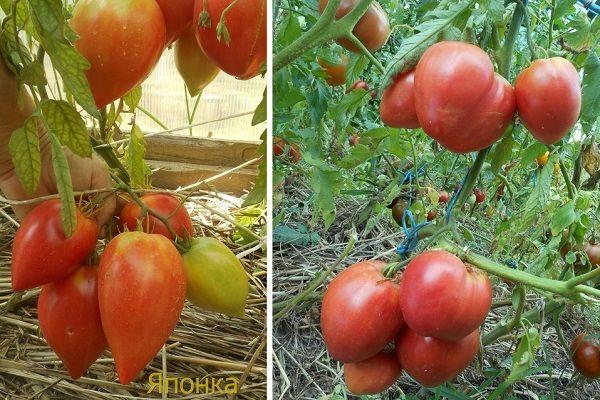
Stepchildren are removed weekly. When fruits begin to form on the cluster, all leaves should be removed. The tops of the bushes are pinched off in July or August.
Weed the beds every 14-15 days. This procedure eliminates the risk of diseases transmitted from weeds to crops.
Related posts:
 Description of the Krasotka grape variety, planting and care technology
 Description of the Julian grape variety, planting and care instructions
 Description of the hybrid tomato Vladimir f1, growing seedlings and caring for bushes
 When and how to properly transplant tomato seedlings, the best days in 2025
 35 Best Powdery Mildew-Resistant Cucumber Varieties with Descriptions
 Description of the Elematis Pink Fantasy variety and pruning group, planting and care
 Description and pruning group of clematis Ernest Markham, planting and care of the hybrid
 Characteristics and description of the Sprut tomato variety, yield and cultivation