
Lovers of unusually colored vegetables will definitely love the Superexotic tomato: this variety is classified as bicolor. Despite its unconventional coloring, these tomatoes were developed by a Russian amateur breeder. They are adapted to central Russia, can be grown in greenhouses and plastic shelters, and are suitable for open-field cultivation.
General characteristics of the plant
The Superexotic tomato variety is classified as an indeterminate plant. This means the stems continue to grow until the end of the growing season. The plants continue to form new clusters with ovaries until autumn, providing gardeners with a bountiful harvest of delicious and healthy vegetables.
Plants show maximum productivity when trained into 2-3 stems. This prevents the bush from becoming dense, and the additional stems produce full-fledged clusters of fruit. In a greenhouse, it's more convenient to train the plant into a single stem, tying it to a trellis. In open ground, a trellis support can be used to support multiple tomato stems.
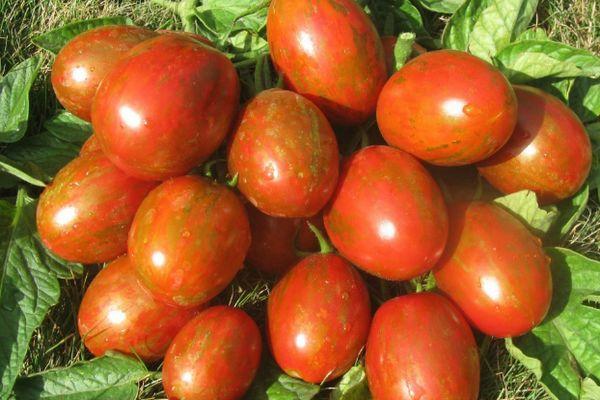
The description of the Superexotic variety highlights the multi-celled nature of its clusters. Each cluster can produce up to 20 identical, medium-sized tomatoes. The fruit weighs approximately 80 g, but due to the large number of tomatoes and the ability to produce 4-5 clusters per season, the total yield per bush, with proper care, can reach 5 kg or more. A yield of 15-20 kg of marketable produce can be obtained per unit of area.
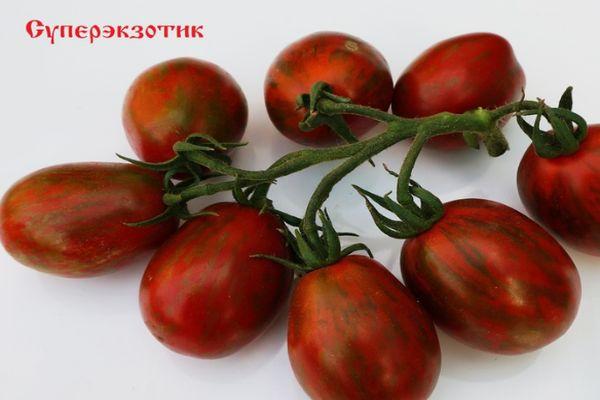
Another advantage of this variety is its relatively early ripening. When grown in a greenhouse using seedlings, the first ripe tomatoes can be harvested as early as early July. In open ground, tomatoes begin to ripen 100-120 days after germination.
Exotic fruits
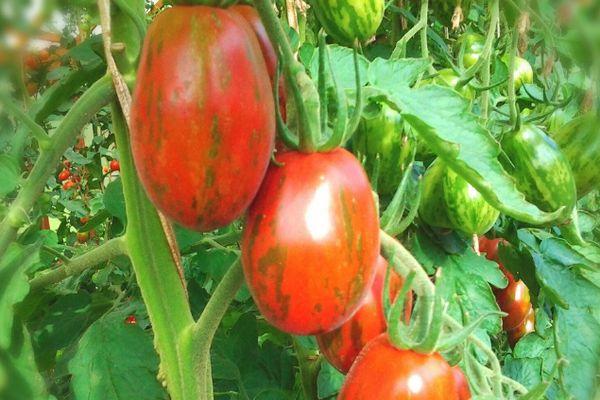
The amateur variety Superexotic is distinguished not only by its abundant fruit production. The color of ripe tomatoes is incredibly decorative: the overall dark red background is beautifully complemented by wide stripes of dark green. Unripe fruits are lighter and darker shades of green.
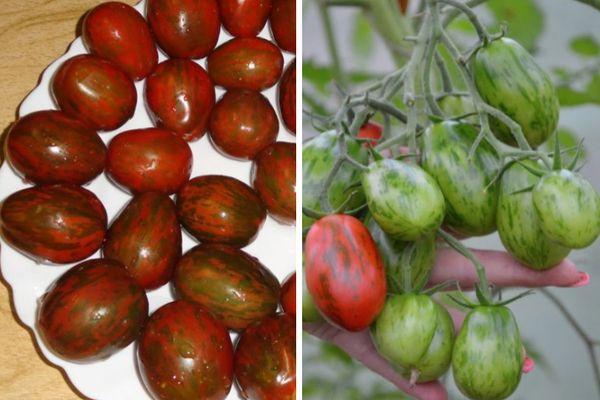
Tomato skin is thick and durable, resisting cracking during ripening and ripening, even in unstable weather and frequent hot and rainy days. It keeps tomatoes intact during cooking and canning. Tomatoes are easy to transport and stay fresh for a long time at temperatures around 10°C.
The flesh is quite dense and intensely red. The fruit contains two seed chambers and is juicy. The tomatoes have a high sugar content, giving them a sweet, dessert-like flavor. When grown outdoors in cool summers, they develop a slight tartness.
Striped tomatoes are versatile. They look decorative in salads and sliced. They can be used to make exquisite appetizers, and this exotic variety will also enhance a holiday table. But they are especially suitable for winter preserves. These small, decorative tomatoes with a dense striped skin will decorate jars of mixed vegetables and look impressive when served.
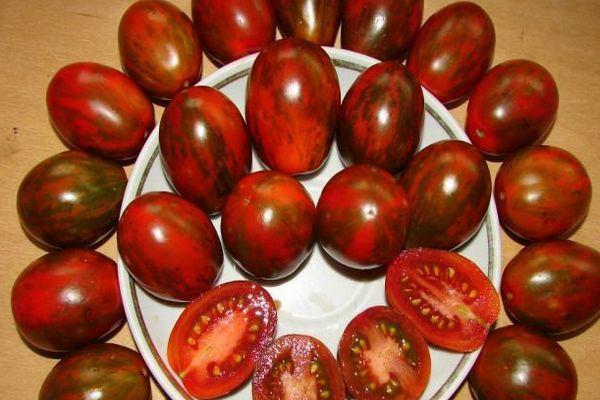
The intense color of the pulp, its distinctive sweetness, and its rich aroma make these tomatoes ideal for processing into juice or sauces. The small fruits are also ideal for drying.
How to grow an exotic tomato?
Growing striped tomatoes isn't particularly difficult, but the sweetest tomatoes can only be grown in a sunny spot. To ensure good seedlings, sow tomatoes no earlier than 60-70 days before transplanting them to the greenhouse. The soil should be made up of one part garden soil and one part sand.
Before sowing, it's advisable to disinfect the soil by generously watering it with a hot solution of potassium permanganate right in the seed tray. You can sow as soon as the soil has cooled.
Spread the seeds on moist soil and sprinkle dry sand (0.5 cm) on top. Cover the box with glass and place in a warm place (+25°C). Under these conditions, the first shoots will appear in 4-5 days.
When the tomatoes develop 1-2 true leaves, transplant the seedlings into individual pots. Water the Super Exotic tomatoes whenever the top 1-2 cm of soil dries out.
Transplanting to the greenhouse occurs around mid-May. Plants are spaced 4 per square meter if they are being trained into a single stem. When grown outdoors, the bush is trained into 2-3 stems, so planting is less frequent, with 3 plants per square meter. Staking can be done when the first flower cluster appears.
During the tomato planting season, feed the plants with a complex mineral fertilizer designed specifically for tomatoes (Kemira, Signor Pomidor, and others). These mixtures contain a well-balanced blend of all the nutrients the plant needs. You cannot fertilize tomatoes with fresh organic fertilizers (infusion of mullein, bird droppings).
Related posts:
 What is the best way to feed tomato seedlings to make them plump?
 Description of the best varieties of black tomatoes for open ground and greenhouses
 What varieties of tomatoes are best to plant in a polycarbonate greenhouse?
 What fertilizers and when to use for feeding tomatoes in a greenhouse
 Which tomato varieties are best for open ground?
 Description of the best tomato varieties for open ground in the central zone
 What is the best way to mulch tomatoes in open ground and greenhouses?
 The best eggplant varieties for growing in a polycarbonate greenhouse: planting and care