
The Japanese Crab tomato, whose characteristics and variety description indicate its ability to be grown in any conditions, is included in the State Register of Breeding Achievements. The fruits have excellent flavor characteristics and are versatile in culinary applications.
Advantages of the variety
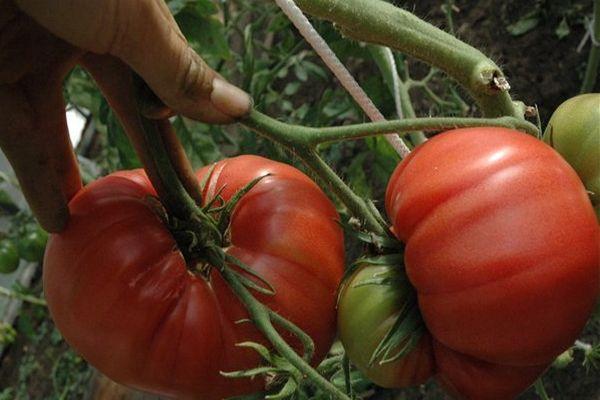
Japanese Crab tomatoes, described as having a mid-season ripening period, are suitable for both indoor and outdoor cultivation. Indeterminate bushes reach a height of 150-180 cm during the growing season, producing up to six clusters.
Tomatoes have medium-sized, light green leaves and simple inflorescences. They require pruning and tying to a support structure. Vegetable growers report that the best results are achieved when growing a single or double stem plant.
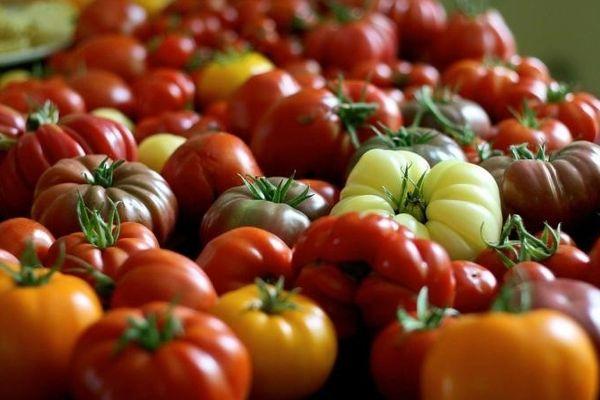
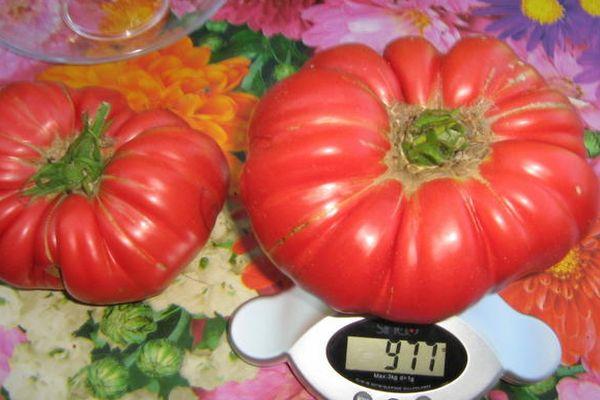
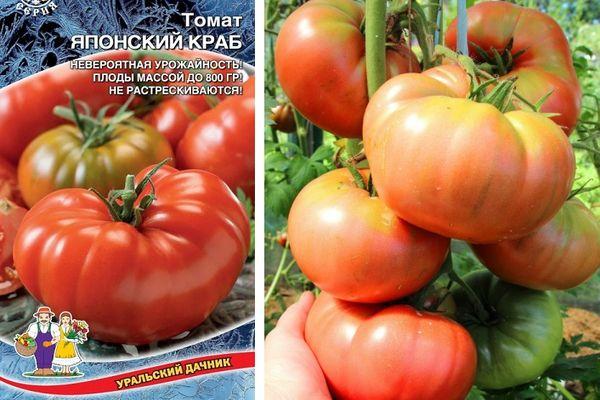
The fruits are flat and round, with plump shoulders and noticeable ribbing near the stem. These tomatoes have a loose texture and excellent flavor. When cut horizontally, more than seven seed chambers are visible.
The fleshy, juicy fruits weigh up to 300-400 g. At the biological ripeness stage, the tomatoes are green with a dark green spot near the stem. As they ripen, they acquire an intense pink color with a raspberry tint.
Gardeners' reviews point to the versatile nature of these tomatoes. They are used in salads, juices, sauces, and purees. Pink tomatoes are good for fresh consumption and can be included in a diet.
The main advantage of this variety is its stable yield and long fruiting period. Tomato yields reach up to 11 kg per square meter. The Japanese Crab tomato is resistant to tobacco mosaic virus, blossom-end rot, and root rot.
Agricultural technology for cultivating tomatoes
Japanese Crab tomatoes are grown from seedlings. Seeds are sown 60-65 days before the expected planting date. A substrate or specially prepared soil mixture is used for planting.
Before planting, the seeds are treated with an aqueous solution of hydrogen peroxide or aloe vera juice. To increase germination and promote healthy seedlings, the seeds are additionally soaked in a growth stimulant.
Fill the containers with soil, compact it lightly, make furrows, and spread the seeds. Top with a layer of peat moss. Use a sieve to ensure even distribution.

After planting, water with warm water using a sprinkler, and cover the container with plastic wrap or glass until the sprouts emerge. Proper seedling development is ensured by following the growing instructions.
During the seedling formation period, periodic fertilization with mineral fertilizers is applied. It's important to monitor soil moisture levels. As the surface layer dries, water the plants. Ensure they maintain the optimal air temperature necessary for normal development.
Gardeners' reviews indicate the need to transplant when two true leaves form. This stimulates root growth and allows for the removal of weak seedlings.
When choosing a site for tomatoes, consider crop rotation. The best predecessors for tomatoes are carrots, onions, parsley, and cabbage. The planting site should be well-drained and have moderately moist soil.
Although the variety isn't picky about soil composition, it thrives in loose, nutrient-rich soils. Best results are achieved in loamy soils with good moisture permeability.
Tomatoes can be planted in both open and protected soil, observing the planting dates. Vegetable growers' reviews indicate that it's not a good idea to plant too densely. It is recommended to place up to 4 bushes per 1 m² at a distance of 40-50 cm from each other.
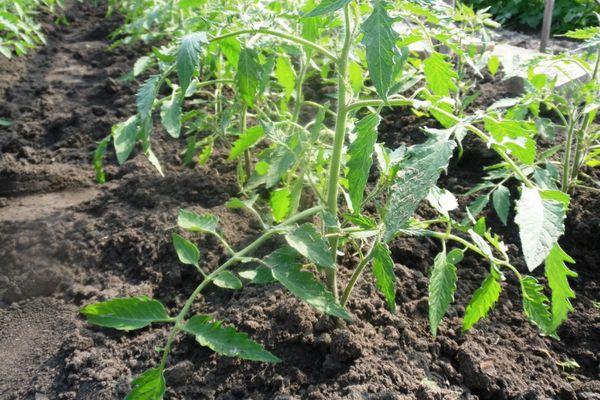
Care for the crop involves timely watering. It is recommended to apply water at the roots. Mulching is used to ensure drip irrigation, even moisture distribution, and prevent the surface soil from drying out.
Black fiber can be used as mulch. Organic materials (straw, hay, leaves) provide additional nutrition for plants.
At all stages of tomato development, mineral fertilizers with complex preparations are required. The amount of nitrogen, potassium, and phosphorus is adjusted depending on soil quality and the needs of the crop.
A tall bush is formed by carefully removing excess shoots. It is recommended to remove side shoots in the morning, removing no more than 3-4 stems. To prevent infection, this procedure is performed manually, wearing gloves.
The plant is tied to a support. With proper cultivation practices, the bushes are less susceptible to various diseases, including late blight. The Japanese Crab tomato variety, with its crab-claw-like fruits, produces a high yield when properly cared for.
Related posts:
 Description of the best varieties of black tomatoes for open ground and greenhouses
 The best eggplant varieties for growing in a polycarbonate greenhouse: planting and care
 What varieties of tomatoes are best to plant in a polycarbonate greenhouse?
 Favorable planting days for tomatoes in March 2025, when is the best time to sow
 Description of the best tomato varieties for open ground in the central zone
 When and how to properly transplant tomato seedlings, the best days in 2025
 Characteristics and description of the Bull's Heart tomato variety, yield and cultivation
 Growing and caring for tomatoes in a greenhouse from planting to harvest