
The Andreevsky Surprise tomato belongs to a group of hybrids grown outdoors in southern Russia. For tomato cultivation in the central and northern regions of the country, breeders recommend using plastic-covered greenhouses or hotbeds. These tomatoes are used for summer salads, pasta, ketchup, juice, and canning for the winter.
Technical data of the plant
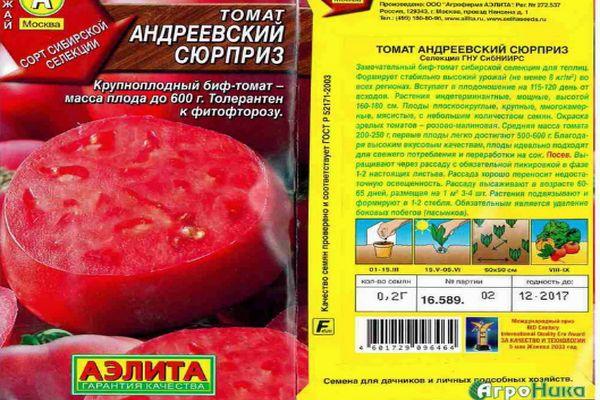
The characteristics and description of the Andreevsky Surprise tomato variety are as follows:
- The tomato produces a harvest 125-130 days after planting the seeds.
- The bush height ranges from 180-200 cm. Breeders recommend tying the stems to supports, otherwise the branches may be damaged by the weight of the ripening fruit.
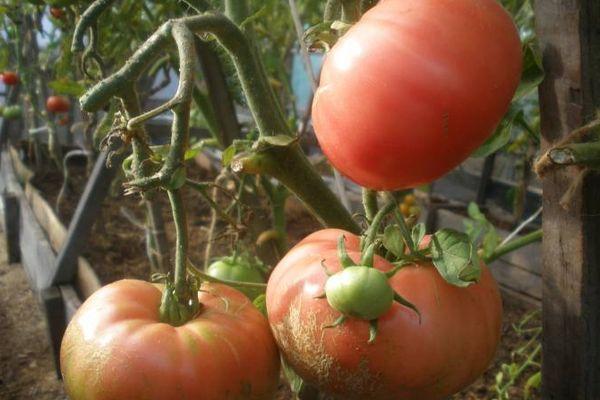
- Description of the berries. The tomatoes are spherical in shape with small protruding ribs. Ripe tomatoes are raspberry and pink in color.
- Fruit weight ranges from 300 to 600 g. Farmer reviews indicate that greenhouse complexes can produce berries weighing up to 0.8 kg.
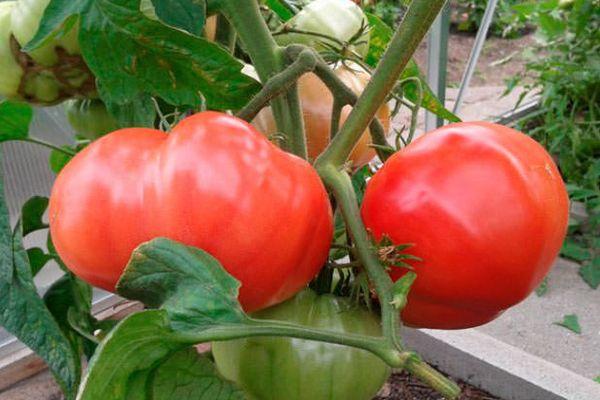
The hybrid yields between 5 and 8 kg of fruit per square meter of garden bed. Commercial cultivation of this variety has shown that the plant is resistant to late blight. The bushes do not require intense light, so the seedlings grow well even in low-light conditions.
Experts recommend training the bush into 1 or 2 stems. The fruits may crack under mechanical stress, so the hybrid can only be transported over short distances.
How to grow seedlings yourself?
Seeds are planted in boxes with special soil at the end of March. The soil is prepared 14 days before sowing. If store-bought soil is unavailable, make it from a mixture of humus, soil, and sand. The prepared soil is disinfected with a strong solution of potassium permanganate and then filled into suitable containers.
Before planting, treat the seeds with potassium permanganate or aloe vera juice. Moisten the soil thoroughly, then sow the seeds in trays to a depth of 20 mm.
Place the container in a warm place and cover with plastic wrap. If the soil becomes dry, moisten it with a watering can or spray bottle.
The first sprouts will appear in 4 days. They require virtually no additional lighting. Place the seedling trays on a windowsill. Once 1-2 leaves appear, transplant the seedlings.
The day before this procedure, it is recommended to water the bushes generously. Then, the seedlings, along with the soil clumps, are transplanted into individual pots. Their diameter should not exceed 10 cm.
To eliminate the risk of fungal infection, seedlings are treated with a weak solution of potassium permanganate.
Fertilize the seedlings 7-10 days after transplanting, then repeat once a week. Use manure or herbal infusions as fertilizer.
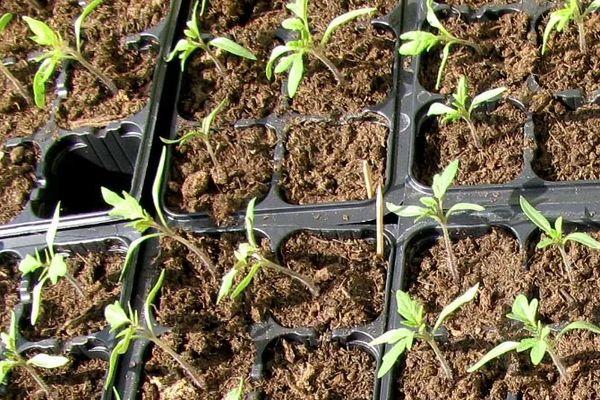
When the seedlings are 60 days old, they are hardened off and then transplanted into permanent beds.
The soil in the greenhouse should be well-warmed. Add manure, then cover the fertilizer with a 16- to 18-cm layer of soil. Add a layer of wood ash between the soil and manure. The planting pattern for young plants in the greenhouse is 0.6 x 0.4 m. Transplanting is done in cloudy weather in the evening.
Before this, it is recommended to install strong supports (stakes) to which the plants should be tied after planting in the ground.
Caring for growing bushes
To obtain the maximum harvest, it is necessary to carry out all agricultural measures correctly and in a timely manner.
Regular watering is done twice a week in the evening or early morning. To achieve this, the bushes are watered moderately with water that has been left to stand in the sun. In the greenhouse, ventilation is performed periodically to regulate humidity and temperature.
As the bushes grow, side shoots are regularly removed. To prevent the plant from growing too tall, breeders recommend pinching off the top.
Fertilize with mineral fertilizers at least three times per season. Initially, enrich the soil with organic and nitrogen mixtures. As ovaries develop on the vines, the tomato plants should begin receiving potassium fertilizers. When fruits begin to develop on the stems, the hybrid is fed with complex mixtures containing phosphorus and potassium.
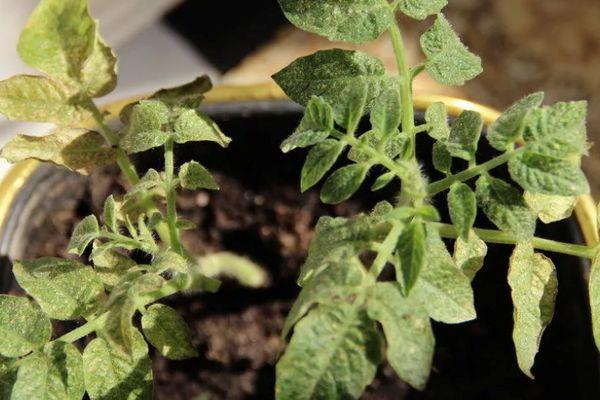
To combat diseases, preventative spraying of the bushes with medicinal preparations is carried out. If the infection does affect the leaves and stems of the hybrid, the infected bushes are destroyed, and healthy tomatoes are treated with copper sulfate.
It's important to loosen the soil in the beds regularly (once a week). This procedure will boost the plants' immunity. Weeding the beds eliminates the risk of parasitic damage to the hybrid's root system. Garden pests (Colorado potato beetles and others) are controlled with industrially produced chemical pesticides.
Related posts:
 The best eggplant varieties for growing in a polycarbonate greenhouse: planting and care
 Methods for planting and propagating cherries at home
 Is it possible to soak treated cucumber seeds before planting and how to do it correctly?
 The best grape varieties for growing in the Urals, planting and care rules in summer
 Causes and treatment of eggplant pests and diseases, how to combat them at home
 Growing and caring for hazelnuts in open ground, rules for planting hazelnuts
 Top 40 DIY New Year's Baking Recipes for 2020
 The health benefits and contraindications of black currants