
The Ursa Major tomato is often confused with others bearing similar names (such as the Siberian Bear). These varieties have similar characteristics; they all belong to the giant group—large-fruited varieties. However, only the Ursa Major stands out for its record-breaking individual fruit weight, reaching 1.5 kg.
Description of fruits
Five to seven ovaries form on a cluster. The first fruits are larger, often 1.5 to 2 times larger than the rest. They are often the heaviest. The remaining tomatoes average 500 to 800 g.
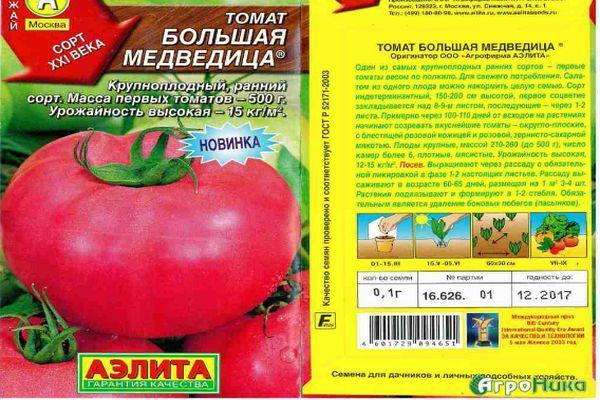
The fruit is round and slightly flattened. According to reviews and photos, Big Dipper tomatoes have slight ribbing around the perimeter and more pronounced ribbing near the stem. The skin is thick and shiny, but may crack in humid summers.
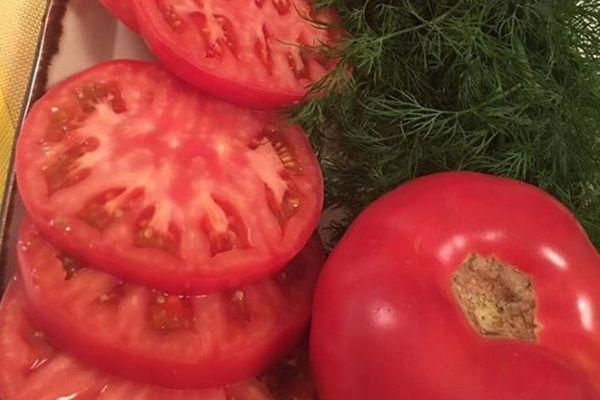
The flesh is pink and grainy. There are numerous, but small, seed chambers. Overall, the fruit can be described as fleshy.
The flavor profile of Ursa Major tomatoes makes them indispensable for summer salads. The grainy flesh has a sweet flavor with a subtle tartness. The tomato aroma is subtle.
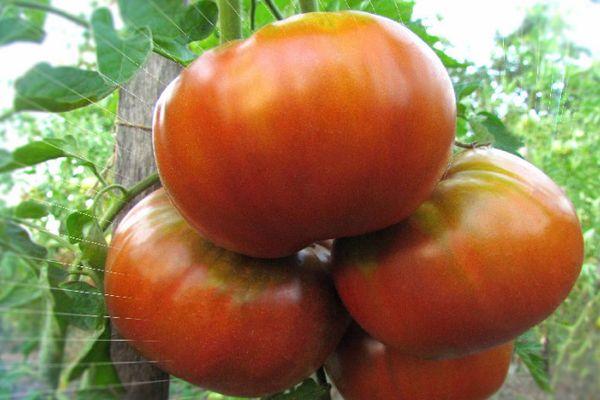
Due to their large size and weight, the fruits are not suitable for whole canning. However, when making juice or puree, Ursa Major tomatoes are very useful: their high sugar content imparts a wonderful flavor to preserves.
Characteristics of the variety
The general characteristics and description of the variety give reason to classify the Big Dipper as an indeterminate tomato—a variety with unlimited growth height.
Description:
- Big Dipper tomatoes can reach a height of 2-2.2 m when grown indoors.
- In open ridges they grow up to 1.5-1.7 m.
- The bushes are formed into 2 stems to obtain a higher yield.
- Stepchildren must be removed in a timely manner, not allowing them to grow more than 5 cm.
When growing Ursa Major, it's important to provide the heavy bushes with reliable support. Even in open ground, a wire trellis is most convenient: it securely holds the combined weight of the stems and leaves, as well as the ripening fruit.
- During the season, the plant produces up to 8 clusters, each of which consists of 5-6 fruits.
- The total yield per plant can be around 15 kg. During cold, rainy summers, when grown outdoors, the yield may decrease significantly.
- Another drawback of this variety is its susceptibility to late blight. In unfavorable years, the fungus attacks the bushes, as well as the fruits harvested for ripening.

In mid-August, it's recommended to stop stem growth and the formation of new clusters. During the remainder of the season, the fruits that set in the last tiers should have time to fill out and reach waxy ripeness. If they don't reach this stage, the grower risks producing a large amount of waste during artificial ripening.
Agricultural technology for seedlings
To successfully grow seedlings, soak the seeds in a pink solution of potassium permanganate for 1-1.5 hours. This antiseptic treatment will protect the seedlings from fungal rot and preserve most of the seedlings. After disinfection, the seeds can be lightly dried on a napkin and then spread over the surface of the moist soil in the box. They should be covered with dry soil or sand.
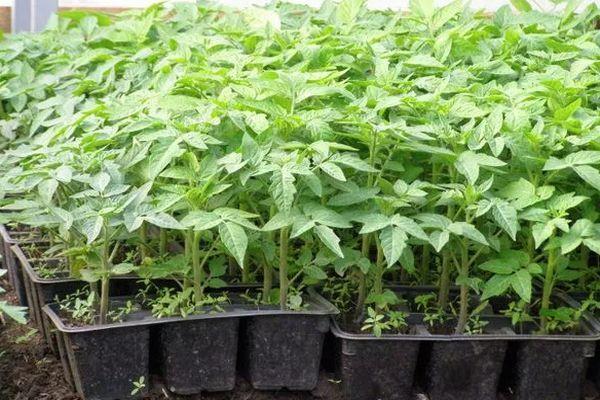
To retain moisture, cover the container with glass. However, when the first shoots appear, remove the cover to prevent the sprouts from rotting. It's not recommended to lower the air temperature when growing seedlings: the optimal temperature for tomatoes is around 200°C. Overcooling can trigger the growth of fungal spores and black leg disease in seedlings.
The "Big Dipper" variety is undemanding in terms of light conditions during the seedling growth period. The seedlings barely stretch, but it's advisable to provide the young plants with sufficient light and artificially extend daylight hours to 10 hours per day. This will ensure strong, low-growing plants that will begin to grow soon after planting. Transplanting into a greenhouse is done in mid-May, and into the open ground after the last spring frosts.
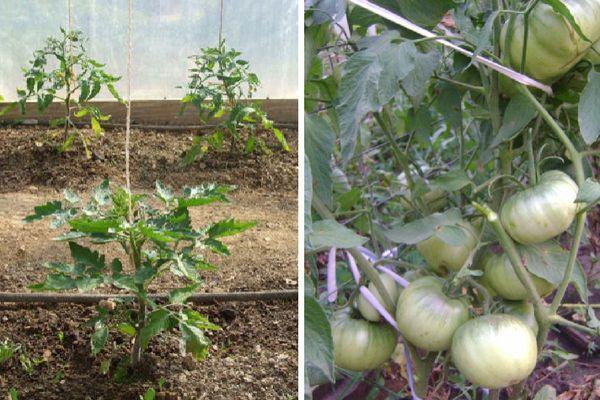
The first fruit clusters begin to form above the 8th leaf, and then develop every 2-3 tiers. When inflorescences begin to form, apply a complex fertilizer with a high phosphorus and potassium content (Signor Tomato or another).
For indoor plants, proper watering during fruit growth is important: overwatering and excessive drying will cause the fruit to crack. It's best to water tomatoes so that the soil remains consistently moist. To achieve this, monitor the top layer of soil for moisture and water when the soil becomes dry, to a depth of 2-3 cm.
Take a look Also
Related posts:
 The best eggplant varieties for growing in a polycarbonate greenhouse: planting and care
 Description of the Big Mommy tomato variety, growing and care recommendations
 Methods for planting and propagating cherries at home
 The best grape varieties for growing in the Urals, planting and care rules in summer
 Descriptions of the 20 best cherry varieties for the Moscow region, their planting and care
 The best and most productive tomato varieties for greenhouse cultivation in the Urals, with descriptions
 The health benefits and contraindications of black currants
 How to control carrot flies with medications and folk remedies
Giant tomatoes require additional feeding. Seedlings of this crop simply force the gardener to take such steps, as the fruits will eventually draw a lot of energy from the bushes. It wouldn't hurt to use a growth activator. BioGrowIts advantage is its fast action.