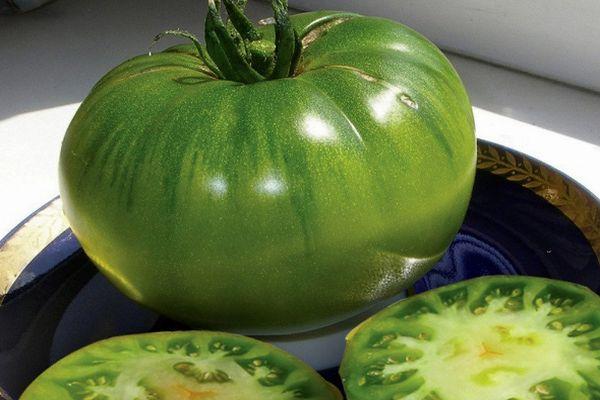
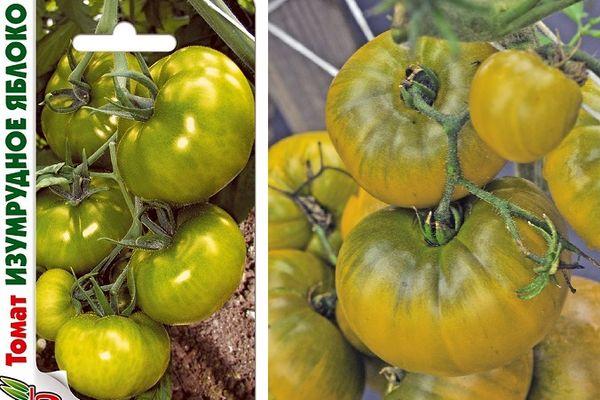
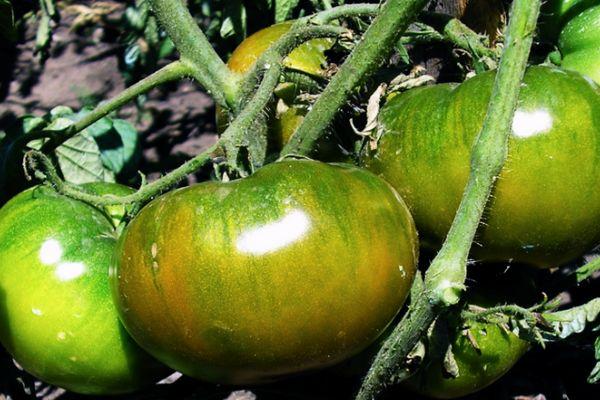
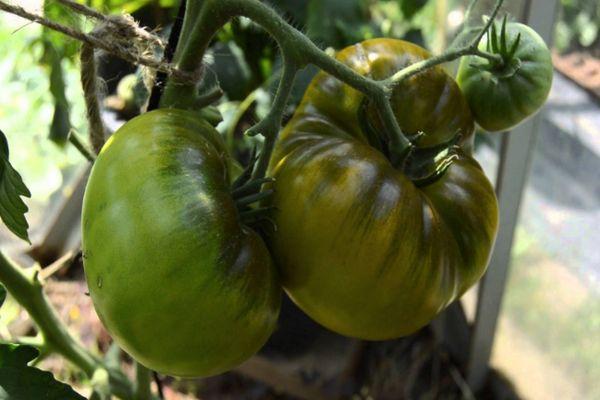
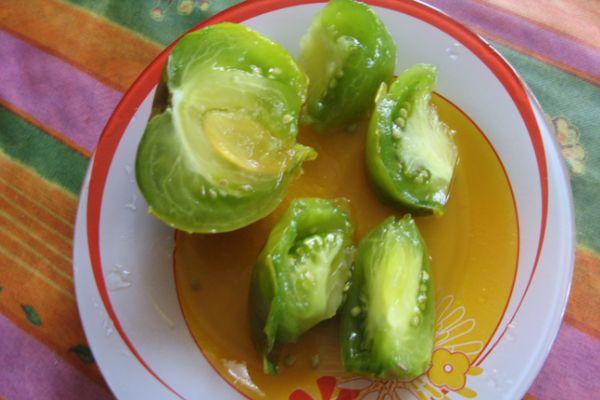
The Emerald Apple tomato produces green fruits. This hybrid is used for diabetics and children. In addition to its basic green color, the Emerald tomato can also have lemon and bronze shades.
Characteristics of the variety
The characteristics and description of the Emerald Apple tomato variety are as follows:
- The vegetation period of the plant from seedlings to full-fledged fruits lasts 115-120 days.
- The Emerald tomato variety grows to a height of 130-150 cm. The plant is quite vigorous and green due to the numerous leaves on the stem. It is recommended to remove excess shoots, otherwise you can lose up to 40% of the harvest.
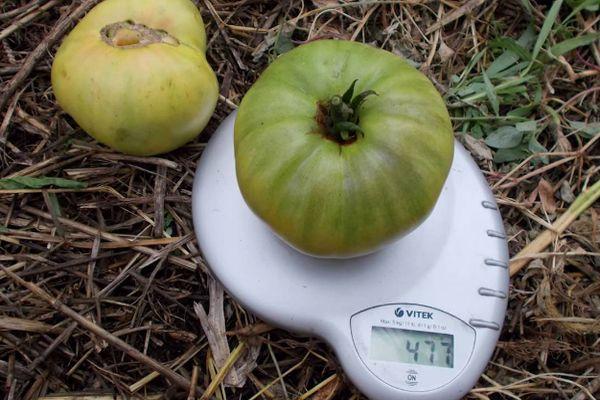
- Fruit description: The tomato is shaped like a laterally flattened sphere. It weighs 0.2-0.25 kg. Small ribs can be seen on the side surface.
According to reviews from farmers who have planted this variety, the hybrid yield is 8-10 kg of fruit per plant per season.
Open-field cultivation is common in southern Russia. In the central and northern regions of the country, the hybrid is grown in greenhouses and hotbeds. This tomato variety is transported over medium distances. The fruits can be stored in cold storage for 15 days.
Planting seeds for seedlings
After acquiring the seed stock, it is treated with a weak solution of potassium permanganate or hydrogen peroxide. One experienced gardener writes: "I grow seedlings in light but nutritious soil. Its acidity should be neutral." A mixture of turf and humus works well for planting seeds. The soil is prepared by mixing the components in equal parts. Some farmers add river sand or vermiculite to the mixture.
Before planting, treat the seeds with germination enhancers. Keep the seeds in a growth stimulator for 24-48 hours. Plant the seeds at a depth of 15-20 mm. Water them with warm water using a spray bottle. This ensures even soil moisture and eliminates the risk of the seeds being washed away by the stream of water.
Cover the seedling tray with glass or transparent film. Wait for the sprouts to emerge. Once sprouts appear (after 5-7 days), move the trays to direct sunlight or fluorescent lamps.
It is recommended to maintain a room temperature of at least 16–17°C. When the apple tomato seedlings have produced 1–2 leaves, they are pricked out. The seedlings are distributed into individual containers, each 8–10 cm in diameter. The young shoots are fertilized with complex mixtures containing nitrogen, phosphorus, and potassium.
Before transplanting seedlings into permanent soil, it is recommended to harden them off for 7-12 days. It is best to transplant plants into soil that has been well-warmed by sunlight.
Before transplanting, loosen the bed, add organic fertilizer, and disinfect the soil with potassium permanganate. Seedlings are planted in trenches 7-8 cm deep. The planting pattern is 0.5 x 0.5 m.
Plant care and pest control
This tomato plant should be watered three times a week with warm water that has been left to stand in the sun. The amount of water should be adjusted depending on the air temperature. This watering should be done before sunrise or after sunset.
When planting tomatoes in the ground, it's recommended to immediately tie them to a sturdy support or vertical trellis. If any leaves are too low, they should be removed from the bush. Shoots are continually removed until only 2-3 stems remain. These are the strongest and most developed plants, which will produce ovaries and fruit.
Top dressing with organic and complex fertilizers is done at least three times per season. Initially, more nitrogen-rich mixtures are used to promote accelerated bush growth. Then, when ovaries appear, the tomato plants are switched to potassium-rich fertilizers. Complex fertilizers are used during fruit formation.
Loosening the beds strengthens the immunity of plants due to the flow of additional oxygen to the roots. Weeding helps reduce the risk of late blight infestation.
To prevent diseases, it is recommended to treat plants with medicinal preparations that eliminate the risk of fungal and bacterial growth. Late blight poses a major threat.
Fruits become spotted under its influence. Copper-containing medications are used to alleviate the symptoms. A folk remedy for the disease is spraying the bushes with copper sulfate.
This variety is often attacked by garden pests. They are controlled with products that poison not only adult insects but also their larvae. Medicinal solutions are applied to the leaves and stems of the plants. Root parasites are controlled by adding ground ash to the soil in the garden bed. This substance also repels slugs.
Related posts:
 Description of the best varieties of black tomatoes for open ground and greenhouses
 Description of the best tomato varieties for pickling and canning
 Description of blight-resistant tomato varieties for open ground and greenhouses
 Characteristics and description of pepper-shaped tomato varieties, yield and cultivation
 Characteristics and description of the Sprut tomato variety, yield and cultivation
 Description of the best Dutch tomato varieties for greenhouses and open ground
 Description and characteristics of the Klusha tomato variety, yield and cultivation
 Description and characteristics of non-stepsoning tomato varieties for open ground and greenhouses