
The "Fleshy Sugary" tomato, whose characteristics and description highlight its main advantages, is distinguished by its consistent fruiting. This tomato, bred by Russian agrobiologists, holds a leading position in the market due to its high productivity, flavor, and ease of care.
Advantages of the variety
The "Myasisty Sakharisty" (Fleshy Sugary) tomato is a standard, indeterminate variety. This mid-early ripening variety begins bearing fruit 90-105 days after seeding.
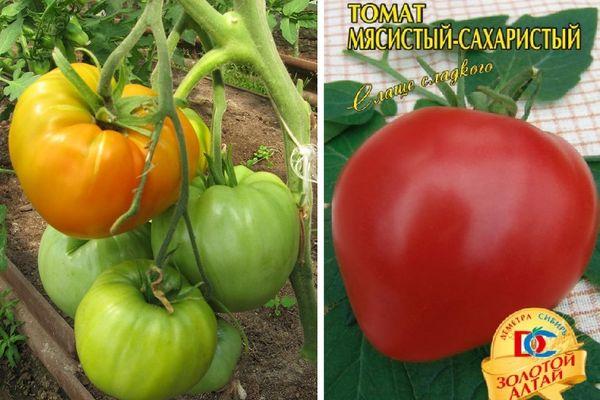
This tall plant is suitable for cultivation in both protected and open ground conditions. Vegetable growers' reviews indicate the plant's cold tolerance, making it suitable for growing in central and northern regions. This tomato is distinguished by:
- consistently high yields;
- resistance to sudden changes in temperature, air humidity, and drought;
- adaptation to stressful growth conditions;
- the ability to set fruit in low light conditions.
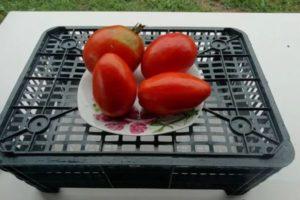
The tomatoes are round, slightly elongated, and heart-shaped. They have a sweet flavor, a glossy surface, and a vibrant crimson color. They have an intense, pleasant aroma and sweet flesh.
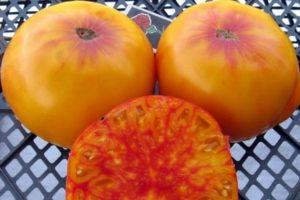
A horizontal section reveals a small number of seeds located in 6-7 chambers. Tomatoes contain 5% dry matter. Fruit weight is 230-300 g.

The first berries can weigh up to 800 g. With proper agricultural practices, 10-12 kg of fruit can be harvested per square meter. For open ground, this figure is around 8-10 kg.
This juicy tomato is used fresh in cooking, making juice, puree, paste, ketchup, and drying. Due to its large size, it is difficult to preserve whole.
Among the advantages of the Myasisty Sakharisty variety are its high resistance to nightshade diseases and biological pests. These tomatoes store well and withstand long-distance transportation.

Agricultural technology for tomato cultivation
This tomato variety is grown from seedlings. Sow the seeds for seedlings in March, 60-65 days before planting. To do this, pour the prepared soil into individual containers, lightly compact it, and moisten with warm water.
Before planting, treat the seeds with an aqueous solution of potassium permanganate and a growth stimulant. After placing the seeds in containers to a depth of 1 cm, cover them with plastic wrap until loops appear.
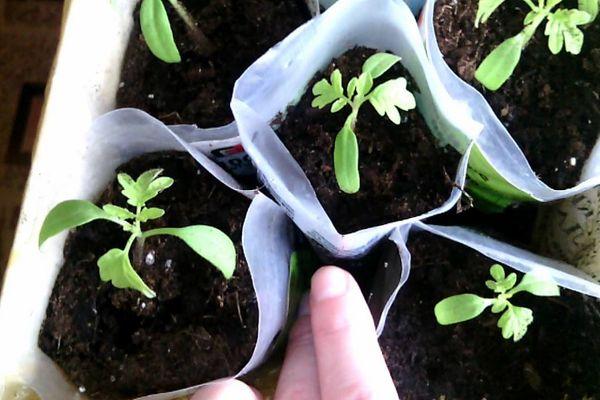
During cultivation, plants need optimal lighting and air temperature. To ensure normal seedling development, periodic fertilization with complex nutrient-rich fertilizers is recommended.
When one or two true leaves have formed, transplanting is performed. This procedure allows us to weed out weak plants and encourages the development of a strong root system.
Before planting in the ground, seedlings need to be hardened off in the open air. To do this, pots with seedlings are placed outside, gradually increasing the time spent there from 30 minutes to several hours. Hardening off helps the plant adapt more easily to the new growing conditions.

Planting in a permanent location occurs when 6-7 true leaves and one flower cluster have formed. Plants are spaced 30 cm apart, with 50 cm between rows.
To grow a delicious sugar tomato, you need to follow the cultivar's proper cultivation practices. The bushes require periodic soil loosening, hilling, and watering.
To evenly distribute moisture and prevent the surface soil from drying out, mulching with black fiber is recommended. Using organic materials as mulch provides additional nutrition for plants.
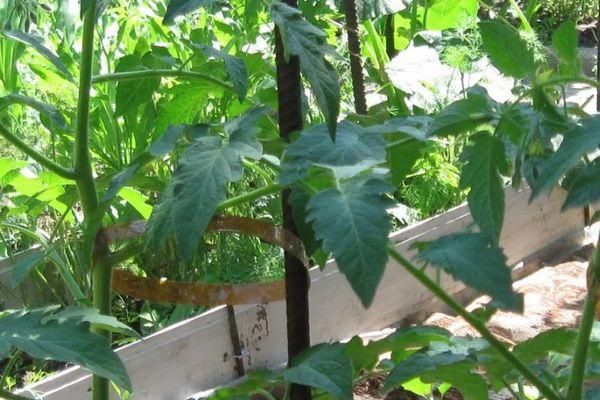
By applying localized fertilizers to the plant's roots, the quantitative composition of mineral ingredients is regulated. At different stages of development, the crop requires potassium, nitrogen, and phosphorus.
The deficiency of boron and magnesium is replenished by adding special preparations. Despite the plant's resistance to many diseases, the variety can be susceptible to black spot.
When signs of disease appear, treat the bushes with fungicides and reduce moisture. During this period, reduce fertilizing with nitrogen-containing mixtures.
The fight against biological pests involves the use of traditional methods and treatment with special preparations.
Related posts:
 Description of the best tomato varieties for pickling and canning
 Description of the best varieties of black tomatoes for open ground and greenhouses
 Description of blight-resistant tomato varieties for open ground and greenhouses
 Description and characteristics of the best indeterminate tomato varieties for greenhouses
 Characteristics and description of pepper-shaped tomato varieties, yield and cultivation
 Description of the best Dutch tomato varieties for greenhouses and open ground
 Description of the best tomato varieties for open ground and greenhouses in the Krasnodar region
 Description and characteristics of non-stepsoning tomato varieties for open ground and greenhouses
I've been planting this variety for several years now. It's very good for both salads and canning, and it's disease-resistant. But I've noticed that the harvest is much better when I use BioGrow, growth is much better and resistance to diseases!