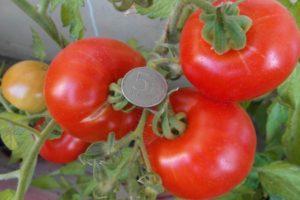
The Red Sugar tomato contains a large amount of various types of sugar (mono- and polysaccharides), carotene, and lycopene. These substances strengthen nails and hair, destroy tumor cells, and boost the human immune system. The fruit itself is gentle on the mucous membranes of the mouth, as the appearance and taste of this tomato variety resembles a tart watermelon. It's not available in stores, but you can grow it yourself in your own garden. This tomato is listed in the State Register of Vegetable Crops of Russia.
Technical data of the plant and its fruits
The characteristics and description of the variety are as follows:
- From planting seedlings in the ground until the first fruits are obtained, it takes 110-115 days.
- The bushes of this plant stretch to 140-150 cm.
- The stems produce a medium number of leaves. They have large, green-colored blades.
- Sakhar tomatoes differ from other tomato varieties in that they bear fruit over a prolonged period. This allows gardeners who don't visit their plot regularly to harvest once or twice a week.
- On each brush, of which there are 2 to 4 on the stem, 4-5 fruits appear.
- The weight of the berries ranges from 80 to 100 g. The Sugar tomato has juicy pulp, in which the grain structure is clearly visible.
- The fruits are spherical in shape.
- Consumers note a sweet taste in all varieties of the described cultivar.
- The skin of tomatoes is thin, and there are few seeds inside the fruit.
Breeders created the entire range of these tomatoes for fresh consumption. However, farmers and gardeners have learned to make tomato paste from these tomatoes and preserve them for the winter. There's even a technology for producing high-quality juice from these berries at home.
Farmers' reviews of this type of tomato show that with proper plant care and timely implementation of all agricultural practices, 6-7 kg of ripe fruit can be obtained from each 1 m² bed.
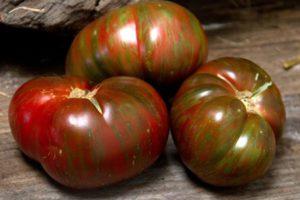
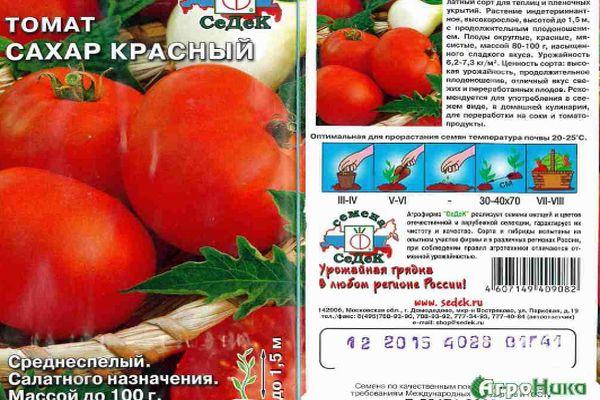
Tomatoes can be grown outdoors in southern Russia. In central Russia, unheated plastic greenhouses are recommended for growing these tomatoes. In Siberia and the Far North, heated greenhouses are recommended.
How to grow red sugar in your garden
Tomato development is influenced by light exposure, air temperature, humidity, and soil. To ensure sweet fruits, it's essential to strictly follow all recommendations from agrobiologists. This variety of tomato is best grown from seedlings.
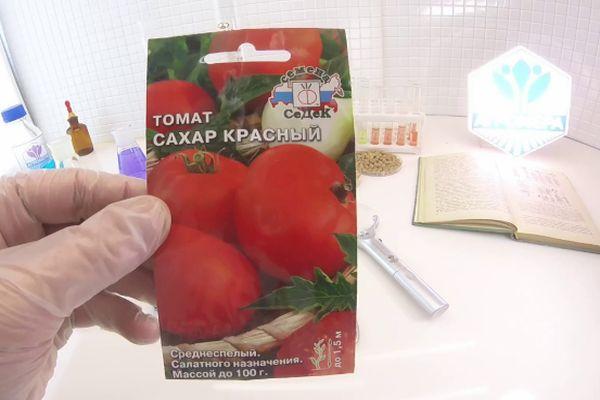
To obtain this, seeds are purchased from seed farms, treated with potassium permanganate, and then sown in individual pots. After the seeds sprout loops, which occurs within 10 days, the pots with the seedlings should be placed on a cool, well-lit windowsill.
It is recommended to provide seedlings with 15-16 hours of daylight. After two leaves appear on each shoot, they are pricked out, cutting deep to the cotyledons. Before planting in permanent soil, the seedlings are hardened off and ventilated. The seedlings are transplanted into an unheated greenhouse in the first ten days of March. This process may be delayed by spring frosts.
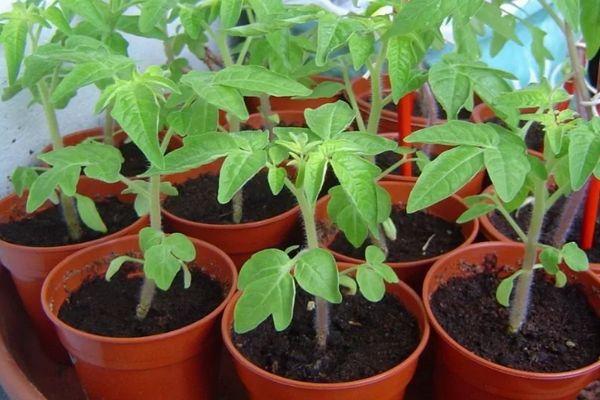
Before planting the seedlings, apply a complex fertilizer to the soil. Avoid overwatering the soil when watering, as this will reduce the yield by 40%. On the first day, protect the seedlings from sunlight.
It's recommended to ventilate the greenhouse regularly. Otherwise, the pollen will become sterilized and the harvest will be lost. The bushes are trained into two stems.
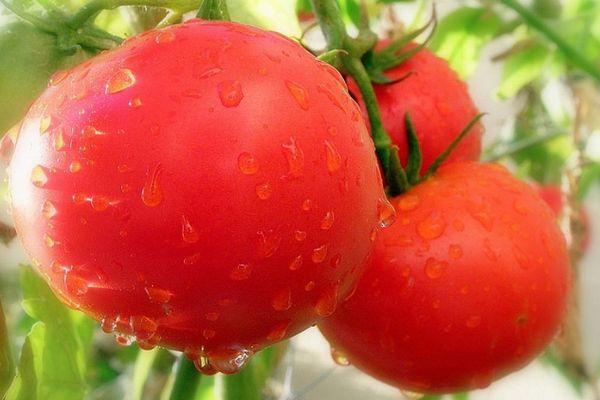
Breeders recommend using the drip irrigation method. Remove old leaves from the bushes daily, and remove side shoots from the stems. Since the bushes are quite tall, they are tied to sturdy supports. Plants are protected from pests using appropriate preparations. With timely ventilation of the greenhouse, tomatoes of this variety are practically disease-free.
Related posts:
 Description of blight-resistant tomato varieties for open ground and greenhouses
 Rules for growing tomatoes in open ground, choosing a variety, planting and care
 Description of the best Dutch tomato varieties for greenhouses and open ground
 Description of the best varieties of black tomatoes for open ground and greenhouses
 Description of the best tomato varieties for pickling and canning
 Description and characteristics of the best indeterminate tomato varieties for greenhouses
 Description and characteristics of the Klusha tomato variety, yield and cultivation
 Why potatoes aren't growing well in the garden, and what to do to ensure a bountiful harvest