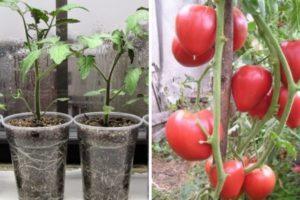
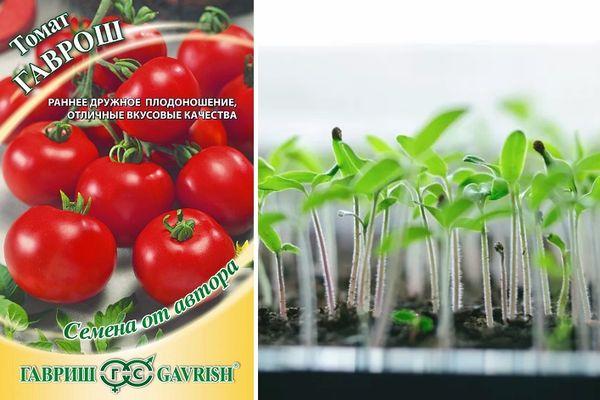
Tomato Gavrosh is recommended by breeders for cultivation in open ground; the characteristics and description of the variety were entered into the State Register of Russia in 1997.
Some information about the plant
Characteristics and description of tomato:
- Fruit appears 82-84 days after planting the seedlings in the ground. Early ripening results in uniform fruiting, allowing for a quick harvest.
- The height of the bush reaches 0.45-0.5 m, so to grow tomatoes there is no need to tie its branches to trellises or supports.
- Gavroche's inflorescence is of the intermediate type and simple. The first ovary appears above the 6th or 7th leaf, and all the others develop after 1-2 leaves.
- The peduncle on tomatoes of the type described has an articulation.
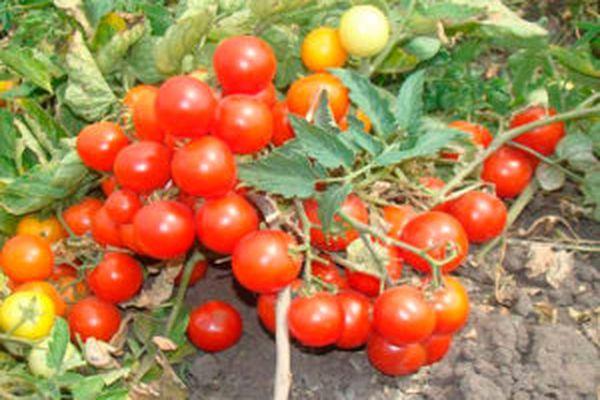
- The fruits are spherical in shape and red in color. The surface of this ball is smooth.
- The berries weigh from 40 to 50 g. Inside the pulp there are 2 or 3 seed nests.
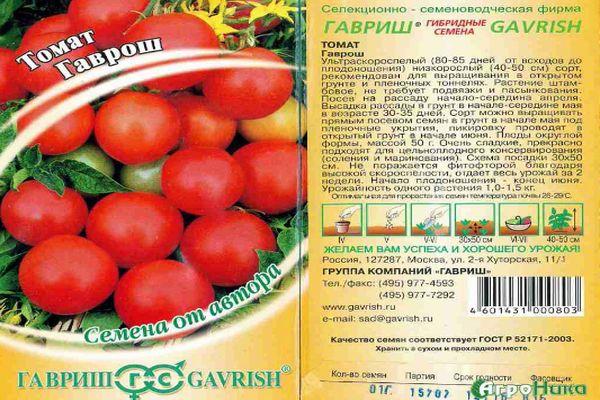
Reviews from farmers growing this variety indicate yields of 1,500-1,800 grams per bush. Gardeners note that Gavroche is relatively resistant to the tobacco mosaic virus. Yields decline sharply if gardeners fail to carry out preventative measures to prevent cladosporiosis.
You can increase your yield by following all the experts' recommendations. Although the plant is intended for open-air cultivation, some gardeners have grown it in greenhouses. This has increased yields by 20-30%.
This variety thrives best in open ground in southern Russia. In the central part of Russia, the Far North, and Siberia, it's recommended to plant seedlings in well-heated greenhouses.
Growing tomatoes in your own backyard
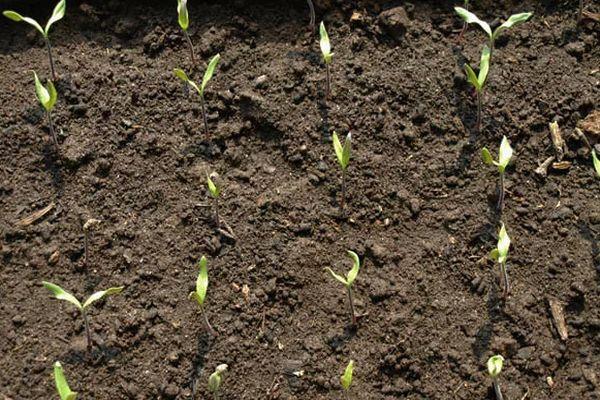
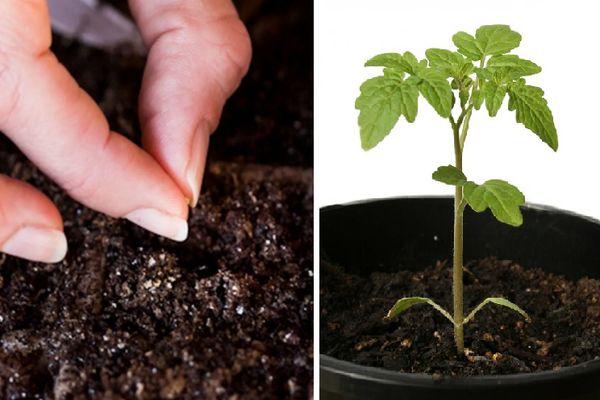
Seeds for seedlings are sown in boxes filled with tomato soil. The seeds are planted 15-20 mm deep. The sprouts, which emerge after 5-8 days, should be fed with organic fertilizer (manure). Once the seedlings have developed 1-2 leaves, they are pricked out.
After 45 days, the seedlings are transferred to permanent soil. Before this, the plants are hardened off for a week. Before planting, the soil is loosened, and humus and nitrogen fertilizer are added. Due to the small stature of the tomato plants, staking is not necessary, but any excess shoots should be removed. The planting pattern is 0.5 x 0.5 m.
Watering should be done early in the morning or after sunset. Use warm, settled water. This procedure should be performed once or twice a week.
To prevent tomato plant diseases, weeding is recommended at least 1-2 times a week. Loosen the soil every 10 days.
Timely completion of all procedures ensures the bushes receive the necessary oxygen flow to the root system, serves as a barrier to the occurrence of tomato diseases, and helps get rid of parasites on tomato roots.
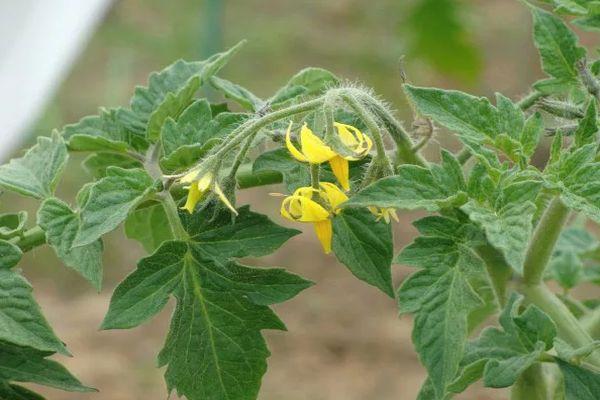
Plants are fertilized three times per season. Initially, nitrogen and organic fertilizers are used; after flowering, the bushes are switched to potassium-rich mixtures. When the first fruits appear, gardeners should feed the tomato plants with complex fertilizers.
If plants show signs of a fungal or bacterial infection, the affected plants should be destroyed before the disease spreads to other tomato varieties. Then, treat the leaves and stems of healthy plants with medicinal preparations.
If garden pests appear on your bushes, it's recommended to eliminate them using folk remedies or chemical pesticides. Root parasites and slugs can be eliminated by adding ground ash to the soil beneath the bushes.
Related posts:
 The best grape varieties for growing in the Urals, planting and care rules in summer
 The best eggplant varieties for growing in a polycarbonate greenhouse: planting and care
 How to propagate and grow peas, cultivation technology, and care in open ground
 Description of the best varieties of black tomatoes for open ground and greenhouses
 When and how to properly transplant tomato seedlings, the best days in 2025
 Description and characteristics of the best seeds of pea varieties and types
 What varieties of tomatoes are best to plant in a polycarbonate greenhouse?
 Description of varieties of sowing peas and cultivation, to which family they belong