
The Cascade tomato is a mid-season variety, ripening in about four months. It's an indeterminate plant, with stems reaching up to 1.5 meters at their peak, requiring support when growing. Furthermore, despite its height, the roots and stems are quite strong, allowing for single plantings. The variety produces a good yield of up to 25 fruits per bush.
What is the Cascade tomato?
Characteristics and description of the variety:
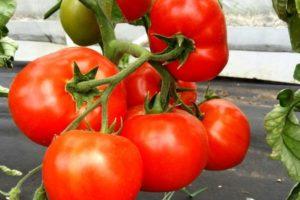
- The color of Cascade fruits is deep red, they are smooth and soft to the touch.
- The dense skin protects tomatoes from external damage.
- According to numerous reviews from summer residents and gardeners, the taste of the Cascade fruits is much sweeter than other varieties and slightly sour.
- It can be used fresh, added to various dishes, or for canning.
- The plant is quite unpretentious, making it well resistant to diseases and poor climatic conditions.
- It is not recommended to plant tomatoes too close to each other so that the bushes have enough space.
- They don't require any special care, just remember to water and loosen the soil.
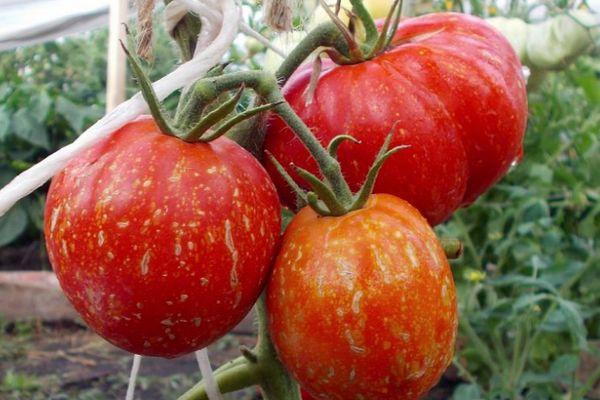
Two months after planting, the first fruits begin to ripen. With proper care, a single bush can yield up to 19-23 fruits, each weighing approximately 60 g—a total of about 3 kg.
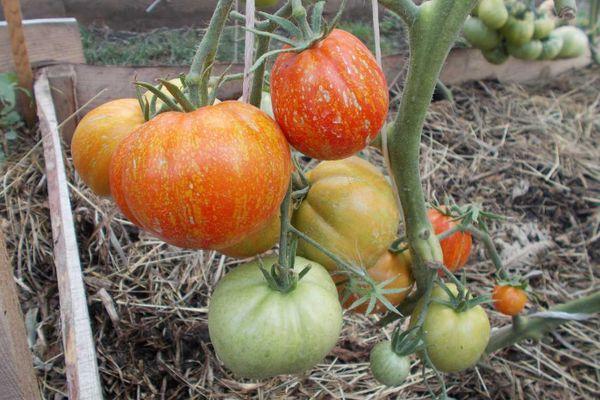
There's another variety of this tomato—the Cascade Lava. This variety produces yellow fruits. Otherwise, it has the same characteristics as the Cascade.
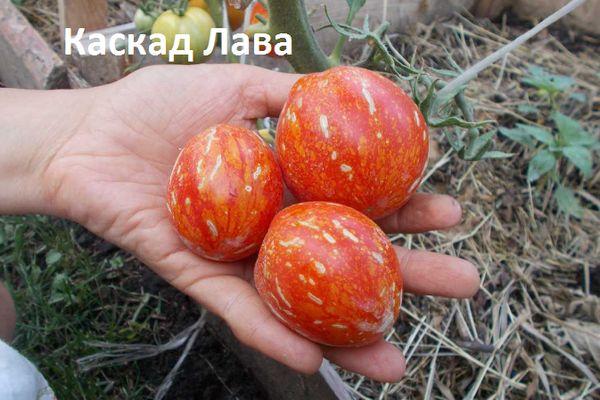
Gardeners' reviews of this variety are positive. Cascade tomatoes are a very popular variety, thanks to their many advantages and few drawbacks. Despite their tall stature, if the bush is tied up, caring for them is straightforward. Among their advantages are:
- A rich harvest.
- The variety is suitable for both open and greenhouse cultivation.
- Amazing taste of fruits and variety of uses.
- The variety is unpretentious in cultivation.
- Beautiful appearance and correct shape of fruits.

How are tomatoes grown?
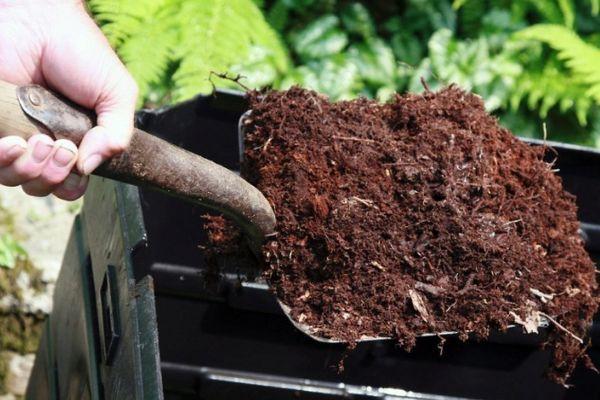
To ensure a good harvest, simply follow a few recommendations. You'll need to prepare the soil in advance, sow the seeds on time, and then plant the seedlings. The soil for this variety should be well-loosened to ensure adequate nitrogen supply. Sandy loam soil is preferred. Prepare the soil in the fall and again immediately before planting.
The soil should be dug up and fertilized with various minerals:
- Humus.
- Ash.
- Wood sawdust.
- Mineral fertilizers.
Seeds should be sown around mid-March. Before planting, it's advisable to treat the seeds with immune preparations to protect them from various nightshade diseases. There's also a way to test for so-called "empty seeds": fill a container with water and immerse the seeds in it. Any seeds that float to the surface can be discarded.
You can also use specialized products to speed up growth. Seeds are planted in boxes with pre-cleaned and fertilized soil.
Make furrows 0.5-1 cm deep in the soil and sow the seeds. Water the soil before and after planting. To speed up germination, it is recommended to cover the seedlings with plastic wrap. Remove the covering after sprouts appear. Before planting, harden off the seedlings by taking them outside during daylight hours. The containers should have holes in the bottom to allow for good air circulation. Otherwise, the seedlings may rot.
Two months after planting the seeds, the grown and strengthened seedlings can be planted outdoors. Gardeners recommend planting the seedlings after the sprouts have developed six leaves. This timeframe is typically early June, when warm weather has stabilized.
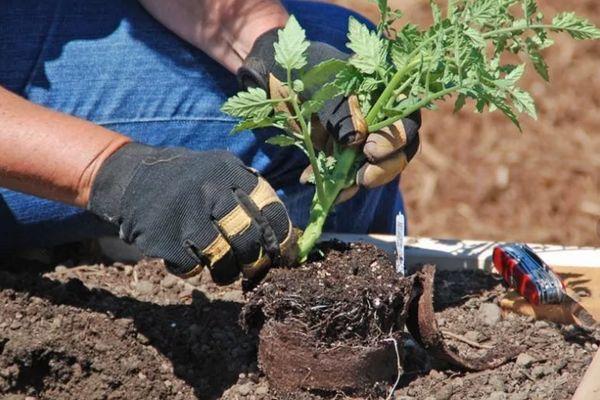
In greenhouses, planting occurs a little earlier—in the second half of May. To transplant seedlings, first dig a hole, fill it with water and fertilize it, then lower the seedling into the hole, about halfway up the stem. Then, fill the hole with soil and water again. Transplantation should be done in warm weather, otherwise the seedlings will get sick.
Each tomato variety requires specific care. Key points include periodic weeding of the beds, pinching out the side shoots, loosening the soil, timely watering, and disease prevention.
Watering should be adjusted based on weather conditions: in dry weather, moisten the holes more, while in rainy weather, reduce or eliminate watering altogether. Water should be taken from prepared reservoirs, where the temperature is warmer than tap water. Weed the beds as weeds grow.
As tomato plants develop, tie them up and, if necessary, transplant them. For additional strength, form the bush from several shoots. Don't forget about fertilization and disease and pest prevention.
Potassium, nitrogen, magnesium, and other compounds are suitable as fertilizers. Special poisons sprayed on the bushes are used against pests and diseases. There are also folk remedies: you can treat the bushes with a decoction of wormwood, dill, or garlic.
Related posts:
 Description and characteristics of small-fruited tomatoes Magic Cascade
 Description of the Bryanochka cherry variety, planting and care instructions
 50 Best Carrot Varieties with Descriptions and Characteristics
 Is it possible to plant carrots in July or at the end of June? What are the best days and care instructions?
 Description of the Red Early apple tree variety, agricultural technology and specific care
 How to propagate and grow peas, cultivation technology, and care in open ground
 The best grape varieties for growing in the Urals, planting and care rules in summer
 How to properly plant peas in a greenhouse and open ground