
Many people plant the crop, but the purposes for growing it vary among summer residents. Tomato Kaspar is recognized by gardeners as the best variety for canning.But it also has positive properties that can only be appreciated after cultivation.
Description of the variety
A variety description will help you better determine the planting location and arrange the plants within the plot. Taking into account all the necessary characteristics, you can achieve the stated yield.
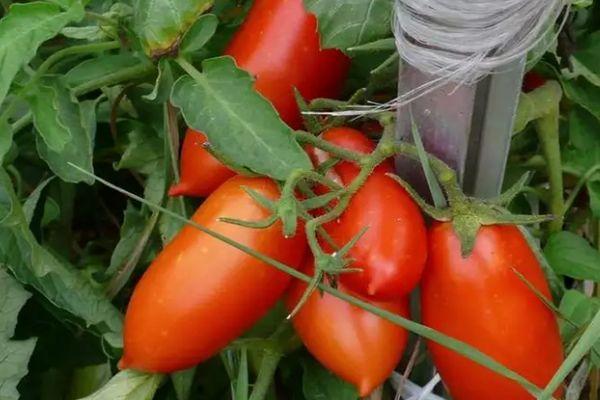
Plant:
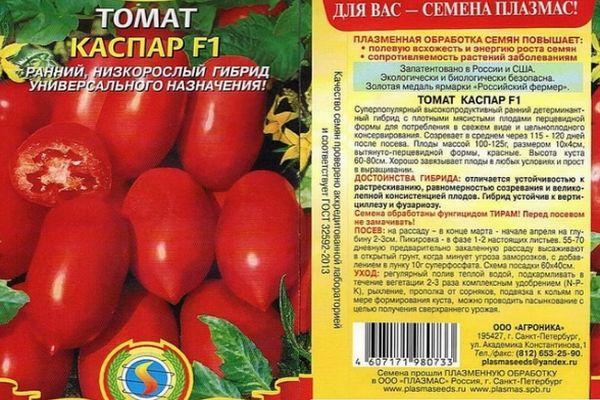
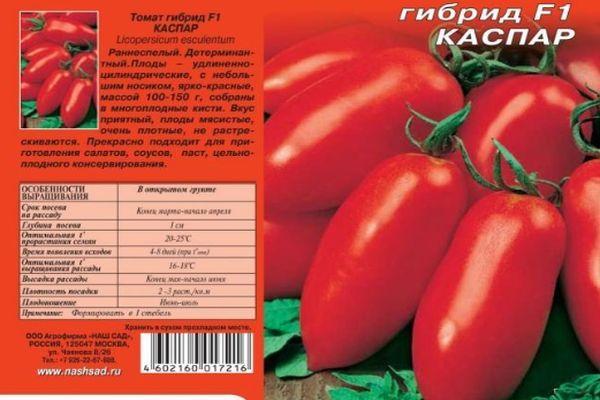
- Early ripening. Tomatoes harvested in greenhouses are ready for consumption at 90 days, and those harvested in open ground at 110-120 days.
- Determinant.
- Height 50-55 cm.
- Compact.
- With a simple inflorescence.
Tomatoes:
- pepper-shaped;
- red color;
- high density;
- excellent taste;
- the skin is dense and peels off easily;
- weight 80-120 g;
- 2-3 chambers;
- can be stored for a long time;
- easily transported.
Thanks to the high density of the pulp, tomatoes do not lose their shape even after the skin is removed.

Growing
Even beginners won't have any trouble planting it. A key feature of this hybrid is that it requires staking, as it produces numerous fruits and the bush bends under their weight.
Growing is done using seedlings. This way, the harvest begins to ripen 2-3 weeks earlier. Seeds are sown two months before the expected transplanting date. Each gardener calculates the timing based on the specific characteristics of the growing region.
Pre-sowing treatment is not necessary, as Kaspar is a hybrid. Plants require care. Strong seedlings are the key to a future harvest.
A specific temperature regime is established in the room. The first 5 days are 15–17°C, and the following days are 20–22°C. The plants require at least 14–16 hours of light to ensure straight stems and prevent them from stretching.

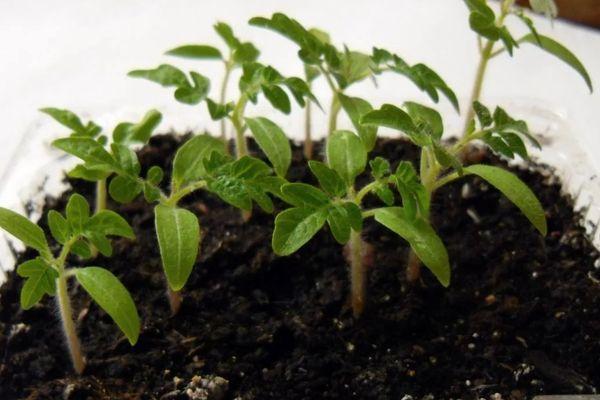
Water as needed, avoiding overwatering or allowing the soil to dry out. When the plants develop two true leaves, transplant the seedlings into individual pots. This encourages the development of a strong root system. Feed the tomatoes with growth stimulants.
10-14 days before planting, tomatoes are hardened off to acclimate them to the growing conditions. To do this, they are placed outside for 10 days, starting with 10-15 minutes and ending with 8-10 hours.
8 plants per 1 m are planted in open ground2.
Care Features
Care is carried out as usual, watering in a timely manner, removing weeds and fertilizing the bushes.
This tomato variety is popular with gardeners with limited growing space. They produce a bountiful harvest and take up very little space.
All plants respond well to loosening the soil, and Kaspar is no exception. This ensures oxygen reaches the root system.
Weeding is especially necessary in the early stages, when the plant needs nutrients for proper growth and development. Weeds, however, suck up most of them.
Pinching out side shoots is optional. It is recommended to grow the plant in two stems.
Water tomatoes with warm water in the evening or early in the morning, avoiding watering during the middle of the day.
Advantages and disadvantages
As the variety's characteristics and numerous positive reviews from gardeners show, the variety has more positive properties than negative ones.
Pros:
- stable, high yield;
- simultaneous ripening;
- high density;
- versatility in use;
- tomatoes do not crack;
- excellent taste characteristics;
- immunity to some diseases;
- undemanding and unpretentious;
- the fruits are stored for a long time and can be transported over long distances;
- the best variety for canning, salting and pickling.
Cons:
- very rough skin;
- it is necessary to secure the brushes;
- Seed material collected from Caspar f1 does not retain parental genes.
The negative characteristics are insignificant compared to the number of advantages this hybrid has.

Pests and diseases
Breeders are developing hybrids with high immunity. This is a key criterion for gardeners when choosing any category of plants. After all, disease-resistant crops are easier to grow.
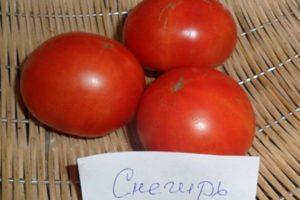
Caspar tomato, which is resistant to the following diseases:
- Fusarium wilt;
- Verticillium wilt.
It is susceptible to aphids and is particularly susceptible to late blight and blossom-end rot.
Preventive treatment of plants will help save the bush from losing part of the harvest.
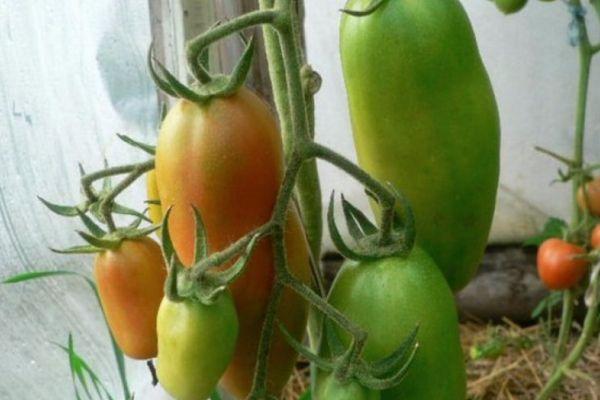
Harvest volume and household use
An important selection criterion is the yield of fruit the plant produces. The higher the yield, the more likely the hybrid will become more popular. The Kaspar tomato variety yields 10-11 kg per 1 m2Subject to all growing and care rules.
Tomatoes are used in any cooking method. They are especially good for winter preserves. They are also suitable for making marinades and salads.
Harvesting and storage
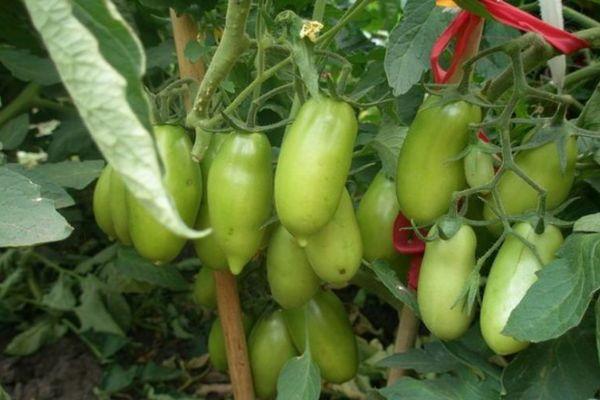
The harvest begins when the deep red fruits appear on the bushes. Harvesting continues until the last tomato on the trusses ripens.
Store in a cool, dark, ventilated area for 1–1.5 months. Some gardeners store Kaspar tomatoes for up to 2 months, creating special conditions.
Gardeners' reviews
A resource for inexperienced vegetable growers, with feedback from like-minded individuals. In their comments, gardeners offer advice to those who decide to grow the hybrid in their garden.
 Natalia: ""I decided to plant the Kaspar hybrid for the first time. It's an easy-to-grow plant, and the tomatoes ripened early. But I didn't like the taste. When pickled, the greenish fruits had visible veins. Next year, I decided to plant no more than five plants. I like the yield, and the tomatoes are only suitable for processing."
Victoria: "My family loves homemade preserves. That's why I have a lot of pickling varieties on my list. After reading comments from people who've planted tomatoes in their gardens, I decided that Kaspar is right for us. It's a low-maintenance hybrid and easy to care for, but there's one downside. You can't collect your own seeds; you have to buy them every year."
Lily: "I love fresh tomato salads. I grow a lot of them at home. I like the Kaspar hybrid, but not for salads. I make sun-dried tomatoes or store them for long periods. They've never let me down."
Take a look Also

Elena: "It won me over with its high yield. We've been planting it for three years in a row. I use it for canning and making tomatoes in their own juice. My husband really likes it."
Lara: "I only use it for pickling. I grow it with the 'Intuition' variety, planting 'Kaspar' between the bushes. After all the fruit is picked, I remove the plants, but 'Intuition' remains until frost."
Kaspar is a hybrid, so it's low-maintenance. Gardeners appreciate these tomatoes, as not everyone has the time to properly care for their plants.
Related posts:
 What varieties of tomatoes are best to plant in a polycarbonate greenhouse?
 Description of the best varieties of black tomatoes for open ground and greenhouses
 The best tomato varieties for growing in the Leningrad region for greenhouses and open ground
 The best and most productive tomato varieties for greenhouse cultivation in the Urals, with descriptions
 Description of the best tomato varieties for open ground in the central zone
 80 Best Eggplant Varieties for Different Regions with Descriptions and Characteristics
 Description of the best tomato varieties for Udmurtia for open ground and greenhouses
 Description of the best tomato varieties for open ground and greenhouses in the Krasnodar region