
All hybrid tomato varieties share common characteristics, yet each has its own unique characteristics. Katya tomatoes are beloved by gardeners for their ultra-early ripening, high yield, and low maintenance. The variety's unique advantage is its ability to retain its marketable appearance for a long time, without cracking or splitting, and retaining its excellent flavor.
Description of the variety
Despite its relative newness, the variety's characteristics and description are well known to many growers. This variety is a first-generation hybrid, developed by Russian breeders. It is registered in the State Register of the Russian Federation and was originally intended for cultivation in the North Caucasus.
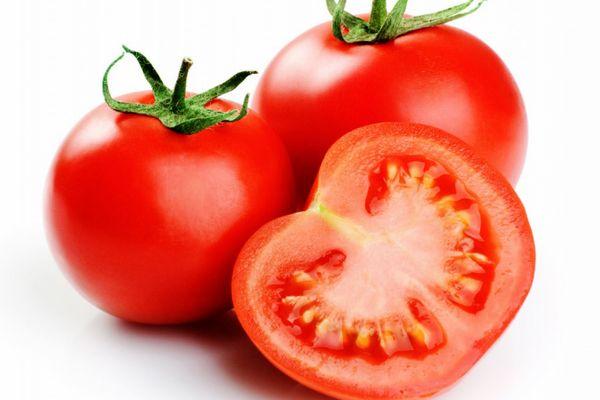
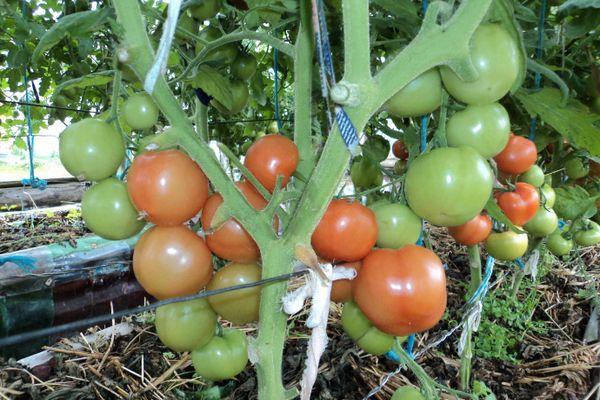
The Katya variety is early maturing. It takes less than 80 days from the first shoots to harvest. The bushes develop determinately, reaching a height of 80 cm, and can be even taller in a greenhouse. The number of leaves per bush is average.
Katyusha tomatoes They can be grown both under cover and in open ground. They tolerate both drought and heavy rainfall well.
In open ground, the Ekaterina variety yields up to 10 kg of fruit per bush, and in greenhouses, up to 15 kg. The first inflorescence forms above the fifth leaf. Each cluster produces up to 9 fruits.
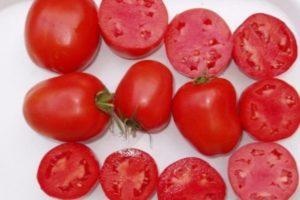
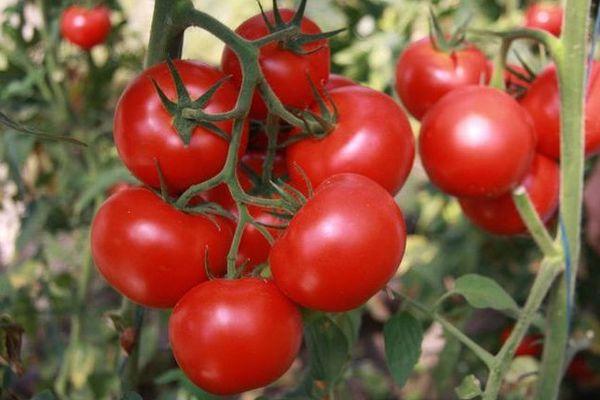
The fruits are flattened or rounded, weighing an average of 130 g. They are bright red, without a green spot near the stem, and have a pleasantly sweet flavor. They ripen evenly on the vine. The dry matter content of ripe tomatoes is 4.8%, and the sugar content is 2.9%.
Growing
Seeds are sown two months before the planned planting of seedlings in the ground. This is usually done in late March. To grow healthy seedlings, the planting material is soaked in a 1% potassium permanganate solution for disinfection. Hydrogen peroxide can also be used. After half an hour, the seeds are rinsed with clean water.
Some gardeners recommend wrapping the seeds in a damp cloth and leaving them until small shoots appear. These sprouted seeds are carefully sown into containers, being careful not to damage the sprouts. A pair of small tweezers can be used.
For sowing, prepare the soil by mixing drainage soil with humus. If you can't prepare the soil yourself, you can buy it ready-made at the store.

It is recommended to treat the seed tray and soil with boiling water and potassium permanganate. Sowing begins after the soil has cooled to normal temperature. Place the seeds at a depth of 1 or 2 cm and water with a spray bottle. Cover the seed tray with plastic wrap and place it in a warm place. This will help the seeds steam better and germinate faster.
After the first sprouts emerge, move the container to a cooler room to prevent the seedlings from becoming too elongated. Pricking out the seedlings is done as usual, after a few leaves emerge.
Caring for seedlings has its own unique characteristics. Experienced gardeners know that moderately warm water is needed for watering seedlings. Water them carefully to prevent excess water from stagnating in the containers. A wood ash solution is used to fertilize the seedlings. Tomatoes need adequate light for full development.
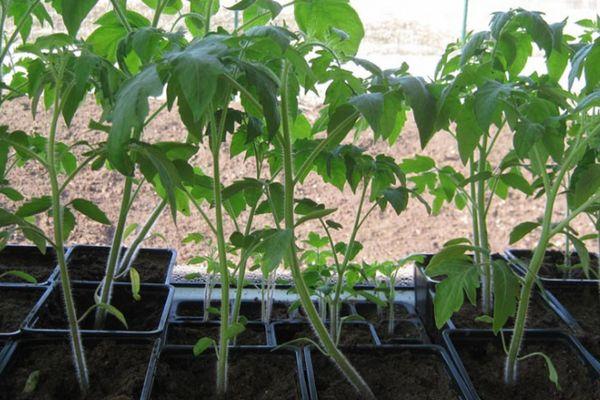
About 10 days before transplanting, tomatoes should be hardened off. To do this, take them outside daily. A balcony or loggia is suitable for apartment living, but care must be taken to avoid drafts.
Once the threat of frost has passed, tomatoes can be planted in the ground. The soil should be dug and watered beforehand. Three to four plants can be planted per square meter.
There are no exact recommendations for the date of planting outdoors. Everything depends on the climate and weather conditions of the coming spring. Tomatoes can be transplanted into a greenhouse earlier.

Care Features
The Katya F1 tomato requires basic care. It doesn't require any special cultivation techniques. It requires regular watering, weeding, loosening the soil, and fertilizing. Water the bushes carefully, taking care not to splash water on the leaves or fruit. Mulching is best.
If tomatoes are grown in a greenhouse, it needs to be regularly ventilated. Otherwise, proper fertilization will not occur. Experienced gardeners shake flowering tomatoes to promote pollination.
Katya tomato plants need to be side-sucked and tied up. It's recommended to grow them in 2 or 3 stems. Leave the first side-suckers, and remove the rest. Once the fruit begins to form, remove all lower leaves.
Advantages and disadvantages
Katya F1 has many advantages over other varieties. Gardeners note the following benefits of the hybrid:
- This tomato variety is resistant to adverse weather conditions, which have little impact on its yield.
- The bushes produce a high yield. Moreover, the fruits ripen evenly, simultaneously.
- Both varieties of the cultivar—Katya and Pink Katya—have a wide range of uses: fresh salads, winter preserves, and juice.
- The plant is resistant to many diseases.
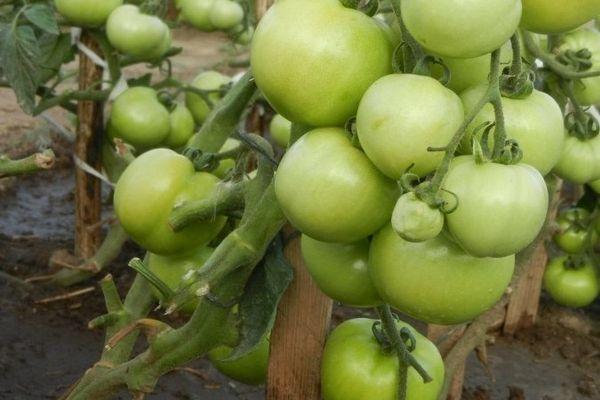
This hybrid also has some negative qualities. These primarily include brittle stems and shoots. They need to be constantly tied to a support, otherwise they will break off under the weight of the fruit. A peg or strong twine can be used for support.
Gardeners also note that insufficient fertilizer reduces the variety's yield. Some gardeners consider the high price of the seeds a drawback.
Pests and diseases
Gardeners are pleased with the Katya F1 tomato variety for another reason: it requires virtually no chemical treatment against diseases and pests. This increases the product's environmental value and is appreciated by consumers.
The plant has high immunity to the main diseases of nightshades. It is resistant to such problems as tobacco mosaic, blossom-end rot, and early blight.
As for late blight, the crop of these tomatoes ripens before the disease begins to develop in the plants.

Harvesting and storage
The first ripe tomatoes are picked from the bushes at the end of June. They bear fruit until the end of summer.
Katya tomatoes are suitable for long-term storage. They retain their marketable appearance and do not wilt. Their thick skin prevents cracking during storage.
According to reviews, Katya tomatoes withstand long-distance transportation. Over 90% of tomatoes arrive safely at their destination.
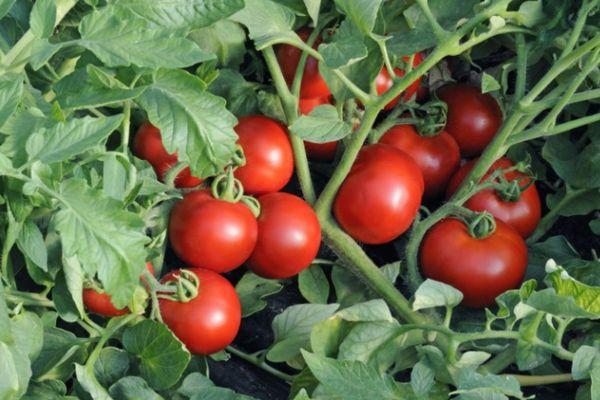
Picked green, these tomatoes ripen peacefully at home without losing their flavor.
Gardeners' reviews
Almost all reviews from gardeners who have grown the Katya variety in their plots are rave. They note the variety's high yield and the lack of need for disease control treatments. The fruits of this tomato are uniform, smooth, and delicious.
According to reviews, the first harvest in the greenhouse can be as early as mid-June, and from the garden beds after June 20th. An infusion of mown grass or mullein is sufficient for fertilizer.
The only drawback for lovers of these tomatoes is that it's impossible to grow hybrid seeds yourself. They have to be purchased each season, and they're quite expensive.
Related posts:
 Description and benefits of the Pink Katya f1 tomato, recommendations and reviews
 Description of the best varieties of black tomatoes for open ground and greenhouses
 Delicious recipes for canned tomatoes with honey for the winter, preparation steps
 11 Best Recipes for Preserving Tomato Slices for Winter
 TOP 17 recipes for pickled sweet tomatoes for the winter
 The best grape varieties for growing in the Urals, planting and care rules in summer
 How to grow cherry tomatoes on a balcony: suitable varieties and planting and care guidelines
 Description of the best tomato varieties for Udmurtia for open ground and greenhouses
This tomato variety can be grown in virtually any soil. To speed up seedling growth, I use the bioactivator "BioGrow"I am 100% satisfied with the yield. I recommend it.