
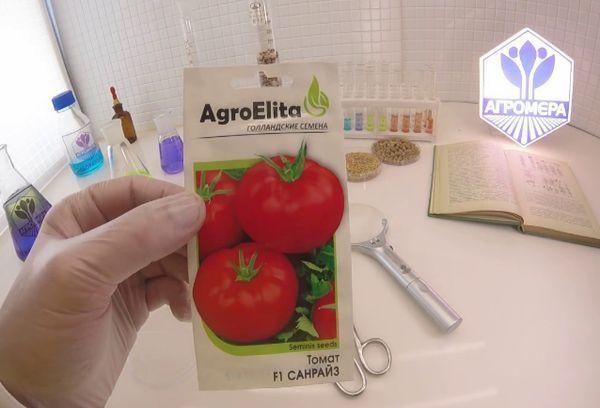
Among Dutch hybrids, the Sunrise F1 tomato stands out as an early-ripening, high-quality tomato. Every gardener and farmer dreams of such high-quality, excellent vegetable plants. And if a variety produces abundant fruit and is disease-resistant, it becomes a favorite and a popular choice. This is certainly true of the Sunrise tomato.
Description of the variety
Hybrid tomatoes hold a place of honor in gardens, with their seeds often selling out first. This is thanks to their resistance to diseases and sudden weather changes. Sunrise tomatoes are suitable for growing in both greenhouses and outdoor garden beds.
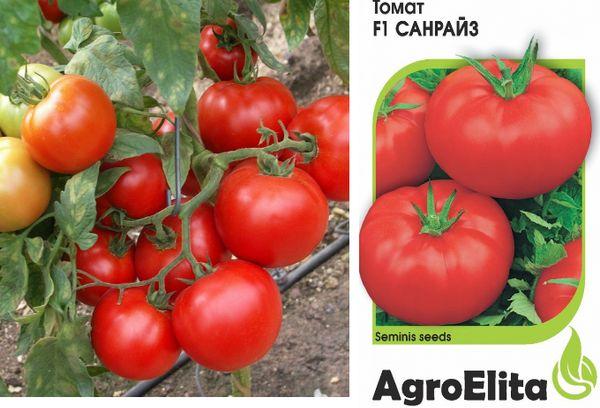
The plant is classified as a determinate variety, as stem growth stops at 60–70 centimeters. Despite this, the Sunrise tomato hybrid grows vigorously, so it's worth shaping the bush by removing excess side shoots. Clusters of 5–6 tomatoes hang from the bush, so it's best to tie them to stakes to prevent stem breakage.
This care will result in a multitude of ripe tomatoes in the shortest possible time. After germination, the fruits will ripen in 60–70 days. And the yield will be impressive: up to 5 kilograms per plant.
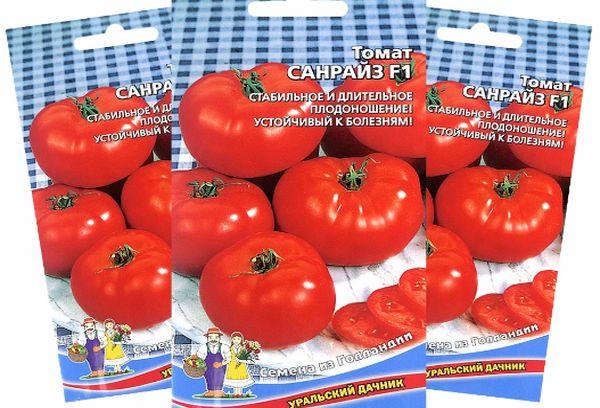
It is noted that the tomatoes of this variety:
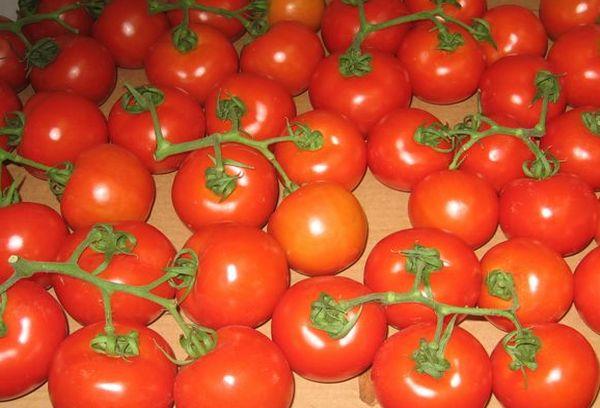
- rounded with slight flattening;
- weighing up to 200–250 grams;
- covered with thick, bright red skin;
- They have a tomato-like flavor with a slight sourness.
The description also includes the excellent presentation of the fruit and its integrity during transportation.
Growing
Tomato seedlings are prepared 65–70 days before planting. The vegetable crop is sown in boxes or trays filled with nutritious, well-drained soil.
The plant seeds should be hardened, disinfected in a potassium permanganate solution, and germinated. This will help the tomatoes sprout faster. Sow the seeds in moist soil, planting them 1 centimeter deep. Leave at least 2 centimeters between the holes.
Initially, the seeds require warmth of up to 25 degrees Celsius. Once the seedlings emerge, the air temperature is reduced to 18–20 degrees Celsius, and daylight hours are increased to 12 hours. Without sufficient light, seedlings will stretch out and the stems will become thin and brittle.
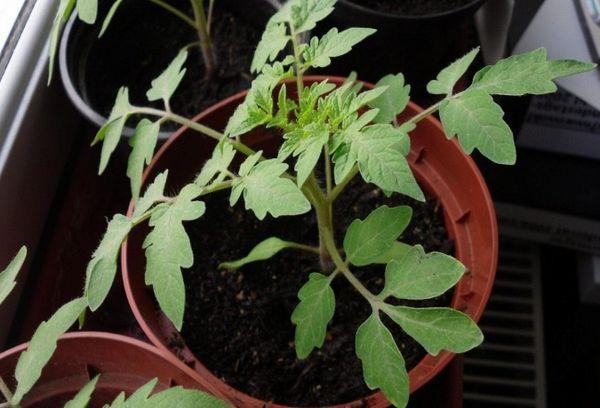
Tomatoes are transplanted when the first true leaves appear. To do this, prepare individual containers for each seedling and fill them with nutrient-rich substrate. It is recommended to pinch off the main root during transplanting. This is believed to help the seedlings develop offshoots. Place the transplanted tomatoes on bright windowsills.
Seedlings are moved outdoors two weeks before planting in open ground or a greenhouse. Tomatoes can be transplanted in mid-May. By this time, the threat of night frosts will have passed, and the soil will have warmed to 8 degrees Celsius.
The Sunrise F1 determinate tomato planting pattern is 60x60 centimeters. Before planting, add 500 grams of compost and 50 grams of wood ash to the hole.
If the weather is still cold, cover the plants with paper domes at night. After 10 days, spray the tomato seedlings with a Bordeaux mixture solution to prevent fungal diseases.
Care Features
The care of the hybrid tomato Sunrise consists of the following standard procedures:
- Water the bushes regularly and thoroughly, no more than once every two weeks. More frequent watering is necessary during prolonged hot weather. Reduce watering to a minimum during the fruiting period.
- Fertilizing begins 10 days after planting. First, use organic matter: mullein diluted 1:5, or chicken manure diluted 1:15. Then, for the second feeding, dissolve 25 grams of ammonium nitrate, 60 grams of superphosphate, and 15 grams of potassium salt in a bucket of water. Add 1 gram of boric acid, first dissolved in 0.5 liters of water.
- For the third feeding, 2-3 weeks later, add 30 grams of ammonium nitrate, 40 grams of superphosphate, and 70 grams of potassium fertilizer. For subsequent treatments, leave the superphosphate at 30 grams and dilute 200 grams of wood ash instead of potassium salt.
- For 1 bush, one liter of solution is enough.
- If ovaries are forming poorly, but the green mass of the tomato is growing, then it is necessary to fertilize the beds with phosphorus-potassium additives.
- The stems of the Sunrise variety must be tied up and side shoots are removed, leaving 4 shoots.
- Tomatoes need loosening and weeding.

Proper tomato cultivation techniques will help you achieve the desired yield of ripe fruit.
Advantages and disadvantages
Gardeners have taken a liking to the Sunrise tomato variety. Reviews speak volumes about the vegetable's merits. The hybrid is distinguished by:
- strong immunity to diseases;
- unpretentiousness in care;
- compactness of the bush;
- rapid maturity.
The disadvantage of the plant is that the fruits can only be used in preparations. It is also noted that tomato stems can break without garters.
Pests and diseases
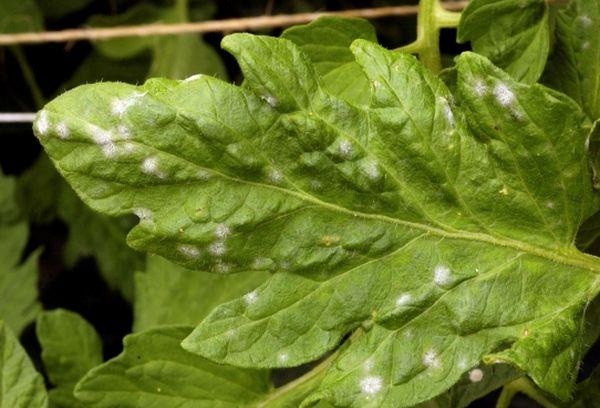
The tomato hybrid is resistant to many fungal and viral diseases. However, it is difficult to protect it from late blight, especially if there have been cold rains throughout the season. The fungus attacks the leaves, stems, and tomatoes, which become covered with brown rot spots. To prevent late blight, follow crop rotation rules and avoid planting tomatoes in the same place every year.
Thrips, Colorado potato beetles, and aphids are among the pests that attack Solanaceae. These pests can be controlled by spraying with insecticides. Folk remedies include treating the plants with an infusion made from the weed. Each treatment is carried out in three stages, separated by two weeks.
Harvesting and storage
Sunrise tomatoes are harvested as they ripen, which occurs in the first half of August. In the greenhouse, harvesting begins earlier.
Ripe tomatoes are placed in boxes and stored in a dry, warm place. Tomatoes stay fresh for a long time. After two weeks of storage, they can be used to make pickled and salted products for the winter. The Sunrise tomato hybrid is one of the best for winter preserves.
Gardeners' reviews
Maria, Saratov: "Pickling and salting tomatoes is difficult because you don't know which variety is best. Sunrise is one of the first hybrids that's ideal for winter canning. I've been growing them for two years now specifically for pickling. The fruits are so firm that they stay whole even when removed from the marinade."
Nadezhda, Omsk: "I chose the Sunrise hybrid because it's easy to grow and produces fruit quickly. This is despite our unpredictable climate. Even in cold summers, I pick tomatoes and make pickles. The preserves are delicious. And the pickled tomatoes retain their shape and vibrant color."
Related posts:
 What is the best way to feed tomato seedlings to make them plump?
 What varieties of tomatoes are best to plant in a polycarbonate greenhouse?
 Which tomato varieties are best for open ground?
 What fertilizers and when to use for feeding tomatoes in a greenhouse
 Description of the best pepper varieties for greenhouses and open ground in 2025
 Description of the best varieties of cluster tomatoes and growing rules
 The best grape varieties for growing in the Urals, planting and care rules in summer
 TOP 11 Best Recipes for Canned Radishes for Winter and Storage