
The Master f1 tomato belongs to a group of hybrids that produce high yields when grown in greenhouse blocks. The variety is included in the Russian State Register of Vegetable Crops. These tomatoes can be stored for a long time (up to 45 days) in a cool room. Their thick skin, which can withstand mechanical stress, allows for long-distance transportation. This hybrid is eaten fresh, frozen, and canned for winter storage.
Description of the variety
The characteristics and description of the Master tomato are as follows:
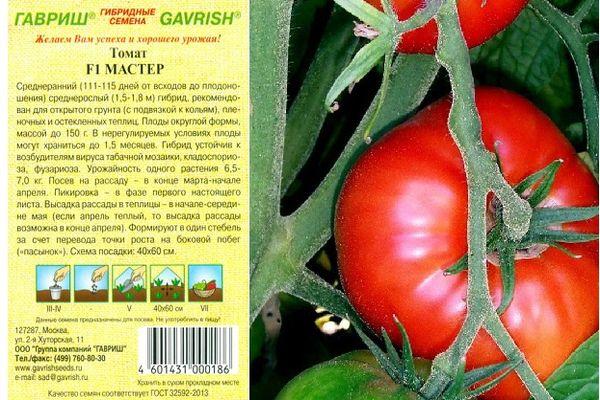
- The plant begins to bear fruit 110-115 days after planting the seedlings in the ground.
- The height of the bush reaches 170-180 cm. The stems produce a medium number of leaves, colored in bright shades of green.
- The first inflorescence develops after the appearance of the 8th leaf, and subsequent brushes are formed every 2 or 3 leaves.
- Growing the Master tomato is recommended in film, plastic, or glass-covered greenhouse blocks.
- Each brush produces up to 6 fruits.
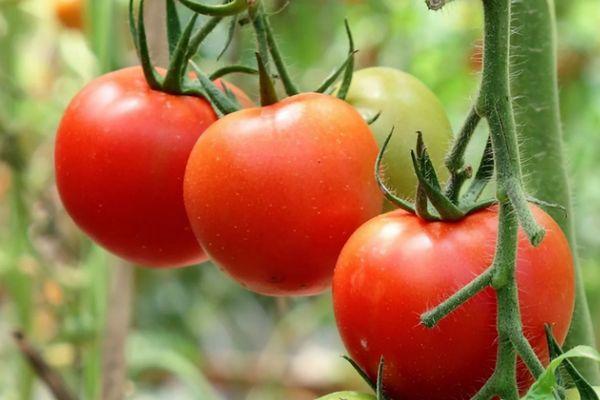
- The fruit is spherical in shape, flattened at the stem. Ripe tomatoes weigh up to 0.15 kg and are bright shades of red. The tomato skin is particularly dense. Unripe tomatoes are green, with a spot visible at the stem that fades as they ripen.
Reviews from farmers cultivating this variety indicate that Master yields 14-16 kg/m². Experienced growers obtain up to 6-7 kg of fruit per bush. Vegetable growers note Master's immunity to fusarium, cladosporiosis, and tobacco mosaic virus. Some farmers achieve stable tomato yields of up to 93% when growing the hybrid in unheated greenhouses.
How to grow seedlings yourself
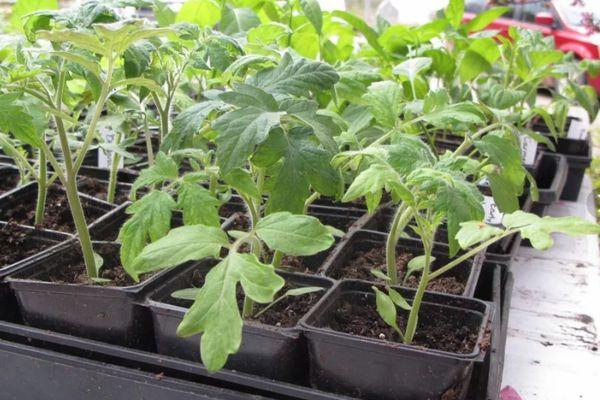
Seeds are sown in the last ten days of March. There's no need to disinfect the seeds, as this has already been done by the producer. After the first sprouts appear, 7 days later, the seedlings should be fed with complex mineral fertilizers every 10 days. When one or two leaves appear on the seedlings, the young plants are pricked out.
It is recommended to water the seedlings with warm water once every 4-5 days. When the young plants are 40 days old, they should be transplanted into a greenhouse.
 If the room is not heated, then in cold weather, transplanting seedlings is delayed for 2-3 days.
Before planting, it is recommended to loosen the soil and add organic fertilizer. Two to three bushes are planted per 1 m² of bed. The hybrid is planted at a spacing of 0.4 x 0.7 m. It is advisable to mix the soil in the hole with mineral fertilizer.
The Master tomato is trained into a single stem. This tomato requires removing side shoots and staking, so sturdy stakes or trellises are placed near the bushes.
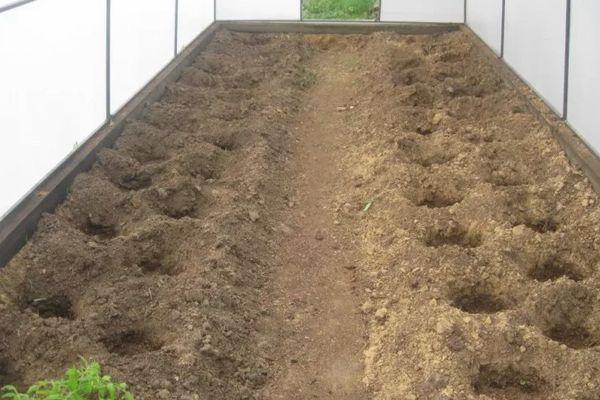
Caring for the hybrid before fruiting
Plants are recommended to be watered moderately with warm water. Allow the liquid to settle in the sun and then spray the bushes with it. This procedure is best done early in the morning, before sunrise. If the gardener misses the time, water the plants in the evening, after the sun sets. Care should be taken to avoid moisture coming into contact with the tomato leaves. If water droplets remain on the plant, it will burn, leading to a loss of some of the harvest.
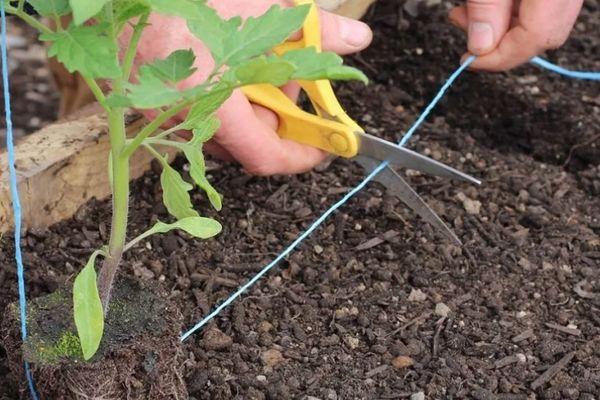
To ensure normal growth of plants in a greenhouse, certain humidity and temperature parameters must be maintained. To achieve this, farmers ventilate the room during hot weather. If the heat continues for more than two weeks, it is recommended to whitewash all transparent parts of the greenhouse unit.
Fertilize tomato plants at least three times during the growing season. Initially, it's best to use a mixture of organic fertilizers (manure, peat) with nitrogen mixtures. This type of fertilizer allows tomatoes to quickly gain foliage. The second time, feed the hybrid with liquid nitrogen and potassium fertilizers during flowering. The final feeding is with complex mineral mixtures containing phosphorus, potassium, and nitrogen.
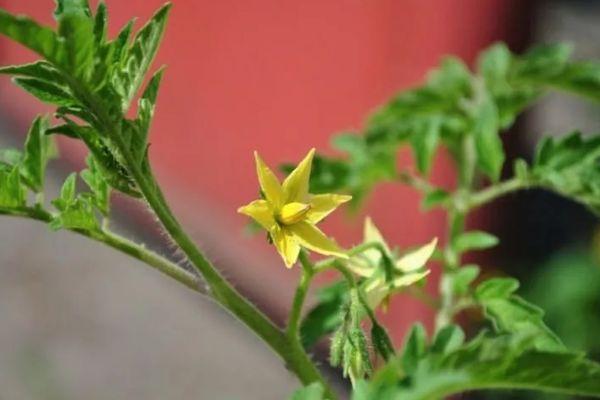
Although the hybrid is immune to most diseases, the manufacturer recommends spraying tomato bushes with Fitosporin or similar products.
It is recommended to loosen the beds twice a week to improve aeration of the hybrid's root system. Weeding is performed once every 14 days. This helps eliminate the risk of certain fungal infections. Weeding also eliminates certain pests that initially infest weeds and then migrate to crops.

Although garden pests such as Colorado potato beetles, aphids, mites, and other insects rarely invade greenhouses, farmers should monitor their plants closely. If signs of pest infestation appear on the leaves, the tomato plants should be treated with appropriate insecticides.
Related posts:
 Characteristics and description of the Sprut tomato variety, yield and cultivation
 Description of the hybrid tomato Vladimir f1, growing seedlings and caring for bushes
 Methods for planting and propagating cherries at home
 Growing and caring for tomatoes in a greenhouse from planting to harvest
 Description of the hybrid tomato Nonna M, growing seedlings and care
 Growing and caring for hazelnuts in open ground, rules for planting hazelnuts
 Characteristics and description of the Bull's Heart tomato variety, yield and cultivation
 Description of the Hugo tomato, growing the hybrid variety using seedlings and further care
This tomato produces a good harvest without any fertilizers, and it's also very tolerant of temperature fluctuations. I only use the bioactivator "BioGrow", the product is inexpensive and effective.