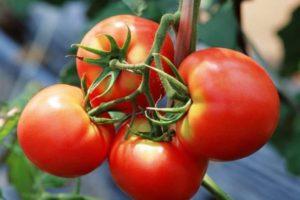
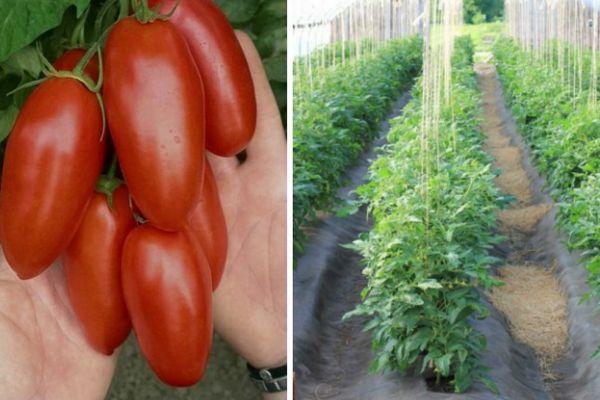
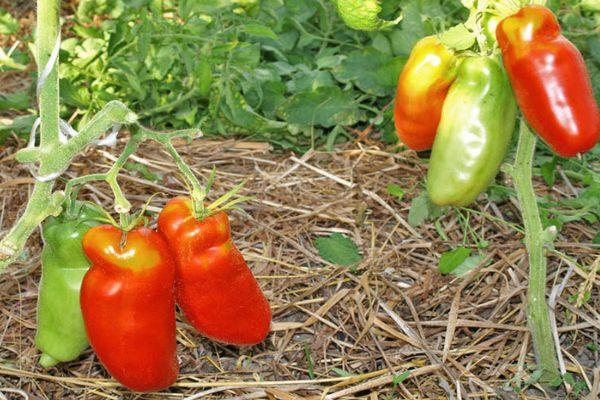
The Hugo tomato belongs to the pepper-shaped tomato family, the distinctive feature of which is its appearance.
What is Hugo's tomato?
Characteristics and description of the variety:
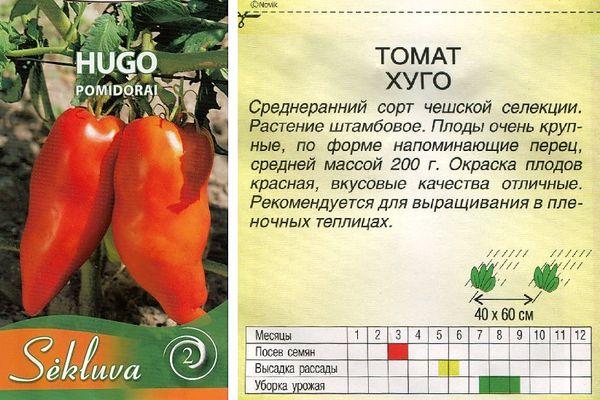
- Tomato Hugo F1 is a hybrid variety developed by Czech breeders.
- It ripens approximately 110 days after planting. The bushes bear fruit until the end of September and produce a good harvest. This tomato variety can be planted both in a greenhouse and in a garden.
- The fruits of the Hugo pepper-shaped tomato are quite large.
- The smallest tomato weighs 250 g. Their skin is tender, and the inside is very fleshy.
- The color of the fruits is scarlet.
- This variety has strong immunity to many common diseases.
- Hugo does not tolerate cold and dark places.
- The optimal and comfortable air temperature is +20 °C.
How are tomatoes grown?
Hugo is grown using seedlings. When choosing seeds, preference is given to the producers "Gavrish," "SeDeK," and "Poisk." Before sowing, the size of the plot where the tomatoes will be planted is usually assessed, and only then, having calculated the approximate number of bushes, do they begin sowing the seeds. The best time for planting is considered to be the second half of March, but in colder regions, this period shifts to early April.
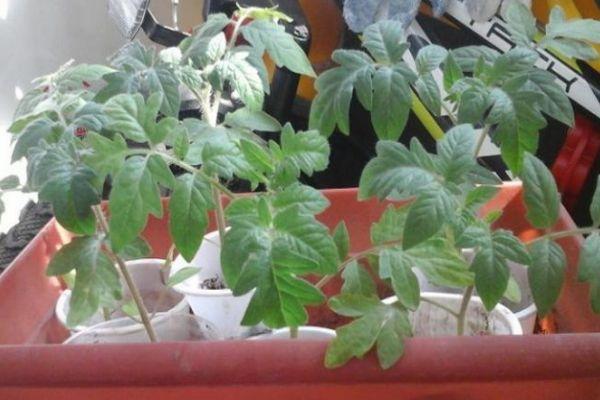
It's best to use compost or wood ash-rich soil for seedlings. Potato soil is not suitable for planting tomatoes.
Place the soil in the selected container, compact it lightly, and moisten it with warm water. Soak the seeds in warm water before planting.
It's easier to use tweezers to spread the seeds. Place them in the soil to a depth of 2 cm and cover with a thin layer of soil. Cover the container with glass or plastic wrap and place in a warm place until the seedlings emerge. A comfortable temperature for germination is 25°C.
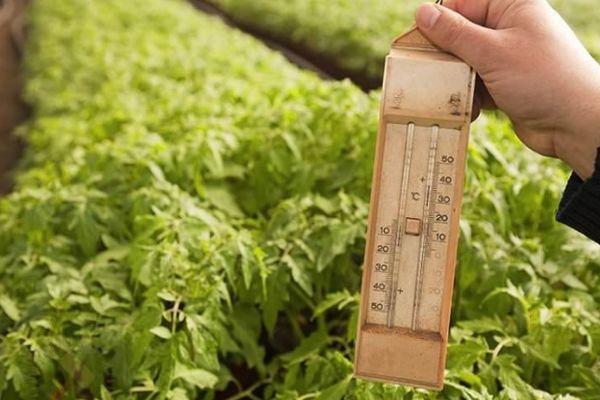
Once the seedlings emerge, remove the plastic covering and place the container closer to the light. If the room is dark, provide artificial lighting.

Pricking out is done after two strong leaves appear. It's best to transplant the plant into plastic containers to make it easier to transplant into the ground later.
 When caring for seedlings, you need fertilizing, sufficient light, and the right temperature conditions.
Hugo tomatoes are best trained to have a single stem (in greenhouse conditions, two stems can be used). The plant should be tied to a tall support.
Caring for this variety is the same as for other tomato varieties. For best fruit growth and development, it's important to monitor the soil: loosen it regularly and remove weeds. Watering is done as needed.
The soil around the roots shouldn't be wet, but it shouldn't dry out either. It's best to water tomatoes using drip irrigation to prevent overwatering.
Excess vegetation should be removed gradually, usually starting with the lower leaves. After the inflorescences appear, side shoots are removed in the same manner. This is done so that the plant doesn't waste its energy on greening the bush, but rather directs it toward fruit production. Inflorescences appear after the 8th to 12th leaf. Each cluster produces 5-9 fruits.
A month after planting, tomatoes can be fertilized with manure or bird droppings. After the flowers appear, the soil is fertilized with ash. If the plants are lacking green mass, add nitrogen to the fertilizer. If, on the contrary, the plants are actively growing, phosphate should be added.
Related posts:
 How to propagate and grow peas, cultivation technology, and care in open ground
 How to properly plant peas in a greenhouse and open ground
 How to plant grapes step by step, with a description of the process and care
 How to control onion flies using natural and chemical methods
 Description of varieties of sowing peas and cultivation, to which family they belong
 Growing and caring for almonds, planting and pruning rules at home
 How to grow a watermelon in a greenhouse in the Moscow region: planting and care guidelines
 How to combat powdery mildew on onions using folk and chemical remedies