
- History of hybrid breeding
- Habitat
- Distinctive features and characteristics of the culture
- Useful properties of fruits
- Cerapadus varieties
- Long-awaited
- Crown
- Firebird
- Rusinka
- Novella
- Padocerus varieties
- Planting and care
- Timing of planting operations
- Site layout plans
- Place and soil
- Preparation of planting material
- What is recommended for planting together?
- Algorithm for planting seedlings
- Aftercare
- Watering and fertilizing
- Trimming
- Protection from diseases and pests
Cerapadus is a plant that was developed after numerous experiments crossing two breeds. It is considered a hybrid of cherry and bird cherry, which possesses important qualities and served as the basis for the creation of new tasty and productive varieties.
It is used not only for producing berries - the hybrid produces high-quality rootstock.
History of hybrid breeding
Before the hybrid was developed by I.V. Michurin, it had not been found in the wild. This scientist decided to cross-breed bird cherry and cherry. Numerous attempts were made to cross-pollinate various plant species, but the most successful attempt was a cross between the Japanese bird cherry Maackii and the steppe cherry Ideal.
In this case, two types of hybrids were obtained:
- Bird cherry pollen was transferred to a cherry tree pistil. The resulting hybrid was named Cerapadus.
- The variety obtained by dropping cherry pollen on the pistil of a bird cherry flower was named Padocerus.
The chosen names are related to the Latin names of bird cherry and cherry: Padus and Cerasus.
However, when initially creating hybrids, the new variety did not inherit all the important traits of its parents. It gained winter hardiness, a strong root system, and resistance to some diseases. However, the flavor was not very good. The berry yield was large, but the fruits themselves were too small.
The created hybrids have become good rootstocks for sweet cherries and sour cherries.
Later, from the first varieties of cerapadus, those were obtained that combined good taste, high yield, strong root system, winter hardiness and other advantages.
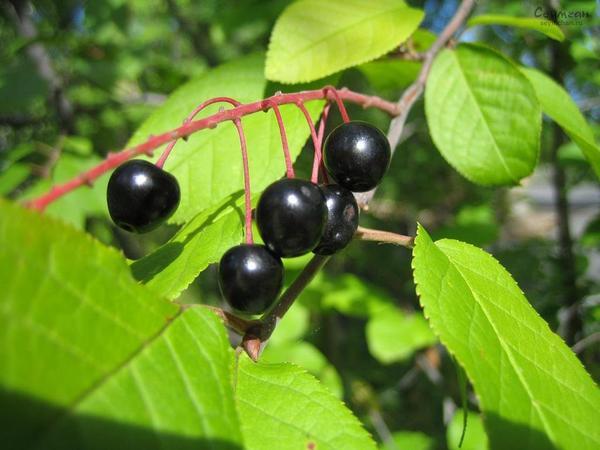
Habitat
Recommended growing regions depend on the specific variety. For example, the Rusinka cerapadus is recommended for use in the Moscow, Ryazan, Tula, Vladimir, Ivanovo, Bryansk, Smolensk, and Kaluga regions.
Distinctive features and characteristics of the culture
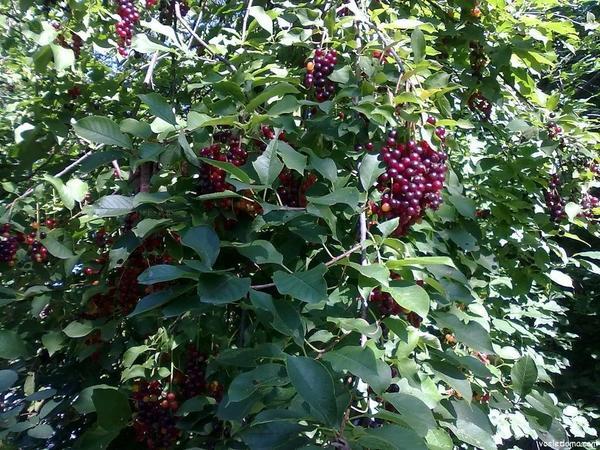
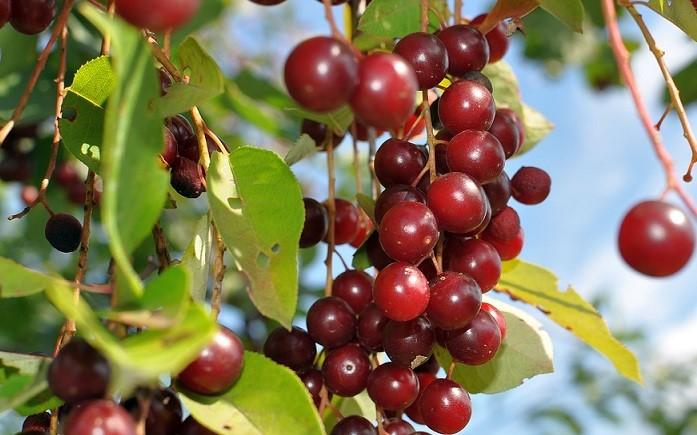
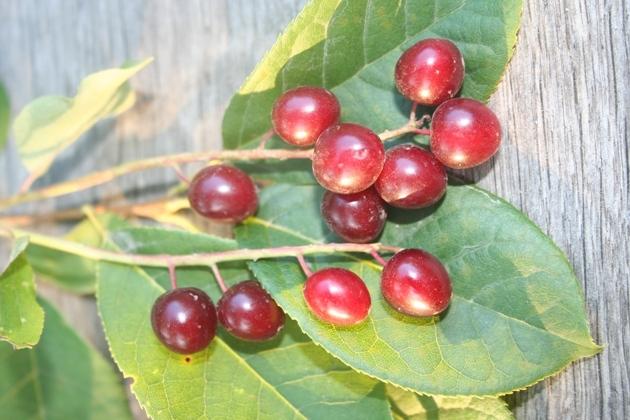
The plant's appearance resembles bird cherry. Cerapadus blooms in early spring. The berries resemble cherries but are smaller. The flavor varies greatly depending on the hybrid. In some cases, the berries have a tart flavor. Other varieties have a pleasant sweet-and-sour taste.
Useful properties of fruits
The berries are commonly used for processing. They make excellent jams and preserves. Some cherry-bird cherry hybrids have a pleasant flavor, but the berries are smaller than those of cherries.
Cerapadus varieties
This hybrid became the basis for the development of several varieties.
Long-awaited
The berries are a deep cherry color. The dense flesh is dark red. The large pit is easily separated. The tree is medium-sized and has a rounded crown. This cherry-bird cherry hybrid is known for its abundant fruit production.
Crown
This variety is a shrub. The fruits have a harmonious sweet flavor with a slight tartness.
Firebird
Trees up to 2.5 meters tall. The crown is dense and compact. The berries are medium-sized, dark coral in color.
Rusinka
This plant is grown as a bush. Its height should not exceed two meters. This cherry-bird cherry hybrid is a late-ripening variety, requiring no pollination. Rusinka tolerates severe frosts and is highly disease-resistant.
The fruits are used to make jam, which is known for its special taste.
Novella
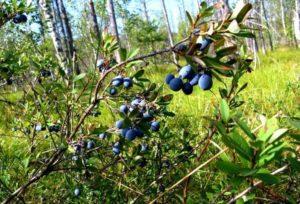
This tree grows up to three meters. Its robust root system ensures the plant's vigor. Novella is a mid-early variety. An important feature is its self-fertility. It can even withstand severe frosts. The berries of this variety are large and glossy. They are black in color.
Padocerus varieties
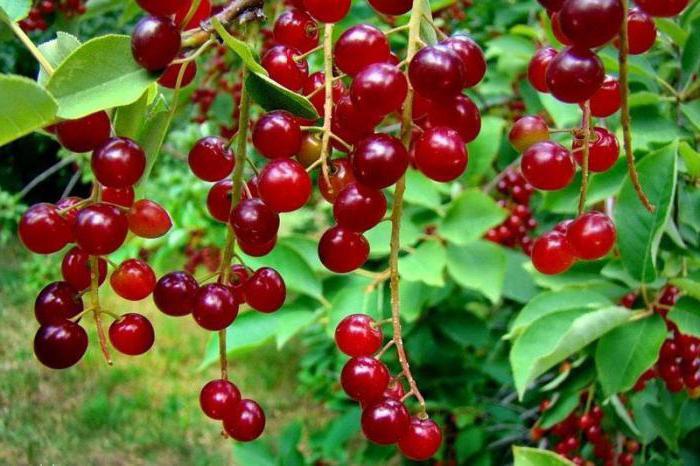
The basic hybrid variety is Padocerus-M. It was later used as a basis for the Almaz cherry variety. The Kharitonovskaya variety was developed from it. It requires pollinators from the Zhukovskaya and Vladimirskaya cherries. This variety is known for its large, dark cherry-colored fruits and orange flesh.
Planting and care
Cherry and bird cherry hybrids do not require complex care.
Timing of planting operations
Planting can be done in spring or fall. In the former case, April is the most suitable time. Cherry and bird cherry hybrids can be planted in late fall. Even with an early winter, these frost-hardy plants will be able to establish themselves.
Site layout plans
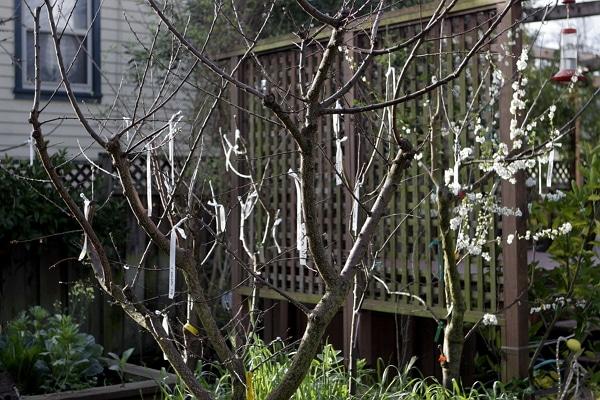
Holes for cherry and bird cherry hybrids must be dug and prepared in advance. If the seedlings are to be planted in the spring, they should be prepared 15-20 days in advance. For fall plantings, holes are usually prepared in the spring. At least 2-3 trees should be planted at a time.
Place and soil
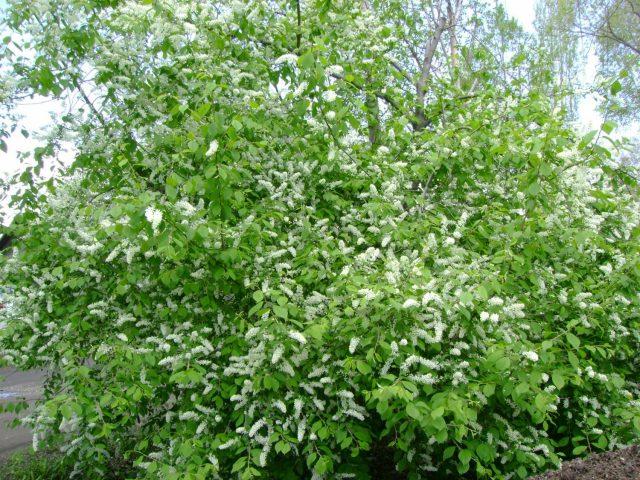
Almost any moderately fertile soil with neutral pH is suitable for growing cerapadus and padocerus. When choosing a suitable site, keep in mind that cherry-bird cherry hybrids require good light, no drafts, and no shade.
Preparation of planting material
Plants should be purchased either from a nursery or from reputable retailers. Only then can you be confident in purchasing high-quality planting material.
What is recommended for planting together?
Planting an apple tree and a cerapadus close to each other will benefit both trees. Due to its high resistance to diseases and pests, the cherry-bird cherry hybrid will provide additional protection for the fruit tree. The root secretions of the hybrids help enrich the soil with nutrients beneficial to the trees.
Algorithm for planting seedlings
The holes should be large enough to accommodate the seedling's root system. Since hybrids have a robust root system, it's important to provide it with sufficient space. Seedlings in a row should be spaced no closer than 2.5-3.0 meters apart. The distance between rows should be at least 3.0-3.5 meters.
Before planting a seedling in the ground, it is necessary to keep it for several hours in clean water or in a root solution.
You need to pour a nutrient mixture into the hole in advance.
It is prepared as follows:
- You need to take 2 buckets of humus and mix it with a bucket of soil.
- Add fertilizer. For this, you can use 100 grams of a mixture of phosphorus and potassium fertilizer. You can also use a glass of nitrophoska.
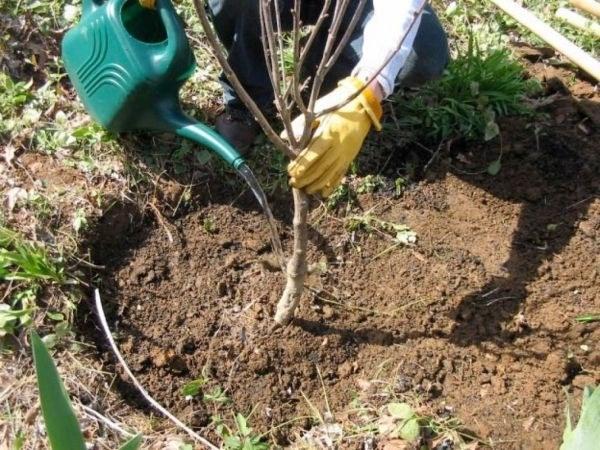
After thoroughly mixing, pour the soil into the hole to form a mound. When planting, carefully arrange the roots around the mound. Then, fill the hole halfway with soil.
Now the soil needs to be compacted and watered with warm water.
Once the water has soaked in, fill the hole with soil. Now it's time to water again. This will require 2-3 buckets of water per plant. Mulch the soil surface with peat, wood shavings (pine shavings are not recommended), sawdust, or other similar materials.
Aftercare
The cherry and bird cherry hybrid does not require special care.
Watering and fertilizing
Cerapadus doesn't require frequent fertilizing, provided it's growing and developing normally. Fertilizer should be applied no more than once every three years. If the hybrid is lagging behind in its development, additional fertilizing will help.
Trimming
This plant requires both formative and sanitary pruning. Formative pruning will help shape the crown properly, while sanitary pruning involves removing dead, diseased, and old branches to prevent the tree from wasting its life energy on them.
The trunk is trained to a height of 0.5-0.6 meters. The crown is made two- or three-tiered, with three to four main branches remaining at each tier.
Protection from diseases and pests
Cerapadus and Padocerus are known for their disease resistance. However, despite this, the plants are treated to combat pests and diseases. Before bud break, they are sprayed with a 2% Bordeaux mixture.
If necessary, the crown and soil around the plant can be treated. For this purpose, use products such as Planriz, Boverin, Actofit, or similar.
No antifungal treatment is carried out.
Related posts:
 What can you make from red bird cherry for the winter? Recipes for making jam, preserves, and juice.
 Simple recipes for red and black bird cherry jam for the winter, with and without pits
 Description and pollinators of the Vladimirskaya cherry variety, planting and care
 TOP 10 simple recipes for red bird cherry compote for the winter, with and without sterilization
 Description and characteristics of the miracle cherry hybrid, planting and care of the variety
 Description and varieties of cherry variety Shpanka, planting and care
 Description and cultivation of the best varieties of felt cherry, planting and care
 Description and characteristics of the Kharitonovskaya cherry variety, planting and care