
- Description and Features
- History of selection
- Characteristics of the variety
- Berries
- Flowering period
- Ripening time
- Applications of berries
- Resistance to diseases and pests
- Taste and medicinal properties
- Advantages and disadvantages of the variety
- How to plant correctly
- Recommendations for choosing deadlines
- Site and soil requirements
- Site selection and preparation
- How to select and prepare planting material
- Planting diagram
- Care instructions
- Watering mode
- Mulching
- Top dressing
- Trimming
- First year
- Second year
- Third year
- Preparing for winter
- Diseases and pests
- Stem cancer
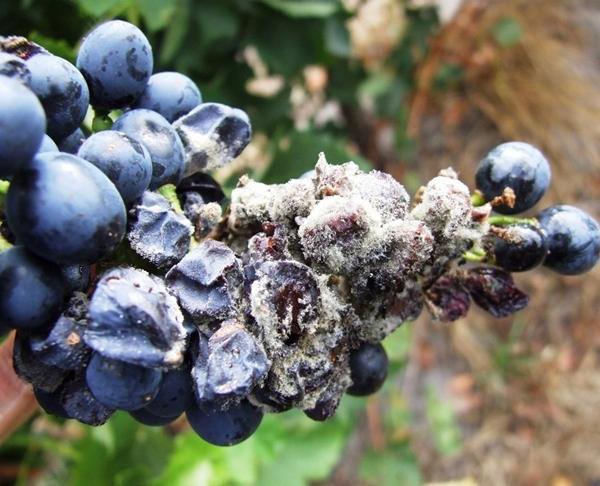
- Gray rot
- Physalosporosis
- Moniliosis
- Aphid
- Kidney mite
- Flower beetle
- Harvesting and storage
- Tips and recommendations
Northland blueberries are widely recognized by gardeners as one of the best frost-resistant varieties. This is due to their widespread cultivation in harsh climates. Given favorable conditions, the berry will produce delicious and nutritious blueberries in abundance for a long time. To achieve the desired results, it's important to understand the strengths and weaknesses of the blueberry bush and how to properly plant and care for Northland blueberries.
Description and Features
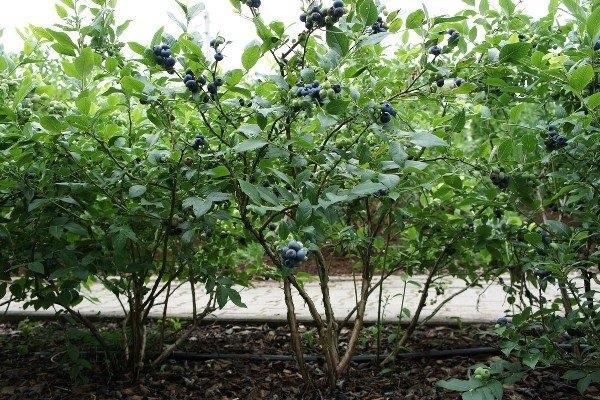
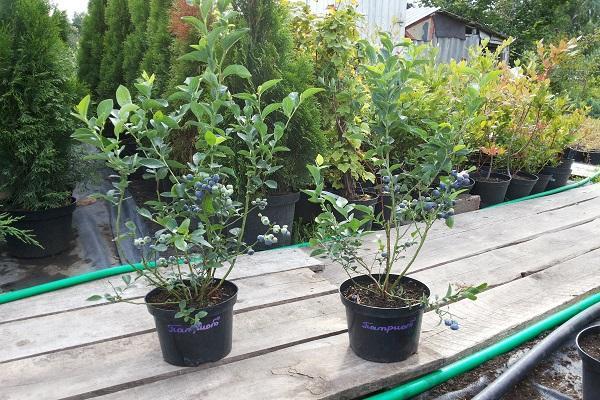
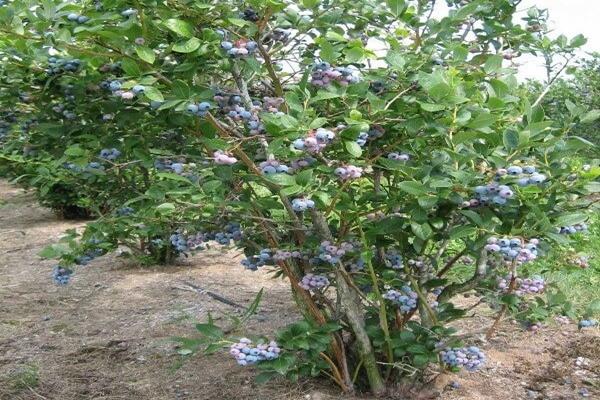
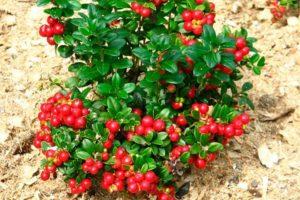
Blueberries are considered tall berries, reaching an average height of 1 m 20 cm. The fruits ripen early, in the second half of June. The berries are large, weighing about 2 grams, sweet, with delicate skin and a distinct aroma.
One bush produces an average yield of up to 5 kg. Under favorable growing conditions, the yield can reach 8 kg per bush. The berries store well and are often used in cooking to make jam.
The plant's root system is shallow. The branches of a mature bush are flexible and can hold a lot of snow. The inflorescence is small, five-toothed, and bell-shaped.
This plant is communal, so it's recommended to grow it in plantations rather than individually, as the berry needs to be pollinated during flowering. The bushes have a strong trunk and a well-developed crown.
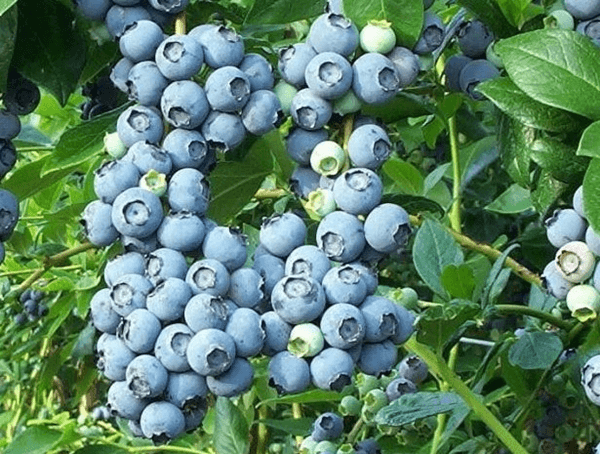
Due to its decorative appearance, blueberries are used in landscape design.
The crop easily tolerates frosts, but is vulnerable to drought. The berry prefers well-lit areas; yields in shaded areas drop several times. Drafts and strong winds also have a negative impact on blueberries.
History of selection
Translated from English, Northland means "northern country." The plant's name is no accident, as the variety was bred by Americans S. Johnston and J. Moulton specifically for areas with cold winters, with temperatures down to -40 degrees Celsius. The scientists were able to cross-breed the tall-growing Berkeley blueberry variety with 19-H, a low-growing shrub, and a seedling of the Pioneer variety.
The Northland blueberry was first announced in 1967. Due to its resilience and excellent yield, the variety quickly spread throughout northern countries.
Today it is one of the best plants in terms of frost resistance, along with such species as Shankler and Berkeley.
Characteristics of the variety
Northland is designed for planting in harsh climates. Blueberry yields are high, and cultivation techniques are minimal, but irrigation and treatment with protective products are essential.
Berries
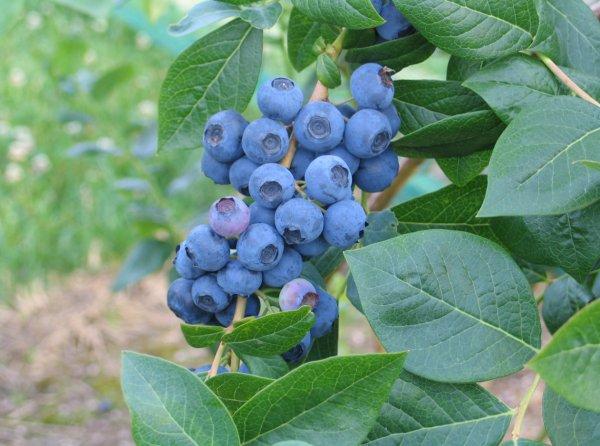
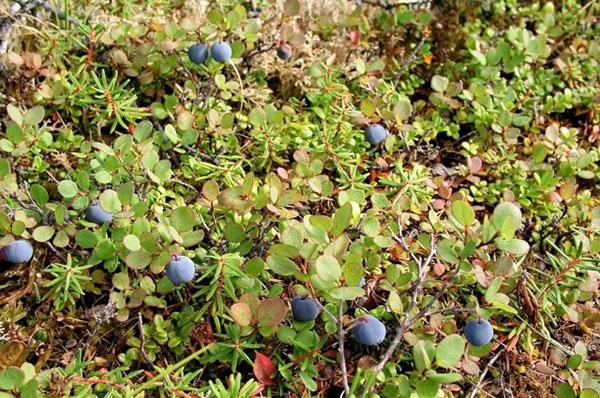
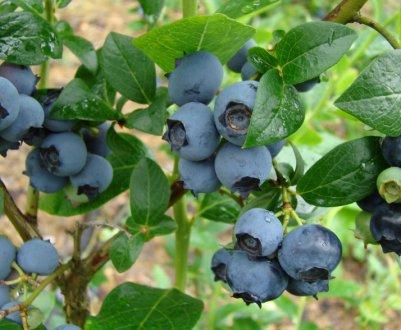
Blueberries produce round berries with soft skin. They are medium-sized, up to 1.6 cm in diameter. They are light blue in color, with a bluish tint. They also have a dry scar.
The fruit can weigh up to 2 grams. The berry pulp is pleasant, sweet, and has a fragrant aroma.
Flowering period
The berry begins to bear fruit in the second year after planting. On average, the plant lives for 30 years. For good pollination, the berry requires other blueberry varieties. The following are well suited for this process:
- Patriot,
- Bluecrop,
- Rubel.
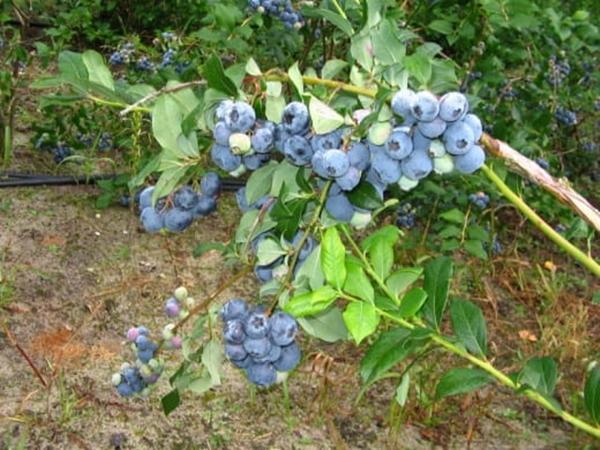
Blueberries bloom in abundance and for a long time, lasting 20-25 days in late spring.
Ripening time
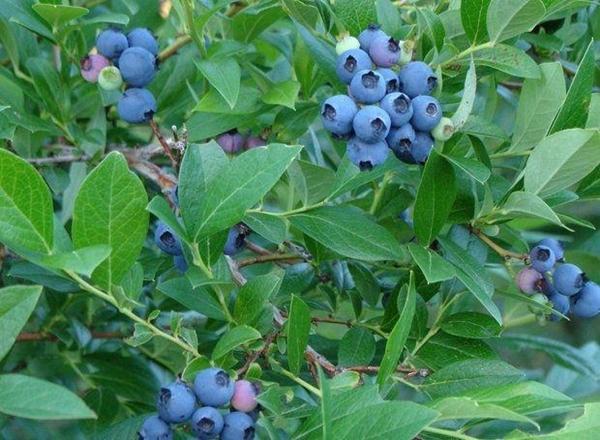
The berries ripen unevenly. They begin to ripen in the second half of July and finish ripening in late summer. Ripe blueberries fall off, so it's recommended to pick them at least 2-3 times every 7 days.
Applications of berries
Blueberries are widely used. They are delicious fresh and can be used to make various preserves and desserts, including jam, confiture, preserves, and marshmallows.
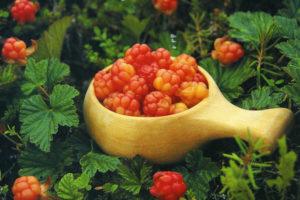
Blueberries also keep well in the freezer and when dried.
Resistance to diseases and pests
Blueberries are resistant to many viral and fungal diseases, but not all. Berry damage is possible:
- gray mold;
- physalosporosis;
- moniliosis;
- stem cancer.
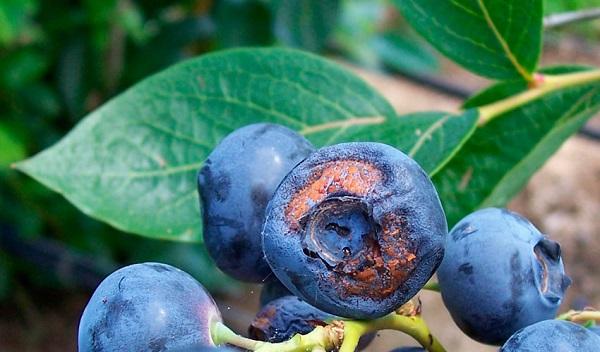
The fruits are eaten:
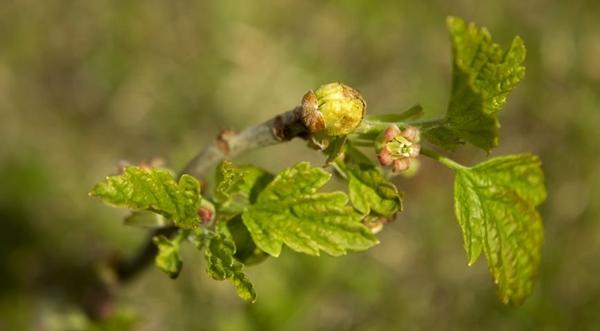
- flower beetle;
- scale insect;
- earwig;
- pine silkworm;
- aphids;
- kidney mite.
Birds often eat blueberries. To deter them, tie ribbons of different colors to the branches or use strips of plastic film.
Often, when a plant of this variety is affected by a viral or fungal infection, the entire bush is burned completely.
Taste and medicinal properties
Blueberries are a natural boon. In addition to dietary fiber, they contain abundant vitamins C, E, and magnesium. Antioxidants regulate pancreatic function and protect against certain chronic diseases associated with aging.
The berry is also capable of:
- improve memory;
- lower cholesterol;
- improve vision;
- prevent macular degeneration;
- protect against certain types of cancer.
Northland received a tasting score of 4 on a 5-point scale.
Advantages and disadvantages of the variety
During the cultivation of the fruits, a number of their advantages were noted:
- Increased frost resistance.
- Early ripeness of berries.
- Consumer and product qualities are at the highest level.
- The productivity rate is high.
- The berry is undemanding to growing conditions and care.
- There is immunity to major diseases and parasites.
- Blueberries ripen early.
- The plant is not tall.
- The berries are sweet and tasty.
- The plant has a decorative appearance.
Blueberries also have some disadvantages, and you need to be aware of them to get a good harvest:
- Drought resistance is low.
- Additional pollination is required.
- Drafts and strong winds are painful to bear.
- Good plant growth is possible only in soil with increased acidity.
- Watering the plant should be done while maintaining a balance between well-moistened, but not flooded soil.
- If the plant is affected by viruses or fungi, it must be burned completely.
- The reproduction process occurs very slowly.
Although the variety has some disadvantages, the advantages completely outweigh them, which makes Northland one of the popular shrubs.
How to plant correctly
In order for a plant to take root in a plot, it needs to be planted correctly.
Recommendations for choosing deadlines
Berries can be planted in summer or fall, but the optimal time is early spring. During the summer, the plant has time to gain strength and adapt to new conditions, and winter will be a challenge.
Site and soil requirements
The area for blueberry seedlings should be free from drafts and well-lit, since in the shade the plant produces almost no blueberries.
Avoid planting berries near fruit trees—they'll rob the bush of the nutrients it needs to thrive. The fruit will grow sour because it won't absorb the required amount of sugar.
Blueberries are sensitive to soil acidity. The optimal pH for the plant is 3.5-5. However, American farmers recommend a pH of 4.5-4.8. If the pH is inappropriate, blueberries will not grow or bear fruit properly.
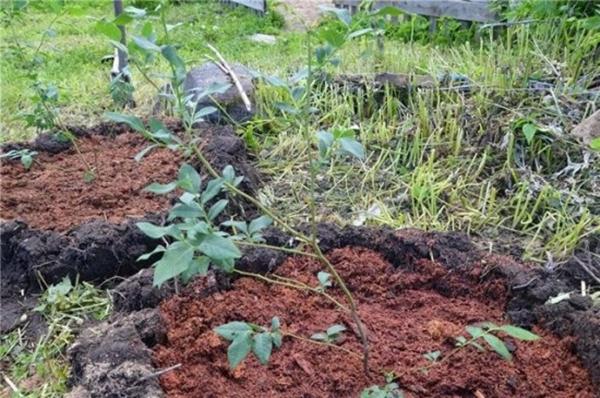
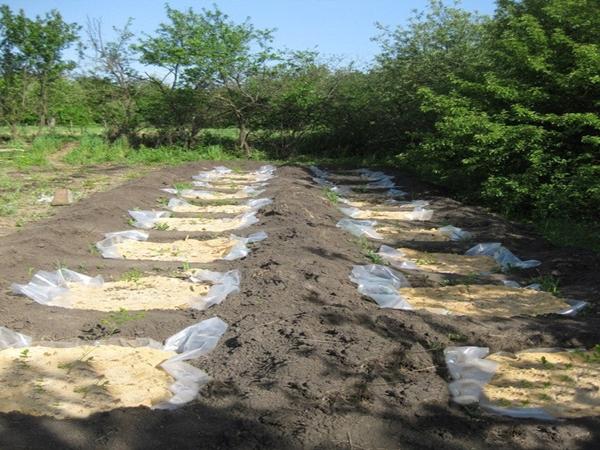
You can create favorable conditions yourself. Dig a hole 0.5 m deep, then fill it with pine needles, sand, peat, and sawdust. Sulfur can be used to increase the acidity. Acetic, malic, and oxalic acids are also used.
Site selection and preparation
When choosing a location for the plant, it is important to select a plot of rested land so that nothing will be grown on it for several years.
The Northland variety is quite sensitive to soil conditions. The optimal soil for the plant is a light, humus-rich, moist but well-drained substrate. Peat and peat-based mixtures offer an excellent combination of these properties.
How to select and prepare planting material
Buying blueberry seedlings should take place in reliable places (special nurseries, exhibition areas).
Young, two-year-old bushes with closed roots and shoots 35-50 cm long take root well. Choose a bush that is neat in appearance, with whole, undrooping leaves, as a healthy seedling is the key to successful berry growing.
Before planting, seedlings should be immersed in water for half an hour to remove the root ball and prevent damage to the root system.
Planting diagram
To ensure rapid rooting and growth of a young plant, follow the planting algorithm:
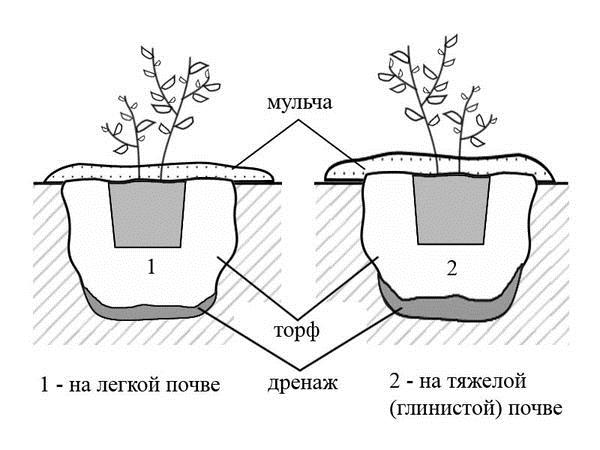
- A hole for blueberries is dug to a depth and diameter of 50 cm.
- A drainage layer (gravel, sand, crushed stone) must be poured onto the bottom; it should be 7-10 cm thick.
- Sprinkle with peat, pine needles, and soil in equal parts to a depth of 10-15 cm.
- Place the finished plant in the center of the hole and align the roots.
- Sprinkle the top with soil mixture and compact it to eliminate any voids.
- Mulch with sawdust, peat, and pine nut shells. Apply a 5-10 cm layer.
- The soil is then moistened with acidified water. For every 10 liters of water, 40 grams of citric acid is required.
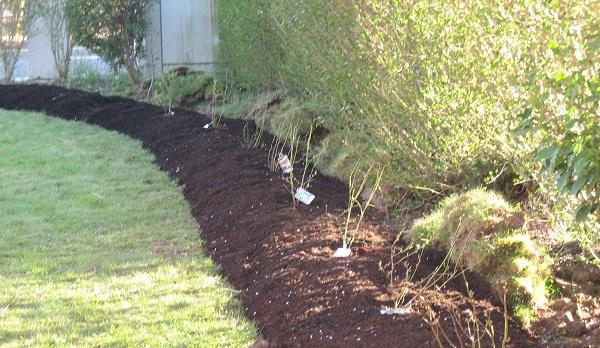
There should be a distance of 1.5 cm between the holes, and 2-2.5 m between the rows of plants.
To ensure good pollination of the bush, which is necessary for fruit set, it is recommended to plant 2-4 bushes of 3-4 different species on the plot.
Care instructions
Once the blueberry has been successfully planted, it is necessary to provide the plant with good care:
- loosening;
- watering;
- top dressing;
- pruning.
Watering mode
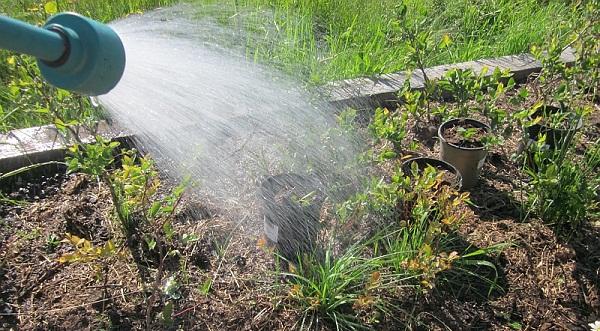
The plant should be watered regularly, even on cloudy days. Watering frequency: once every 7 days.
When the bush is fruiting, water it once every 4-5 days. The recommended amount for a mature plant is 10 liters. Water twice, once in the morning and once in the evening.
It is better to water blueberries using a drip irrigation system.
Mulching
An important step is loosening the soil. This procedure is performed a couple of times a year. It's important to keep in mind that the root system is located close to the surface, so loosening the soil must be done carefully. The soil should be dug to a depth of 10 cm.
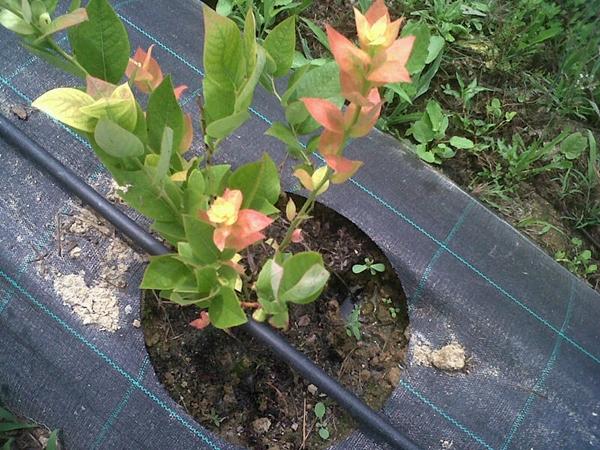
Mulching is an important method that helps suppress weed growth, retain moisture, and enrich the soil with organic matter. The mulch layer under plants should be 5 cm thick. Gardeners use the following for mulching:
- grass;
- peat;
- crushed tree bark.
Top dressing
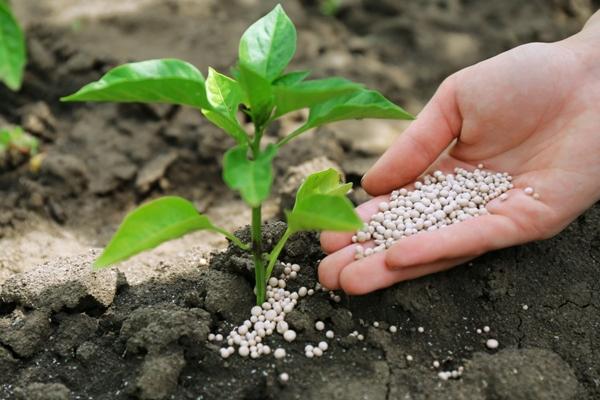
Northland can be fertilized with minerals or complex formulations. This is done twice a year—before the buds swell and 6-7 weeks later. The amount of nutrients is calculated based on the age of the plant:
- For a 2-year-old bush you need 1 tbsp.
- For a 3-year-old plant – 2 tbsp.
- If the plant is 5-6 years old – 8-16 tbsp.
When Northland lacks a certain element, the reaction is immediately noticeable:
- Nitrogen deficiency is manifested by a decrease in the growth rate of the bush and fruits, and the leaves turn yellow and pale.
- Phosphorus deficiency – purple coloration.
- If young shoots die, there is not enough potassium.
- Boron deficiency is indicated by a blue coating on the top of the plant.
It is impossible to feed Northland with organic fertilizers, as they can reduce soil acidity.
Trimming
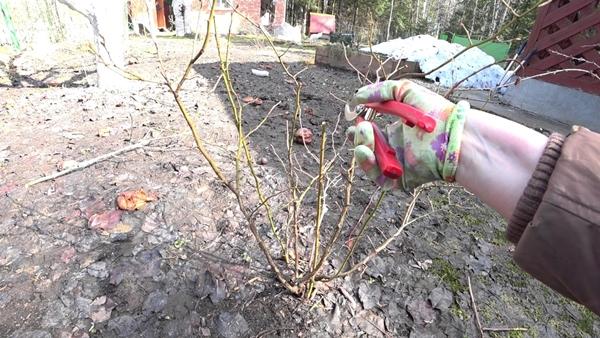
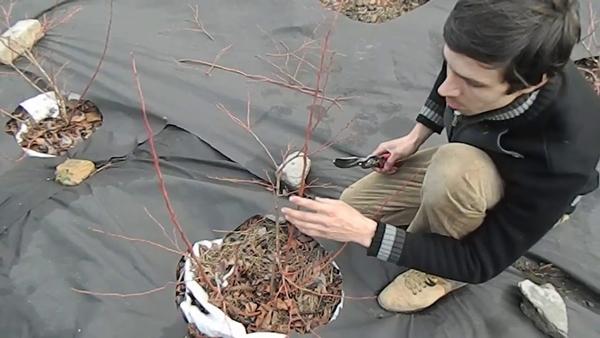
Pruning is an important part of caring for any plant. This method can significantly improve the quality and quantity of the harvest. Pruning is performed in early spring.
First year
When planting in open ground, trim away weak and broken branches. Healthy branches are shortened by half if the seedling is one year old. If the plant is two years old, no pruning is necessary.
Second year
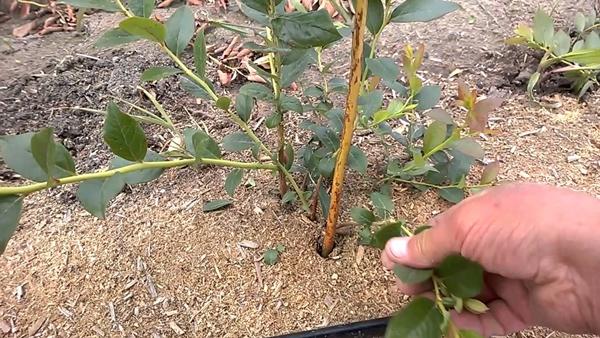
In 2-3 years, a strong, branched bush is formed - all branches with fruit buds are cut off.
Third year
Pruning in spring and fall at 5-6 years, before the first buds open and after fruit harvest, removes diseased, old, weak, and horizontally growing branches. Only strong branches and four new ones are left.
Ten-year-old blueberry bushes are still in their infancy, producing small fruits. Therefore, it's recommended to prune the plant back to the stump. This pruning will help rejuvenate the berries, allowing them to produce larger fruits again.
Preparing for winter
This blueberry variety is a frost-hardy plant, but in areas with low temperatures that persist for long periods of time, it requires covering during the winter.
Burlap, spunbond, or other breathable material is used as a dugout. It is stretched over the support. Using polyethylene film is not recommended.
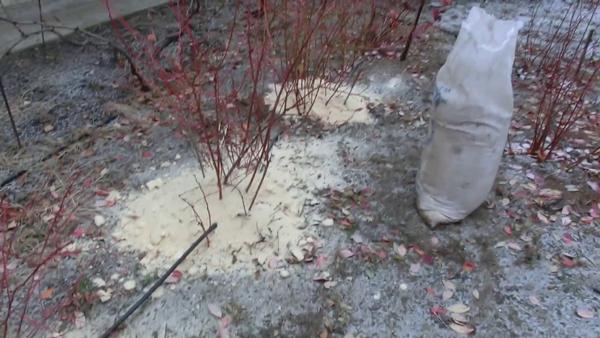
Autumn fertilization should begin no later than the end of August, using high-quality fertilizers containing magnesium. Applying fertilizer later can result in frost damage.
Diseases and pests
There are different plant diseases.
Stem cancer
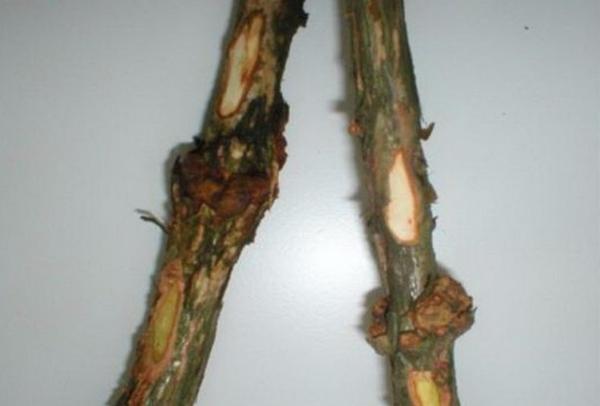
Characterized by the appearance of small red spots on the leaves, which grow and turn brown. Enlarging ulcers can be observed on the stems, which dry out.
Treatment involves cutting back and burning diseased branches. Then, treat the plant with fungicides such as Fundazol or Topsin. Three treatments are required, every seven days until flowering, and three treatments after harvest.
Prevention involves avoiding over-watering of the soil and excess nitrogen fertilizers.
Gray rot
With this disease, blueberry leaves and stems become covered with a brownish coating, which then turns gray and dies. The disease affects the entire plant.
Treatment involves treating the Northland plant with a 2% Bordeaux mixture starting in mid-April. Spray the affected bush with Fundazol three times every 7 days until the blueberry blooms, or use Eurapen—2 grams per liter.
Preventive measures include timely pruning and replanting of blueberry bushes.
Physalosporosis
The disease manifests itself as small reddish spots appearing on young branches of the bush. The following year, larger wounds appear, leading to the death of the branches.
Diseased shoots are cut off and burned. The bush is also sprayed with Bordeaux mixture, Fundazol, and Topsin.
Moniliosis
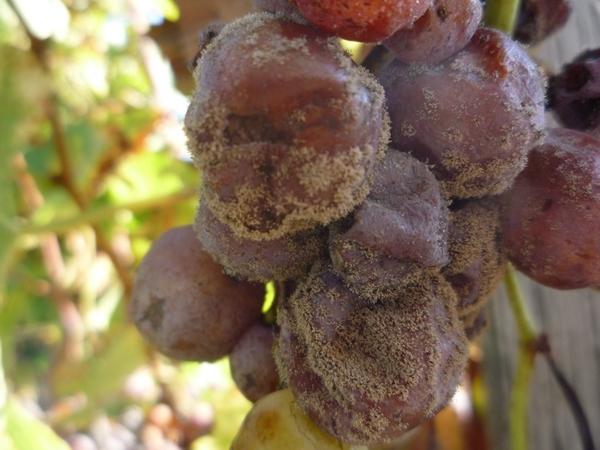
When affected, the ends of the plant's branches and inflorescences appear frost-damaged, but this is actually a fungus. Fruits infected with moniliosis become mummified.
The plant is treated by removing all affected parts of the bush. Topaz and Fundazol are used.
Aphid
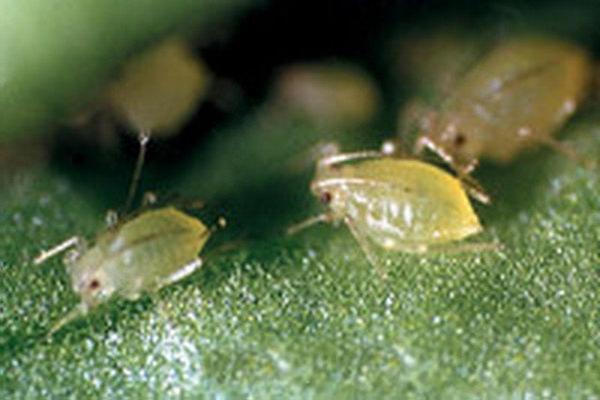
Externally, the insect appears as a colony of small individuals located on shoots and young leaves at the base of the plant. Aphids transmit many viral diseases. Diseased blueberry organs become deformed.
To destroy the pest, the bush is treated with insecticides:
- Karate.
- Calypso.
- Actellic.
Kidney mite
The spider mite is a small, white pest with long legs. The insect overwinters in the axils of plant leaves. In the spring, the spider mite settles in the area of leaves, buds, and flowers. It feeds on the plant's sap. Galls form on the bark, which become a breeding ground for viruses.
Blueberries are treated by treatment before the buds open, using iron sulfate, as well as such agents as KZM and Nitrofen.
Flower beetle
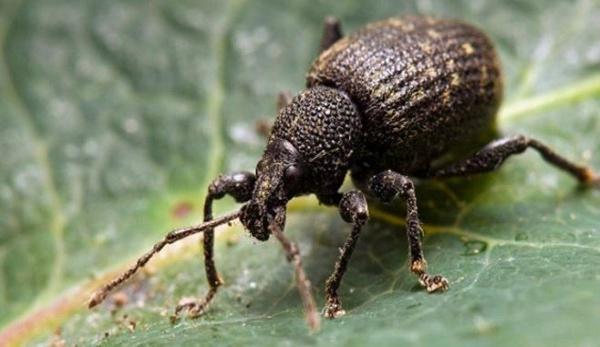
These are small beetles with brown specks on their bodies. They damage blueberry buds. The larvae feed on the stamens and pistils, secreting a mucus that subsequently prevents the buds from opening. This causes the flowers to dry up and fall off.
To treat blueberries, soil is treated., leaves using Fufanon and Intra-Vir. Periodically, shake the bush and remove insects from the branches.
Harvesting and storage
Berries are harvested from mid-July to the end of August.
Storing blueberries can be done in the following way:
- In the refrigerator, without washing the fruit, for up to 5-6 days, temperature - +2 degrees.
- In the freezer, without washing the berries – from 7 to 9 months.
- Bake the dried berries in a single layer in the oven for 1 hour at 40 degrees Celsius and 2 hours at 50-60 degrees Celsius, stirring 3-4 times. Store for up to a year.
Tips and recommendations
Northland is a berry worthy of gardeners' attention. Careful care of the plant will be generously rewarded with a healthy harvest:
- Select two-year-old blueberry seedlings for planting, up to 50 cm tall, with a closed root system. This will ensure optimal survival.
- Plant the plant in a sunny place, protected from drafts.
- The soil should have a pH of 3.5-4. To increase it, add acids such as citric, acetic, and oxalic.
- It is important to feed the plant correctly and water it regularly.
Related posts:
 Description and characteristics of 45 of the best varieties of garden blueberries
 Blueberry recipes for the winter, including freezing or blending with sugar to preserve all the vitamins
 Description and characteristics of the Elizabeth blueberry variety, planting and care
 How to feed and what fertilizers are best for blueberries, soil acidification
 Description of the Denis Blue blueberry variety and the subtleties of growing it
 Description and growing guidelines for the Reka blueberry variety
 Description and characteristics of the Toro blueberry variety, growing rules
 Blueberry planting and care guidelines in the Moscow region, including the best varieties