
- How do fertilizers affect plants?
- For the development of the bush
- On crop yield
- When to Fertilize Blueberries: Signs of Micronutrient Deficiency
- When to feed: timing and technology
- In the spring
- In summer
- In the fall
- The best types of fertilizers, their dosages and proportions
- Nitrogen
- Electrolyte
- Vinegar and citric acid
- Colloidal sulfur
- Potassium sulfate
- Phosphate rock flour
- Ammonium sulfate
- Microelements
- Phosphorus and potassium
- Complex fertilizers
- AVA
- "Good Force"
- Florovit
- Ogrod 2001
- Target
- Top dressing without fertilizers
- Ammonia
- Hydrogen peroxide
- Watering with "living" and "dead" water
- We select the best option depending on the blueberry variety
- Soil acidification
- What is contraindicated for fertilizing blueberries?
- Errors and how to fix them
- Excess of micro and macroelements
- Chemical burn of a bush
Fertilizer is applied to blueberry bushes throughout the ripening period. This not only increases yield but also creates the most favorable conditions for the bushes to thrive.
How do fertilizers affect plants?
Plants often lack sufficient nutrients for full development. Fertilizers are most often applied through the root system and offer numerous benefits depending on the type of nutrient. Proper fertilization can influence the following criteria.
For the development of the bush
The plant's nutritious minerals positively influence the plant's development, making shoots strong. The plant is less susceptible to disease. The presence of nutrients in the required quantities promotes vigorous growth in a short period of time.
Important: Blueberry roots contain strains of fungus that, as they develop, help the plant fully absorb all the nutrients from the surrounding soil.
On crop yield
Insufficient nutrients negatively impact the health of berries. Most often, the yield suffers. Fertilizer deficiency can also manifest itself as reduced flavor and berry deformation. To ensure a large harvest, blueberry fertilization is necessary throughout the season.
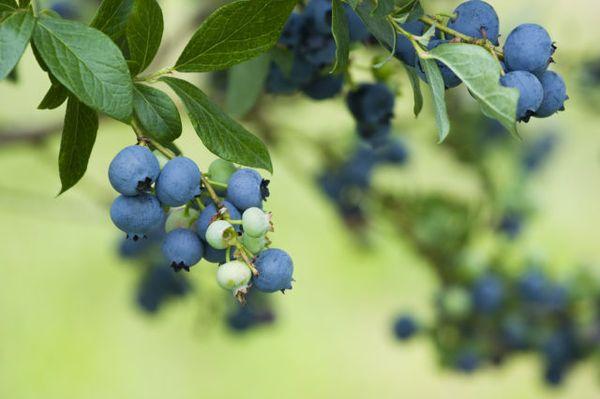
When to Fertilize Blueberries: Signs of Micronutrient Deficiency
To avoid harming the plant, it is necessary to apply fertilizers in moderation; excessive amounts of nutrients can not only reduce growth intensity, but also lead to the death of the blueberry.
Fertilizing is necessary in the following cases:
- the leaves turn yellow, the plant grows poorly;
- a red border appears on the edge of the leaf, the leaf gradually curls up and withers;
- the leaves become limp and drooping;
- the leaves are deformed;
- young shoots become weak and brittle;
- the bark on the shoots takes on a bluish tint and cracks;
- the berries develop poorly and may fall off unripe;
- the buds are not forming well.
There can be a large number of symptoms of a deficiency of useful components, which are difficult to identify in the early stages of development.
When to feed: timing and technology
Blueberry fertilization follows a specific schedule, and it's important to know which fertilizer can be used at which time of year. The plant prefers acidic soil, which is also important to consider when choosing a fertilizer.
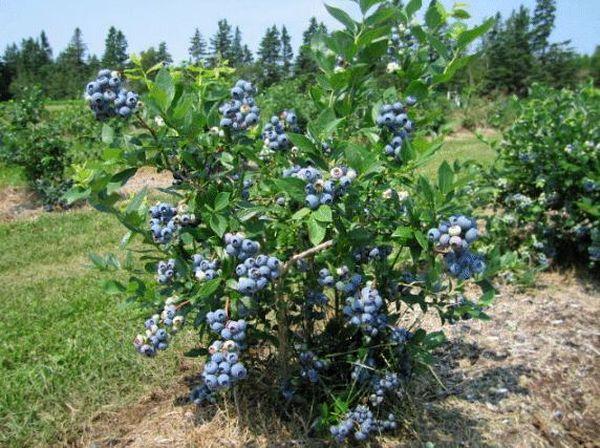
In the spring
The first application of fertilizer should be done immediately after the snow melts or at the end of March. Nitrogen-based fertilizers are applied during this period. If using a complex fertilizer, preference should be given to those containing nitrogen.
In summer
The next fertilizing application is in July, using a potassium-based fertilizer. In August, a mineral complex containing potassium and magnesium is applied. This is necessary to improve the flavor of the berries. Fertilizing is applied during irrigation.
Take a look Also
In the fall
Autumn fertilization should be carried out after the harvest. This type of fertilization is necessary to ensure the plant survives the winter and begins vigorous growth in the spring. Phosphorus and sulfur-potassium fertilizers are used.
The best types of fertilizers, their dosages and proportions
To apply fertilizer correctly, it's necessary to accurately calculate the proportions and select the right type of fertilizer. The type of fertilizer will depend on the problem being addressed and the time of year when the nutrients are applied.
Nitrogen
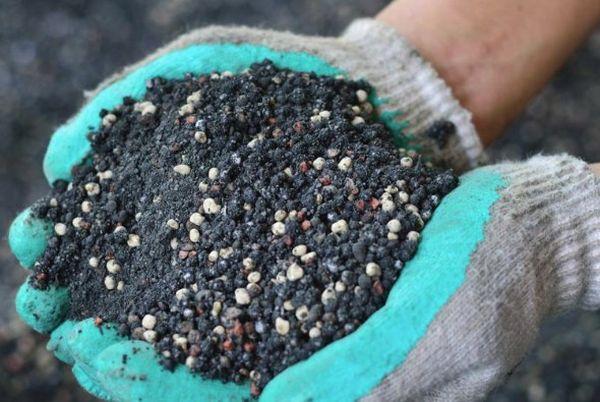
Nitrogen-containing fertilizers are essential for active plant growth, so they should be applied in early spring. A lack of this type of nutrient can also result in the absence of buds on the bushes. A lack of nitrogen leads to incomplete ripening of the crop and poor taste.
The following mineral preparations containing nitrogen can be used:
- Urea - for use, 20 grams of granules are diluted in 10 liters of clean water.
- Ammonium nitrate - 30 grams of substance per 10 liters of clean water.
- Nitroammophoska (NAP) is a mineral fertilizer that contains a complex of beneficial components, such as potassium, magnesium, and nitrogen. To fertilize blueberries, mix 30 grams in 10 liters of water and apply directly to the roots.
- Diammophoska contains a complex of nitrogen and potassium. To use, dissolve 20 grams of the product in 20 liters of warm water.
Nitrogen fertilizers are applied in the morning or after sunset onto previously loosened soil.
Electrolyte
Blueberries are a plant that prefers acidic soil. Therefore, electrolyte, which contains sulfuric acid, is used to additionally acidify the nutrient layer. To acidify the soil with electrolyte, follow these steps:
- mix 50 grams of electrolyte in 10 liters of water;
- leave for 1-2 hours, then water the bushes;
- At least 5 liters of solution are used for each bush.
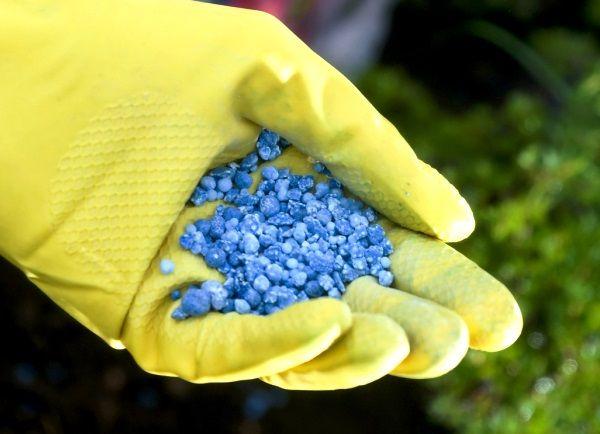
When watering, avoid contact with the plant and leaves to reduce the risk of burns. The solution should be poured at least 30 cm away from the plant.
Important: Mix the solution using electrolyte in a plastic container to prevent possible metal oxidation.
Vinegar and citric acid
To create an acidic soil environment, you can also water the plant with vinegar and citric acid. Use the following proportions: dilute 3 teaspoons of acid in 12 liters of water. You can replace the citric acid with a vinegar solution, using half a cup per bucket of clean water. Water the plant at least 5 liters per bush.
Colloidal sulfur
Using this substance not only allows for a bountiful harvest but also makes the soil ideal for growing blueberries. When using colloidal sulfur, 90 grams of the substance should be distributed per square meter. Residual sulfur may remain on the surface, but the substance dissolves after rain or regular watering.
Potassium sulfate
Potassium sulfate quickly acidifies the soil where blueberries are planted. Dissolve 40 grams in 10 liters of water and water the roots using the root system. Monopotassium phosphate, which contains phosphorus and potassium, can also be used. When using this substance, maintain a ratio of 20 grams per 10 liters of water. Potassium sulfate should be applied to the soil once a year to increase yield.
Take a look Also


Phosphate rock flour
A special type of product that is often used to increase blueberry yield. The substance is applied directly to the plant, followed by watering. 20-30 grams of flour can be applied per bush.
Ammonium sulfate
This type of substance is used to further acidify the soil. The use of ammonium saturates the roots with nitrogen and phosphorus, which has a beneficial effect on crop growth. To use, the substance is dissolved at a rate of 40 grams per bucket of water.
Microelements
Micronutrients should be applied to plants with caution, as too many can harm the crop. Copper, zinc, and iron are essential for plant development. You can also feed the crop using specialized complex fertilizers designed for blueberries.
Phosphorus and potassium
Timely application of phosphorus and potassium not only increases bud and berry production but also protects the plant from disease. These nutrients are applied once a year, with 100 grams of phosphorus and 2-3 grams of potassium per bush.
Complex fertilizers
Complex fertilizers can be used, which contain all the necessary minerals for the development of blueberries.
AVA
This complex fertilizer contains all the necessary components for the full development of blueberry bushes. Using the product does not require any additional nutrients. It promotes the growth of nitrogen-producing microbes. To apply the fertilizer, simply apply 100 grams of the product per bush and thoroughly till the soil.
"Good Force"
Developed specifically for feeding blueberries, it contains 7 components. To use, simply dissolve 10 ml in a bucket of water. This product is available in liquid form.

Florovit
Florovit has proven its effectiveness time and again. It helps acidify the soil and nourishes the roots with all the necessary elements. Apply 20 grams three times per season. The powder is scattered under the bush and mixed with the soil.
Ogrod 2001
Polish fertilizer is produced in granular form and distributed over the soil at a rate of 35 grams per square meter. Fertilization is performed three times.
Important: The interval between feedings should be at least one month..
Target
Contains all the necessary minerals for blueberry development. The instructions for use provide detailed feeding recommendations. The proportions are calculated based on the size of the bush. The package includes a measuring spoon for applying the fertilizer to the soil.
Top dressing without fertilizers
If necessary, you can use improvised means that can be found in every home.
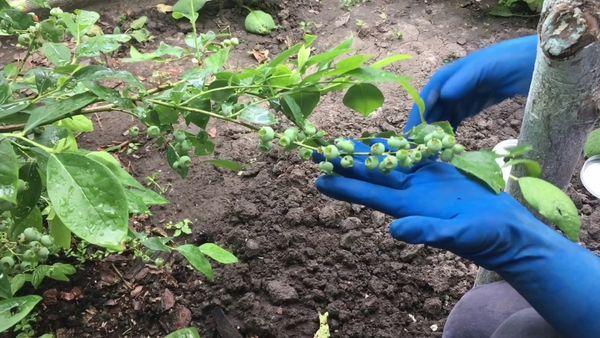
Ammonia
The medicinal substance contains a large amount of nitrogen, so it can be used as a fertilizer. To apply the fertilizer, prepare a working solution. Mix 40 grams of ammonia in 10 liters of water and water the blueberry bushes. For surface spraying, you can add 2 tablespoons of finely ground laundry soap to the working solution.
Hydrogen peroxide
Used to accelerate bush growth. To use, mix 3 tablespoons of hydrogen peroxide in a liter of water and add 1 teaspoon of liquid soap. Spray the bush with the resulting mixture.
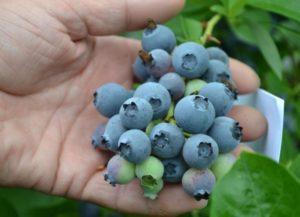
Watering with "living" and "dead" water
To obtain a liquid called "living" water, it must be negatively charged. "Dead" water has a positive charge due to electrolysis. When fertilizing blueberries, you can alternate between the two. However, it's important to note that "dead" water tends to acidify the soil and is considered more beneficial for this type of crop.
We select the best option depending on the blueberry variety
When choosing a fertilizing method, the blueberry variety is crucial. Highbush blueberries are commonly grown. All types of fertilizers, including complex and specially formulated ones, can be used for this crop. Garden blueberries can be fertilized with mineral fertilizers that acidify the soil, which will help create an optimal environment for the bushes.
Soil acidification
If blueberries are planted in non-acidic soil, the plants will develop poorly. The season before planting, the soil should be acidified. To acidify the soil, scatter sulfur granules or powder beforehand and thoroughly till the soil. The sulfur will gradually dissolve and promote the desired acidic state in the soil.
You can also acidify the planting site using ammonium sulfate. If the seedlings are already planted in the ground, you can acidify them using any acid, including acetic, oxalic, or citric. To do this, mix a small amount (no more than 30 grams) with 5-6 liters of water and water. You can also acidify the planting site with Thiovit Jet, a sulfur-containing product. Thiovit Jet helps eliminate a wide range of blueberry diseases.
What is contraindicated for fertilizing blueberries?
Some types of fertilizers can be harmful to plants, so it is not recommended to use them:
- wood ash;
- organic fertilizers such as manure, humus;
- substances containing lime.
Such preparations can normalize the acidity of the soil or cause burns on the roots of the bushes.
Errors and how to fix them
Gardeners often make mistakes that reduce yields or lead to crop failure. These mistakes include:
Excess of micro and macroelements
Gardeners often make mistakes by applying excessive amounts of nutrients. This leads to the plant rapidly gaining green mass, but failing to produce buds or fruit.
Chemical burn of a bush
Failure to maintain proper proportions can lead to root burn. To prevent this, proper care is essential. It's also important to allow time between fertilizations to allow the plant to recover.
Blueberries are a healthy plant with a distinctive flavor. Proper care allows you to harvest and grow a healthy plant in your garden.
Related posts:
 Description and rules for growing the Northland blueberry variety
 Description and characteristics of 45 of the best varieties of garden blueberries
 Blueberry recipes for the winter, including freezing or blending with sugar to preserve all the vitamins
 Description and characteristics of the Elizabeth blueberry variety, planting and care
 Description of the Denis Blue blueberry variety and the subtleties of growing it
 Description and growing guidelines for the Reka blueberry variety
 Description and subtleties of growing the Spartan blueberry variety
 Description and characteristics of the Toro blueberry variety, growing rules