
- The history of blueberry breeding Bonus
- Description and characteristics
- Habitat
- Botanical description
- Flowering and fruiting
- Collection and use of berries
- Immunity to diseases
- Resistance to low temperatures and drought
- Advantages and disadvantages of growing
- Landing specifics
- The right time for planting
- Site selection and soil preparation
- Step-by-step algorithm for planting a seedling
- Further care of the crop
- Irrigation and fertilization
- Mulching and loosening the soil
- Shaping and pruning
- Protection from diseases and insects
- Growing a bush
- Reviews of the variety
The Bonus blueberry variety originates from the United States. In Russia, it's grown on a small scale, primarily by gardeners. Therefore, the only way to taste these unusually large berries is to buy them from a private seller. Alternatively, you can try growing this marvel of American breeding yourself. With proper cultivation, Bonus adapts well to the moderate climate of the Moscow region.
The history of blueberry breeding Bonus
The variety was created by American scientists at the University of Michigan, with the participation of Jim Hancock. The researcher and breeder specializes in developing new strawberry and blueberry varieties. Bonus brought the idea to fruition, creating the largest-fruited blueberry variety in the world.
Description and characteristics
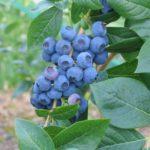
Blueberry Bonus is a mid-late variety that propagates well by cuttings. Five-year-old bushes are most productive. The large, deep blue berries are striking in size and have a memorable, piquant, tart flavor.
Habitat
Bonus blueberries grow in cool and temperate climates in the United States and Canada. Blueberries are popular in Europe, grown in Finland and Sweden. The variety adapts well to the Moscow region.
Botanical description
Blueberry Bonus Appearance:
- medium-sized, upright bush;
- average height – 1.5 meters, maximum height – up to 1.8 meters;
- root system - mycorrhiza or fungal root;
- elastic, straight shoots;
- stem thickness – 3 centimeters;
- smooth, dense, oval-shaped leaves, dark green in color;
- leaf length – 6-8 centimeters, width – 3-4 centimeters;
- bush width – 1.3 meters;
- white, pale pink bell-shaped flowers are collected in numerous inflorescences;
- the fruits are round, flattened at the poles, collected in inflorescences of 10-20 pieces;
- berry diameter is 2-3 centimeters, average weight is 1.8-2.5 grams, maximum is 3.5 grams;
- The dense, juicy, greenish flesh contains small seeds.
Take a look Also
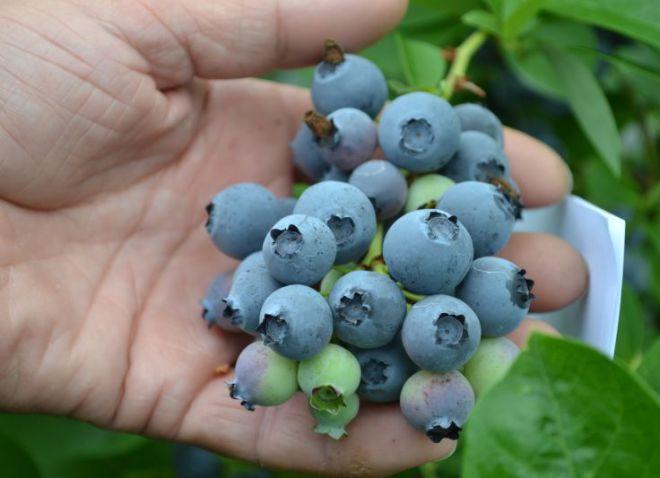
The green color of young shoots turns light brown in autumn. The leaves turn scarlet. Therefore, growing this variety offers a bonus: the bushes can be used as garden decoration. With age, the branches acquire a permanent brown color.
Flowering and fruiting
Bonus blooms from mid-May to late June. The variety is self-pollinating, but cross-pollination is possible to adjust the size and flavor of the berries.
Collection and use of berries
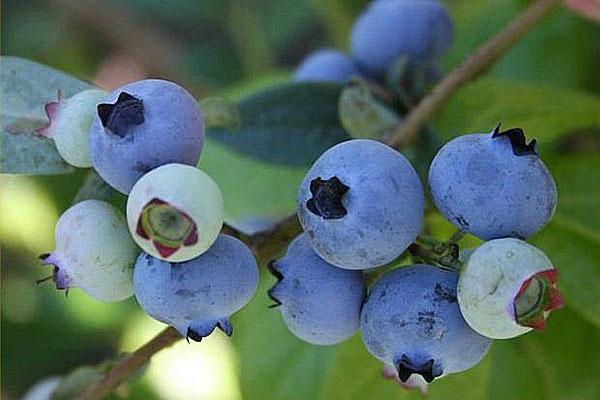
As they ripen, Bonus blueberries turn from green to blue. However, they can only be picked two weeks after this color change. Then they are fully ripe and sweet. A sign of ripeness is when the berry easily separates from the stem. With proper cultivation, one Bonus blueberry bush produces up to 8 kilograms of berries. In the Moscow region, the berries ripen from late August to September.
Blueberries Bonus are suitable for home consumption, canning, and large-scale cultivation for retail.
The berries are used in cooking – to decorate cakes, pastries, and to make pie fillings.

Immunity to diseases
Blueberries are susceptible to gray mold, late blight, and stem canker. The Bonus variety is hardy and highly resistant to disease. However, avoid dampness in the beds, as this will lead to mold.
Resistance to low temperatures and drought
The plant tolerates spring frosts and thaws reliably. The Bonus variety can withstand temperatures down to -35 degrees Celsius.
Advantages and disadvantages of growing
Pros:
- dense berries do not get crushed during transportation;
- high yield;
- endurance, resistance to changing climates and pests;
- large fruits are easy to collect by hand;
- attractiveness to buyers;
- high content of vitamins and antioxidants in berries;
- Bushes are used in landscape design.
Flaws:
- uneven ripening of berries;
- the variety is not suitable for automated harvesting;
- Determining the ripeness of berries requires experience in growing the variety;
The disadvantages include the long development of yield - the peak is reached 5 years after planting the seedling.
Landing specifics
Problems with growing Bonus blueberries in the Moscow region — stunted bushes and lack of fruit. Bushes require acidic soil for growth and fruiting.
The right time for planting
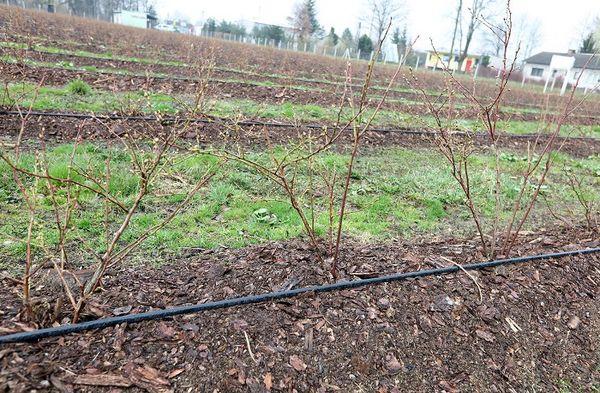
Seedlings are planted after the last frost, when the weather has stabilized and the soil has warmed to 10 degrees Celsius. This typically occurs in late March or early April. Fall planting is not always successful, as fragile seedlings freeze during the winter.
Site selection and soil preparation
Bonus blueberries thrive in an open, sunny or partially shaded location. The soil should be acidic, with a pH of 3.5-4.0. In neutral or non-acidic soil, the fungal portion of the root system will not function, and the plant will not be able to absorb nutrients. A pale yellow leaf color indicates that the soil's acidity is declining.
The soil should be light and well-drained, so peat and sand can be used. Blueberries don't grow in clay or loam soil. Proper drainage is also essential.
Six months before planting blueberries, measure the soil's acidity. If it's low, increase it with an aqueous solution of electrolytes and citric acid.
Step-by-step algorithm for planting a seedling
Sequence of actions:
- dig holes 1 meter deep and 1 meter wide, with an interval of 150-180 centimeters;
- leave a gap of 150-160 centimeters between rows;
- form the beds in the direction from north to south;
- pour a 5-centimeter layer of drainage into the bottom of each hole;
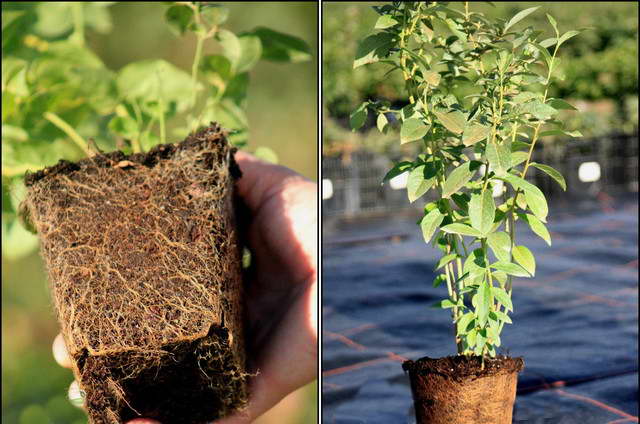
- Place seedlings in pots in water to soften the soil around the roots;
- pour water into the planting holes and wait until it is absorbed;
- straighten the roots of the seedlings and place them in the holes;
- sprinkle with acidified soil and cover the tree trunk circle with mulch.
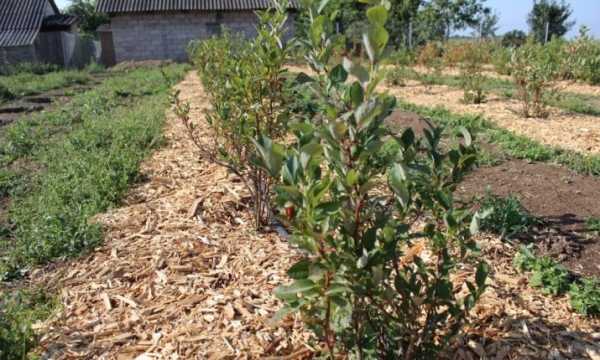
It's best to mulch with pine needles. Sawdust is not suitable for blueberries.
Further care of the crop
A bonus feature of growing blueberries is controlling soil acidity.
Irrigation and fertilization
Pour a bucket of water under each bush. The soil should be moderately moist. In dry soil, blueberry bushes grow slowly and produce small berries. It's important to monitor the soil's acidity. If the pH drops, add citric acid and electrolytes to the irrigation water.
Fertilizer is applied 3 times a year:
- early spring - nitrogen fertilization;
- during bud break - ammonium sulfate and superphosphate;
- After harvesting - phosphorus fertilizer.
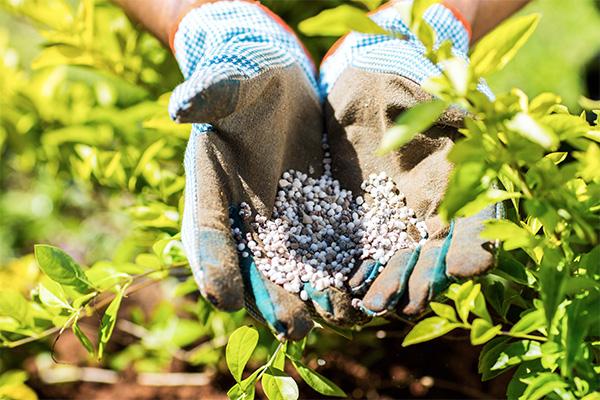
Calcium is added when fruit appears, and potassium is added after the fruiting period ends. Organic fertilizers are not added, as they harm the roots.
Mulching and loosening the soil
The soil must be loosened carefully, to a depth of 3 centimeters, so as not to damage the roots close to the surface of the earth.

Pine needles, spruce branches, and pine cones are best for mulching. Sunflower seed shells are good for winter cover.
Shaping and pruning
Medium-density bushes don't require intensive pruning. Shoots are pruned in the plant's third year of growth, after the fall harvest. Leave the bush at 40-45 centimeters tall and with strong branches.
Protection from diseases and insects
Blueberry Bonus has strong immunity to common diseases and pests. However, preventative fungicide spraying before flowering and after harvest should be done. In early spring and late fall, the bushes can be treated with Bordeaux mixture.
Sunlight maintains plant health. Therefore, weeds that rob plants of nutrients and block the sun need to be removed.
Growing a bush
Bonus blueberries are propagated by root cuttings and layering. A shoot is separated from the mother plant's root, planted in sand, and then transplanted into open ground after two years.
Rooting a layer is a faster method of propagation. The lower branch is bent down and covered with soil. Within a year, the shoot will develop roots, and the following year it can be replanted. Layers begin to root in the spring.
Reviews of the variety
Gardeners note that the Bonus fruit is larger than, for example, the Duke variety. The diameter is slightly smaller than a two-ruble coin. A two-year-old seedling planted in spring produces numerous inflorescences.
The berries' flavor is compared to marmalade. However, the fruits take a long time to accumulate sugar. Immediately after coloring, they are tart. The flavor of ripe berries is impressive with its vibrant, balanced acidity and sweetness.
Related posts:
 Description and rules for growing the Northland blueberry variety
 Description and characteristics of 45 of the best varieties of garden blueberries
 Blueberry recipes for the winter, including freezing or blending with sugar to preserve all the vitamins
 Description and characteristics of the Elizabeth blueberry variety, planting and care
 How to feed and what fertilizers are best for blueberries, soil acidification
 Description of the Denis Blue blueberry variety and the subtleties of growing it
 Blueberry planting and care guidelines in the Moscow region, including the best varieties
 Description and characteristics of the Toro blueberry variety, growing rules