
- Botanical features
- Advantages of planting on a plot
- The best varieties of white currants
- Dutch White
- Dessert
- Creamy
- Jumper
- Primus
- Smolyaninovskaya
- Juterborg
- White Fairy
- White Potapenko
- White grapes
- White squirrel
- English White
- Ural
- Minusinsk
- Margarita
- Belyana
- White boulogne
- We choose depending on the growing region
- For the Moscow region and central Russia
- For the Urals and Siberia
- For the Southern regions
- For the Altai Territory
- Specifics of agricultural technology of white-fruited crops
- Preparing the site and seedlings
- Timing and technology of planting
- Watering and fertilizing bushes
- Trimming
- Cleaning between rows and mulching the garden bed
- Seasonal treatment against pests and diseases
- Transfer
- Covering plants for winter
- Methods of propagation of currants
- Layering
- By cuttings
- Seeds
- Result
White currants are a healthy crop that's easy to care for and grow. Most varieties are disease-resistant. The fruits are easy to store and can be transported over long distances.
Botanical features
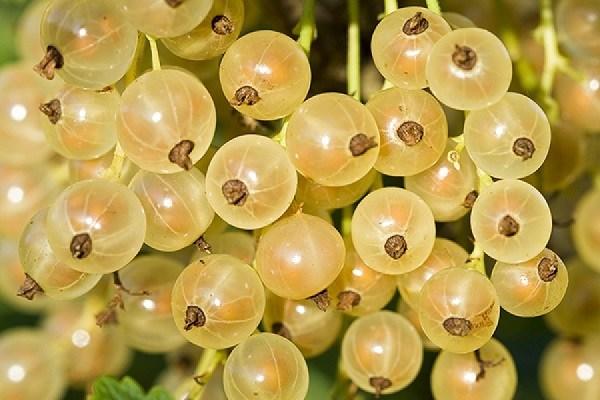
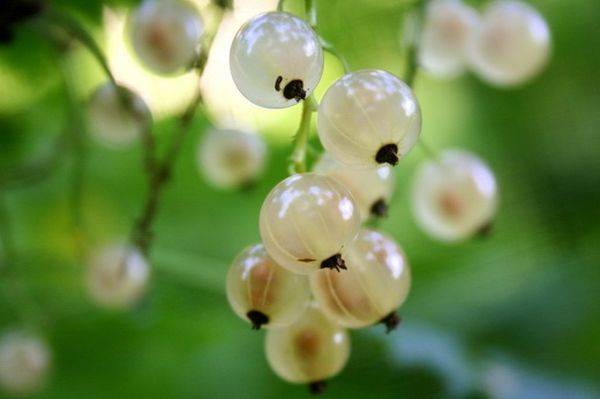
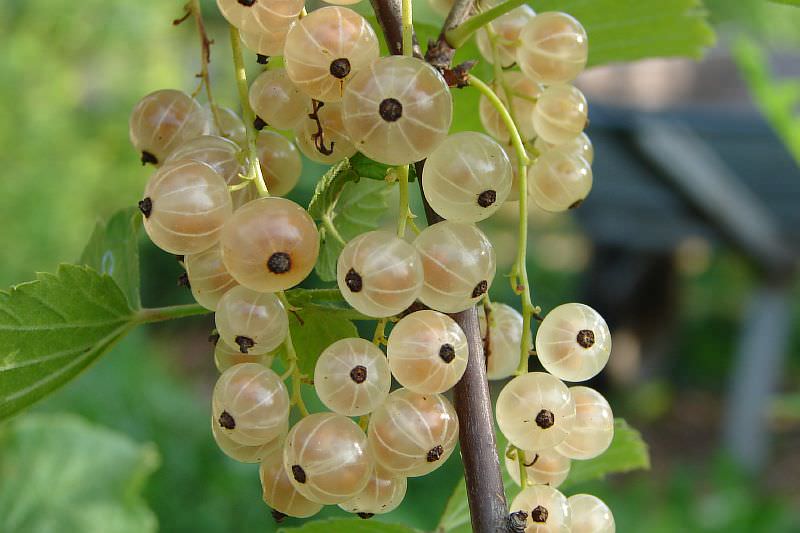
White currants are distinguished by their bush height, which can reach up to 1.5 meters. The leaves are trilobed, with small teeth along the edges. The inflorescences are small and light yellow. During flowering, small clusters form. The crop ripens in late summer. Once ripe, the berries turn white with a slight yellow tint. It's also worth noting that the berries do not fall off. The fruits have no pronounced aroma.
Advantages of planting on a plot
Planting a bush has the following list of useful points:
- the culture is distinguished by its harvest;
- the berries do not fall off, are suitable for freezing, without reducing their beneficial properties;
- the bushes are resistant to diseases, including currant mite;
- the bushes do not require regular watering, even in dry weather conditions they produce a good harvest;
- do not require maintenance, can tolerate low temperatures;
- The berries are healthy.
The berries can be transported over long distances without damage.
The best varieties of white currants
Among the list of varieties, it is necessary to highlight those frequently used among gardeners.
Dutch White
The bush reaches 1 meter in height and has a moderately spreading habit. It begins bearing fruit in midsummer. The berries have a firm skin. It tolerates long-distance transport and can be stored without losing its flavor.
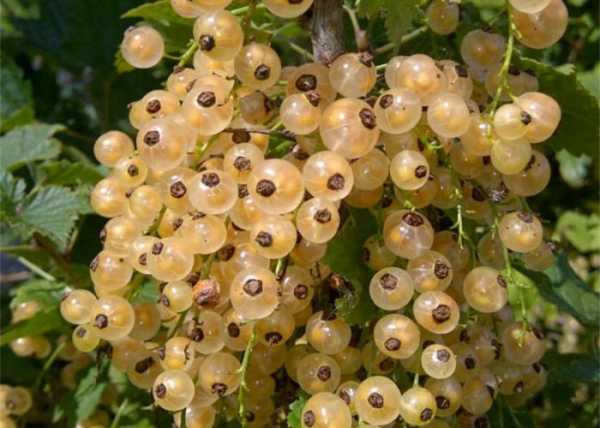
Dessert
The bush can reach 1.2 meters in height, with straight, densely spaced branches. The plant ripens in mid-July. The berries are juicy, weighing up to 1 gram. After harvesting, the berries must be processed immediately.
Creamy
The crop ripens in mid-July. The bush can reach a height of up to 1 meter. The clusters are large, reaching 10 cm, and the berries are cream-colored. They are sweet and large.
Jumper
A mid-season variety. The berries are round and creamy. The bush can reach a height of up to 1.5 meters. The branches are erect, weakly developed, with brown bark.
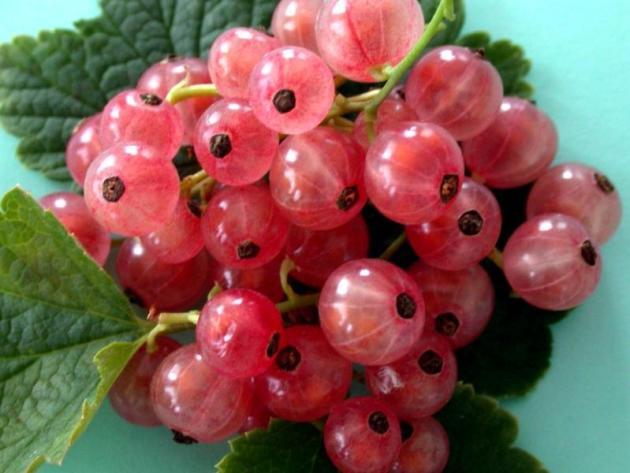
Primus
This variety is easy to care for. The berries are juicy, thin-skinned, and sweet. They ripen in late July.
Smolyaninovskaya
The variety ripens in late July and is resistant to low temperatures and diseases.
Juterborg
The bushes reach 1.3 meters in height and are slightly spreading. The berries are flattened and can be stored.
White Fairy
This currant is an early variety, also known as Diamond. The shoots quickly become woody, so regular pruning is necessary. The berries are tart, and this variety is noted for its productivity and resistance to disease.
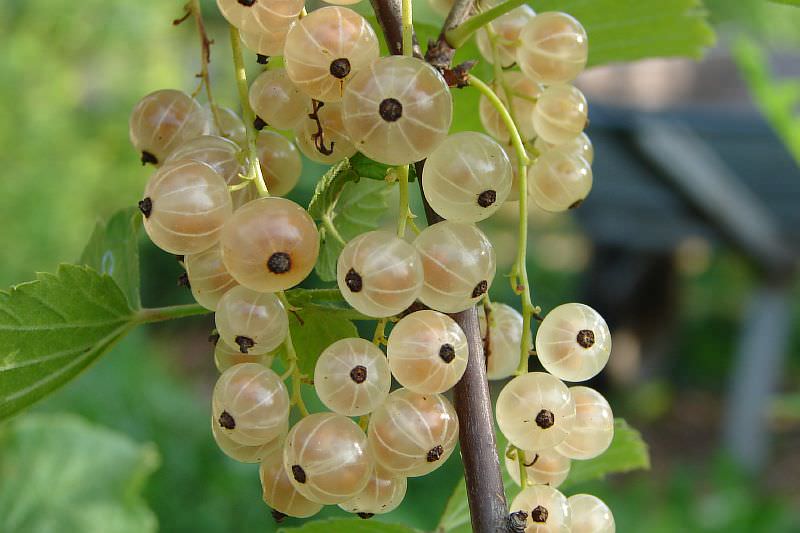
White Potapenko
A mid-season variety. The variety is named after the breeder who first developed it. The berries are small and sweet and tart. They are disease-resistant and suitable for fresh harvesting and further processing.
White grapes
This is a mid-season variety. The fruits are sweet and suitable for storage and transportation.
White squirrel
This is a mid-early variety. The bush grows up to 1 meter tall. The clusters are large, reaching 12 cm, and the berries weigh up to 1 gram. The berries have a sweet, juicy flavor. After harvest, they can be stored for 3-4 days.
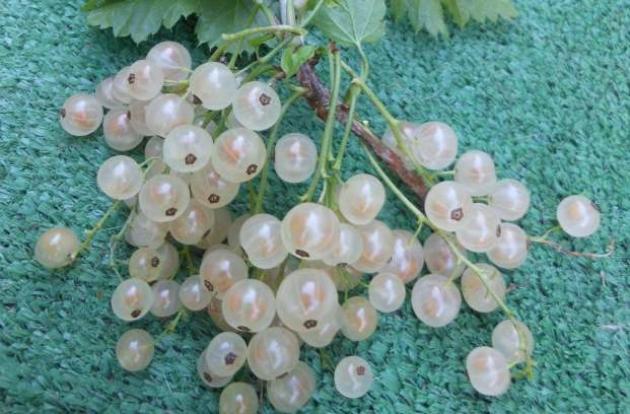
English White
The variety ripens early, in late June. It can withstand low temperatures. The shoots are upright, and the fruits are round and sweet.
Ural
This cultivar is self-pollinating. It ripens early and is disease-resistant. The fruits are round and sweet.
Minusinsk
This variety is disease-resistant. The berries are large and can be stored for up to a week. The bushes grow up to 1 meter tall and are slightly spreading. The fruits ripen in mid-summer.
Margarita
Medium-sized bush with large berries. The fruits are sweet and juicy.
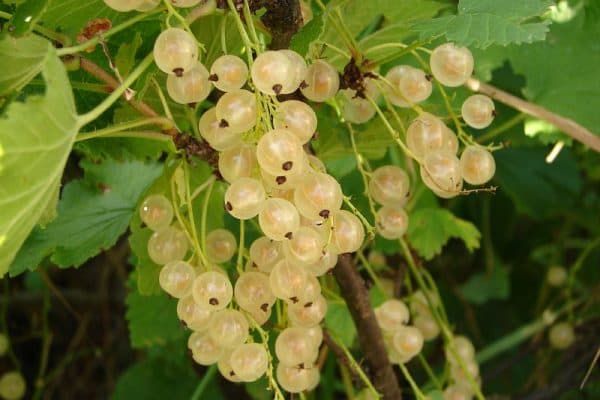
Belyana
Currants ripen in midsummer. They are known for their high yield and excellent flavor. Fruits can reach up to 1.5 grams in weight and are white with a slight yellow tint.
White boulogne
The crop is early, with small, slightly spreading bushes. Currants are productive and easily tolerate low temperatures.
Important: Currants retain their shape after harvesting, even during transportation. However, to ensure this, they are harvested in special boxes. The fruits are stacked in no more than two layers.
We choose depending on the growing region
To obtain a harvest, it is necessary to choose the right currant varieties, depending on the region in which the gardener lives.
For the Moscow region and central Russia
For these regions, it's important to select mid-season varieties. The following species are recommended:
- Diamond;
- Bayan;
- Smolyaninovskaya;
- Creamy.
These varieties are the sweetest and most productive. Proper care prevents diseases and pests.
For the Urals and Siberia
It's important to select varieties that tolerate low temperatures and have an early ripening period. The following currant varieties are recommended for this region:
- Belyana;
- Ural;
- Minusinsk;
- Potapenko.
Fruits with good taste characteristics.
For the Southern regions
All varieties of white currants are grown in these regions. However, gardeners most often prefer:
- Versailles White;
- White Fairy;
- Creamy.
Southern regions have a mild climate, so currants easily adapt to new growing conditions. However, in arid regions, irrigation is necessary to ensure a productive harvest.
For the Altai Territory
The following varieties are used in this region:
- Boulogne White;
- Dessert;
- Ural white.
Take a look Also
The crops are immune and do not require complex care.
Specifics of agricultural technology of white-fruited crops
To plant white currants, it is necessary to follow specific agricultural practices; otherwise, the yield will be low and the plant may die.
Preparing the site and seedlings
Before planting seedlings, prepare the site. Remove all excess vegetation and roots. Dig thoroughly, removing all weed roots. The site should be level and sunny. The soil should be loose and neutral in pH. Before planting, fertilize the site by adding a bucket of compost, a cup of wood ash, and 100 grams of superphosphate per square meter.
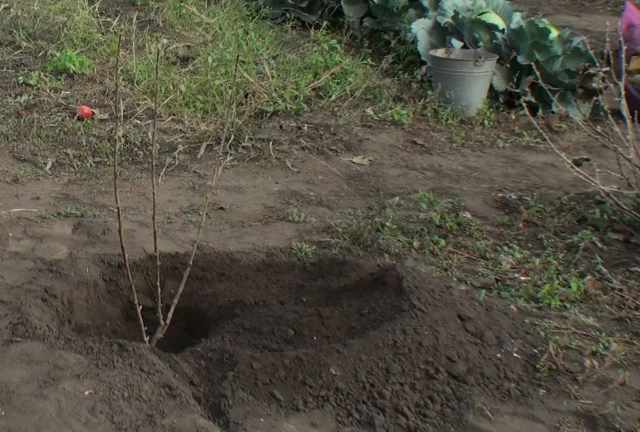
Before planting, seedlings are soaked in a growth activator and planted in open ground. If purchased, they should be treated with a mild solution of potassium permanganate.
Timing and technology of planting
Choosing the right time for planting seedlings is essential for a successful harvest. Currants can be planted in the fall, around September, or in early spring, around mid-April, when the soil has warmed up. In the spring, seedlings with closed roots are preferentially used.
The process of planting currants in open ground consists of the following stages:
- on the prepared area, dig holes up to 40 cm deep;
- a quarter of the hole is filled with a nutrient mixture in the shape of a hill;
- the seedling is placed in the ground at an angle of 45 degrees, the roots are straightened out on the hill;
- the seedling is filled with soil and compacted;
- The planting site must be watered with warm water.
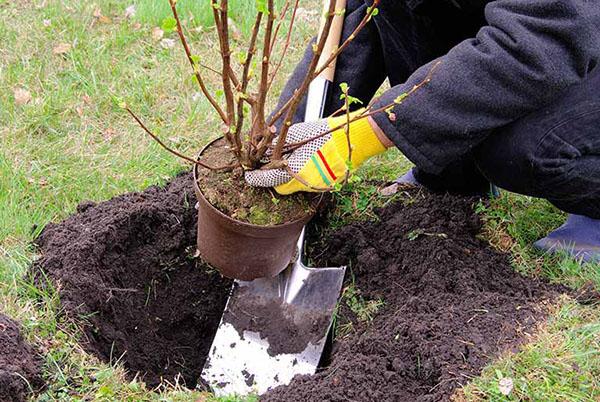
Seedlings should be planted at least 1 meter apart. Otherwise, once the bushes have grown, the mature plants will need to be replanted.
Watering and fertilizing bushes
The plant doesn't require excessive watering. It should be watered every 5 days. However, in early June, when the ovaries are forming, the amount of water should be increased.
The bush requires regular fertilizing. No fertilizer is applied during the first year after planting. In the second year, follow the following fertilizing schedule:
- in the spring, after the soil has warmed up, nitrogen fertilizers are applied;
- at the end of May - beginning of June it is necessary to add organic fertilizers;
- superphosphate is used in summer;
- In the fall, after harvesting, fertilizing is carried out using humus.

Before flowering, potassium fertilizers should be applied. These minerals increase the intensity of flowering and fruit set.
Trimming
The bush is pruned in the fall, removing all damaged shoots. In the spring, it is necessary to perform sanitary pruning and remove damaged and dead branches. Pruning for shaping the bush can also be done in the spring.
Cleaning between rows and mulching the garden bed
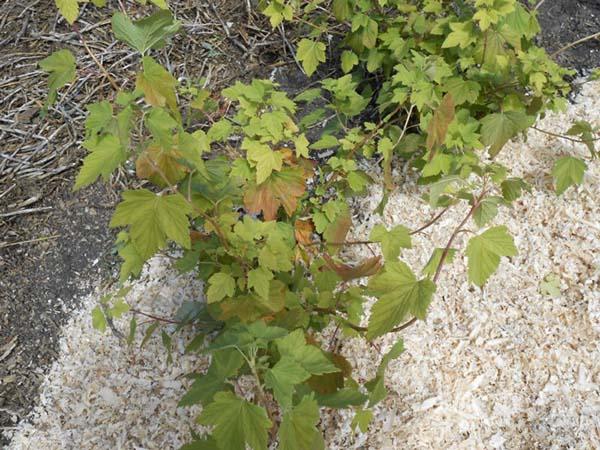
The presence of weeds between bushes often encourages pest infestations. Therefore, weeds are removed as they appear. Regular soil loosening is also essential to oxygenate the soil. To prevent weeds from appearing, proper soil care and mulching are essential. Wood shavings or special fiber are used for this purpose.
Seasonal treatment against pests and diseases
White currants are immune to many diseases. However, pests can appear on the bushes. This occurs as a result of larvae and bacteria accumulating in damaged shoots or soil layers.
To reduce the risk of diseases and pests, the bushes must be treated twice.
The first treatment is carried out immediately after the snow melts. The second spraying is done after the harvest, when the leaves begin to fall from the bushes.
Transfer
Transplanting is often necessary when the planting site is poorly chosen or the seedlings are planted too close together. Currants are transplanted in the spring, after the snow melts. This procedure is performed before the buds swell to reduce the risk of damage. In the fall, transplanting is done in mid-October.
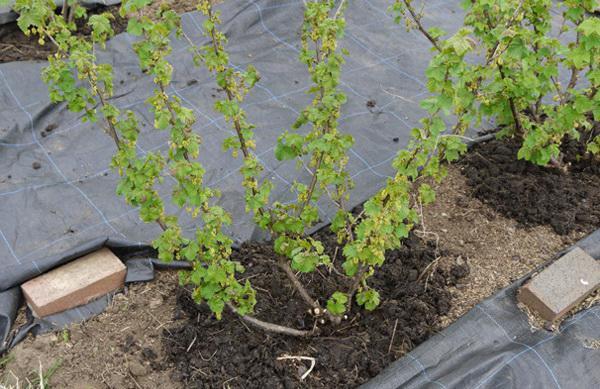 Important: Repotting a mature bush is a labor-intensive process that can harm the plant. Therefore, it is necessary to apply fertilizer during planting.
Covering plants for winter
The plant does not require winter protection. However, in some regions with harsh winters, it is necessary to prune the bushes and cover the roots with humus and spruce branches. The shoots can be covered with burlap.
Methods of propagation of currants
The crop is easy to propagate. The method used determines whether the crop's flavor characteristics are preserved.
Layering
To propagate this way, the shoot must be bent toward the ground and dug in. This procedure is performed in early spring before the buds swell. Typically, the finished seedling can be planted separately after a year.
By cuttings
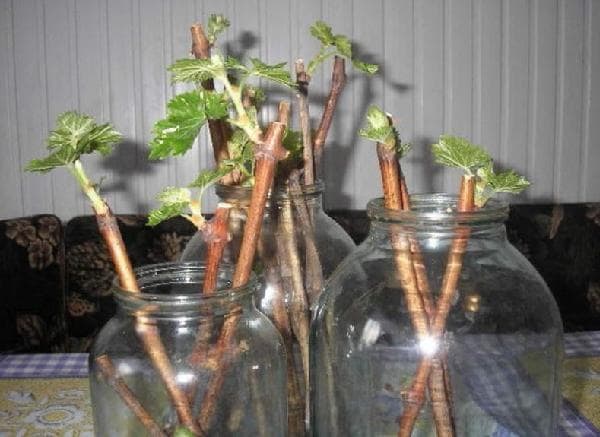
Propagation by cuttings is much more common. After the buds have swollen, separate the cutting. It's important that the cutting has at least 3-4 buds. Place the cutting in soil and water. Leaves should appear within 1-2 weeks. This seedling can be replanted only after one year.
Seeds
This method is rarely used. To use it, currant seeds are planted in a seedling container in early February. After the shoots emerge, the seedlings should be placed in a greenhouse or on a windowsill until April. After the soil warms up, the seedlings are transplanted into the soil in their permanent location.
Result
White currants are much less commonly grown than red and black currants. However, the fruits have distinctive flavors and contain nutrients essential for human development.
Related posts:
 Descriptions of the 20 best cherry varieties for the Moscow region, their planting and care
 The best grape varieties for growing in the Urals, planting and care rules in summer
 Description of 36 of the best sweet and large varieties of gooseberries
 Description of varieties of sowing peas and cultivation, to which family they belong
 Which tomato varieties are best for open ground?
 How to propagate and grow peas, cultivation technology, and care in open ground
 How to properly plant peas in a greenhouse and open ground
 Description and characteristics of 45 of the best frost-resistant grape varieties