
- Methods of blueberry propagation and selection of optimal timing
- Cuttings
- Green cuttings
- Root
- lignified
- Semi-lignified cuttings
- Preparing suitable beds for rooting seedlings
- Peculiarities of caring for young sprouts
- Seed method
- By dividing the whole bush
- We propagate the plant by layering
- Root shoots or partial bushes
- How do the timings depend on the growing region?
Many gardeners are interested in how to properly propagate blueberries. Today, numerous methods are known. New plants can be obtained by cuttings. The crop can also be propagated by seeds, layering, and root suckers. Each method has its own advantages and disadvantages. To ensure the desired results, it is essential to strictly follow the instructions.
Methods of blueberry propagation and selection of optimal timing
There are many methods for growing garden blueberries. Each has its own advantages and disadvantages.
Cuttings
Blueberries propagate well from cuttings. These are usually taken in the summer. In the fall, the planting material should be prepared for storage and then transplanted into the ground in the spring.
Green cuttings
This method of blueberry propagation is the most commonly used. It is recommended to begin harvesting green cuttings in late June. To do this, select high-quality, defect-free shoots. Gardeners recommend cutting branches with at least five buds.
After cutting the material, prepare the soil. It's recommended to mix sand and peat in a 1:3 ratio. Plant the cuttings in this prepared soil. It's important to maintain a 5x5 cm pattern. It's recommended to propagate the cuttings in a container, covered with plastic wrap.
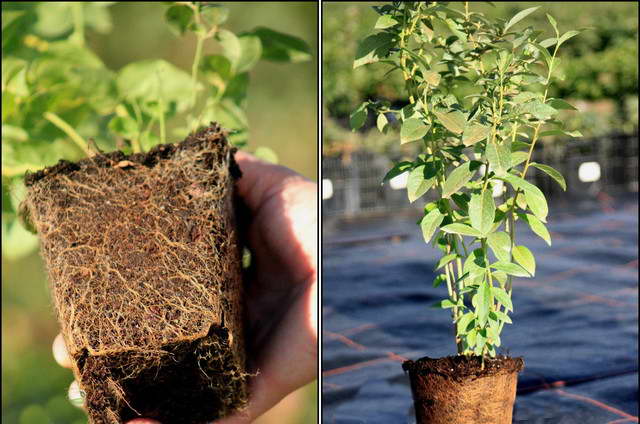
After a couple of months, the cuttings will root. During the winter, it's recommended to cover the blueberries with peat and sawdust. In the spring, the cuttings are planted in a greenhouse and watered.
This method has significant advantages:
- it is possible to preserve the varietal characteristics of the mother plant;
- seedlings develop stronger roots compared to other varieties;
- The bushes are characterized by excellent endurance.
However, this method has certain drawbacks. The key drawback is that blueberries take root in August, meaning they may not be ready for the upcoming frosts. Therefore, the crop requires optimal conditions for the winter.
Root
This method isn't suitable for tall plants, as they don't produce underground rootstocks. Therefore, it's used for swamp blueberries, twig blueberries, and lowbush blueberries. Their rootstocks provide good material that roots easily.
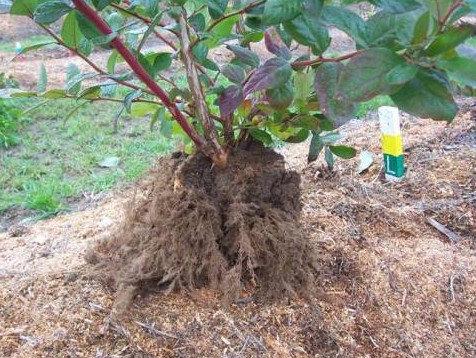
To carry out the procedure, it is recommended to perform the following steps:
- Prepare a bed in a shaded area. Add pine needles, peat, and sawdust to the soil. A complex fertilizer is also recommended.
- Expose the overgrown roots of selected mature plants. It is recommended to trim off any long roots.
- Cut the resulting material into cuttings 10-17 centimeters long. It's important that each cutting contains a large bud.
- Form furrows in the bed. They should be 10-12 centimeters deep, spaced 15 centimeters apart. Water them thoroughly.
- Place the cuttings in the holes. It is recommended to point the bud upward.
- Sprinkle the cuttings with soil and water again.
- Place a covering of hoops over the bed and cover it with spunbond. Remove it after a month. By this time, sprouts should appear. If this doesn't happen, you can suspect a problem. The cuttings may have dried out or, conversely, rotted. They are also often attacked by soil pests. To determine the cause, dig up a few roots and assess their condition.
- From planting until early fall, the soil should be watered regularly. It's important to ensure it doesn't dry out.
- By the end of the season, you'll be able to harvest ready-made seedlings. It's recommended to transplant them to a permanent location or leave them in the garden bed. This should be done until spring. Beforehand, mulch the area with peat and cover it with spunbond.

lignified
Woody cuttings are often used to propagate blueberries. These should be harvested in March or April. For this purpose, it is recommended to cut the shoots, leaving five buds on each. The branch should be at least 15 centimeters long.
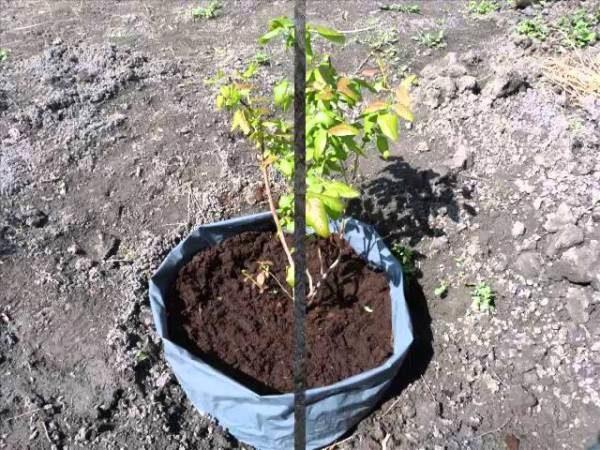
To prepare the soil, use peat moss. Place the cuttings in it, leaving two buds at the top. Blueberries can be propagated in containers.
It is recommended to place it in a greenhouse. It's important to consider the temperature. The greenhouse should be warm, but not too hot. Cuttings take a short time to root—a full 1.5 months. After three months, they need to be fertilized. For this purpose, ammonium is recommended. Apply 10 grams of fertilizer per square meter. Plants should be moved to the nursery in the spring.
Semi-lignified cuttings
Blueberries can also be propagated using semi-hardwood cuttings. These are best harvested in the summer, from the second half of June to the end of July. This should be done 1-2 weeks in advance. For this purpose, branches from the current year's growth or branch shoots are used.
Shoots that have finished growing should be removed. A sharp downward motion is recommended. This preserves a fragment of last year's wood on the cutting. Strips of bark at the ends of branches should be trimmed off. Use a sharp tool for this.
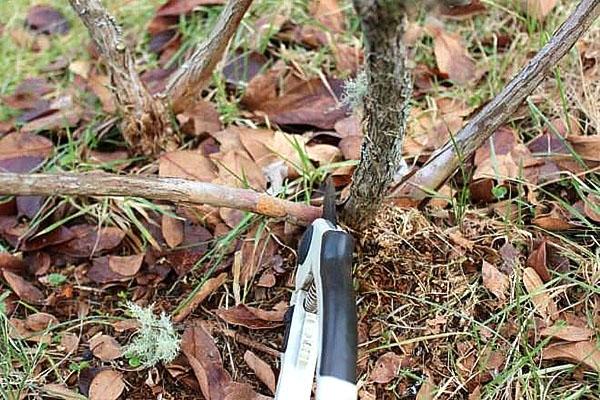
The leaves should be removed from the lower section of the cutting—half or a quarter of the length. The cutting is then dipped in a special rooting powder. The resulting material should be transferred to the greenhouse, onto pre-prepared beds. This should be done so that the leaves do not overlap.
It takes at least a month and a half for semi-woody cuttings to root. During this period, regular watering of the beds is recommended. It's important to ensure the leaves don't wilt. The greenhouse needs adequate ventilation, and the cuttings require treatment against harmful insects and diseases.
However, using nitrogen fertilizers is not recommended. It's important to allow the cuttings to develop woodiness. This will help them survive the winter more easily.
At the end of August, the covering material should be removed from the greenhouse where the rooted cuttings are already located. In October, the plants should be covered with a layer of sawdust or peat, 5-7 centimeters thick. In early November, it is recommended to cover the beds with spunbond. In this form, the young plants can survive the winter. In the spring, when the soil has completely thawed, the young plants should be moved to a seedling nursery or placed directly in containers for further growth.

Preparing suitable beds for rooting seedlings
Cuttings can be planted in a hotbed or greenhouse. To do this, it's important to prepare the beds in advance. These can be done using the following methods:
- You can make a wooden frame. It should be rectangular and 20-25 centimeters high. Fill it with prepared soil.
- You can remove the top 20-26 centimeters of soil. Fill the resulting hole with prepared soil.
Peculiarities of caring for young sprouts
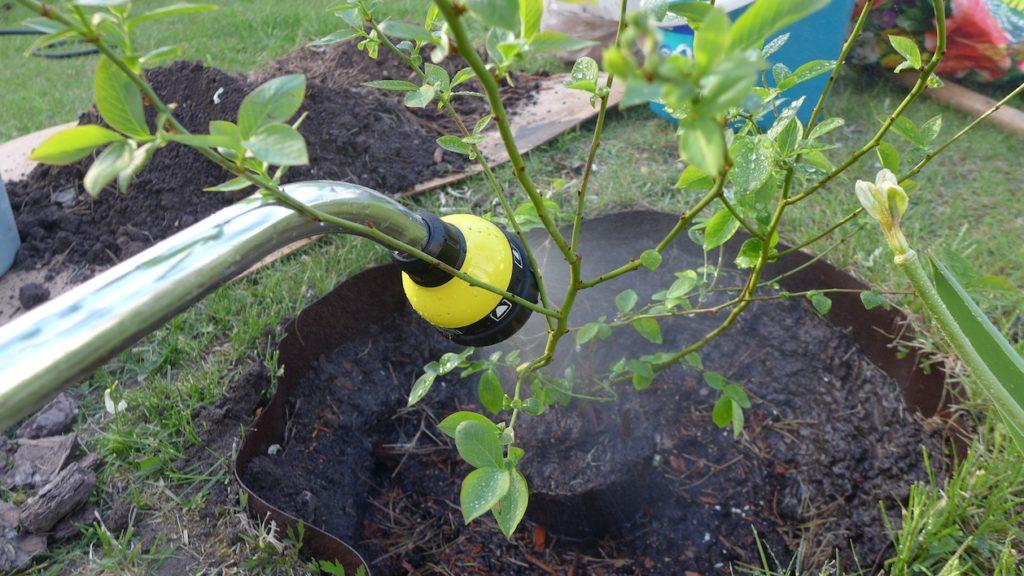
These plants require comprehensive care. First and foremost, ensure the correct temperature. It should be between 18 and 21 degrees Celsius. If the soil is too cold or too warm, the plant's weak roots will die.
It's important to monitor the development of diseases and pest attacks. If any unwanted symptoms appear, immediately treat the crops with Kuprozan or Fundazol.
Azofos can also be used. Insecticides can help eliminate harmful insects. Ambush is a good choice for this purpose. Cuttings should be watered regularly and the optimal humidity level in the greenhouse should be monitored.
Seed method
Propagation by seed is considered a rather labor-intensive method. It is not typically used at home. This method is most often used to develop new varieties.
Seed stratification takes 90 days. Seedlings should ideally be obtained in March. Therefore, it's best to begin preparing the planting material in early December. Plants should be planted superficially.
Then it's recommended to water them and cover them with glass. Sprouts will emerge in 1-3 weeks. They should be grown like regular seedlings.
By dividing the whole bush
A bush with several full-fledged shoots and strong roots is recommended to be divided into several sections. To do this, dig it out of the ground and carefully separate the shoots that contain a sufficient number of roots. They should be 5-7 centimeters long.
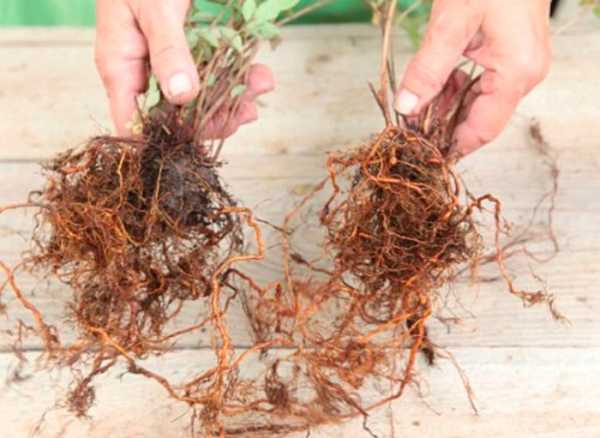
The resulting seedlings should be inspected. If damaged roots are found, they should be trimmed. The seedlings should then be immediately transferred to a new location. It is recommended to plant the plants 10-12 centimeters deeper to encourage new roots. After planting, water the plants thoroughly and trim their branches back to a short length.
We propagate the plant by layering
To propagate blueberries using this method, select strong branches in the spring or early summer. Cut back one-year-old shoots by a fifth and place them in a hole. Secure all cuttings to the ground. Wire hooks can be used for this. Cover the hole with sawdust.
When the vertical shoots reach 8-10 centimeters, they should be earthed up to half their height. For this, it is recommended to mix equal parts peat and sawdust. This procedure is repeated three times, as the shoots grow..
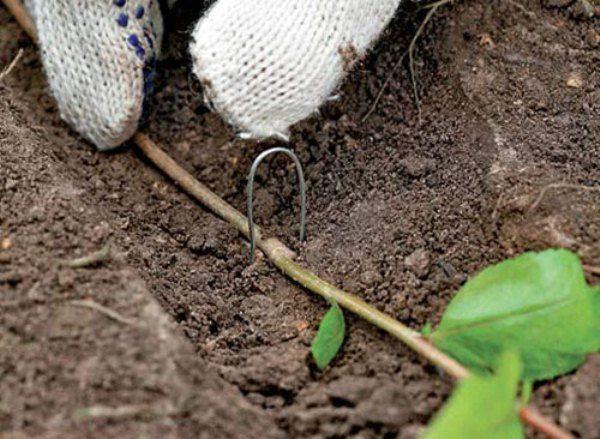
The soil should be kept moist all summer. It should be watered and loosened regularly. After about 2.5 years, the shoots will develop full-fledged roots. At this point, they are transplanted to their permanent location.
Root shoots or partial bushes
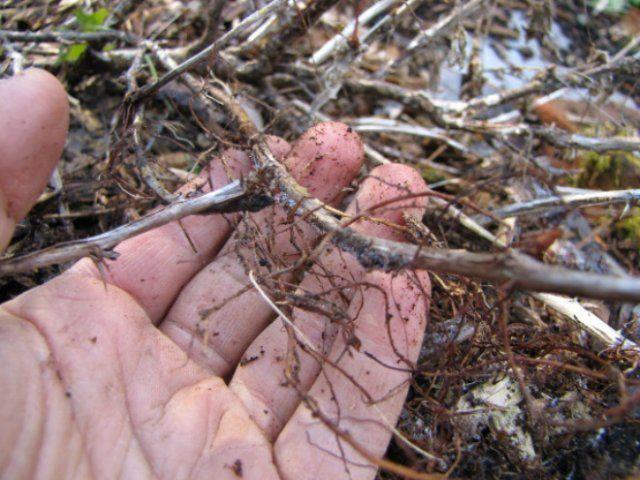
Some varieties of this plant produce root suckers. These appear about 30 centimeters from the main plant. It's best to separate the seedlings in the spring. It's important that they develop full-fledged roots before autumn.
It's crucial to prune the taproot, which connects the main plant and the shoot, with extreme care. Pulling out the shoot is strictly prohibited. Dig around it, find the connection, and cut it off. Then transplant the plant to its permanent location.
How do the timings depend on the growing region?
Blueberries are successfully cultivated in various countries, including Russia, the central regions of Belarus, and Kazakhstan. Belarus's natural conditions are ideal for growing the crop, which is why it is grown throughout the country.
Central Russia is characterized by severe frosts. Therefore, planting is recommended in April. The crop is stored for the winter in the second half of October or November.
The Urals and Siberia have a fairly harsh climate. Therefore, in these regions, it's best to grow special frost-resistant varieties. When propagating, it's recommended to use tunnel greenhouses or hothouses.
Blueberries are propagated in a variety of ways. Cuttings are considered the most effective. This can be done using green, root, or woody cuttings. Other methods require significant gardening skills.
Related posts:
 Methods for planting and propagating cherries at home
 How and by what methods can gooseberries be propagated, timing and planting
 How to propagate grapes in summer using green cuttings at home
 The best grape varieties for growing in the Urals, planting and care rules in summer
 Rules and methods for grafting plums in summer, tips for beginners
 Conditions for growing mandarin at home and rules for caring for the tree
 How to grow an apple tree from a branch and how to properly care for the plant
 The best methods for growing grapes from seeds at home