
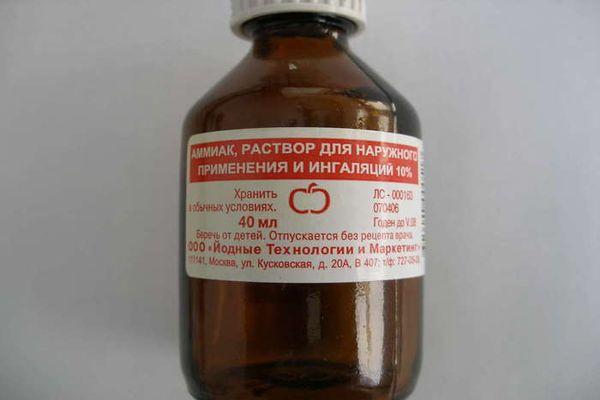
Garlic is treated with ammonia when the plant's leaves turn yellow due to attacks by various garden pests. Garlic is most often fertilized with ammonia, but ammonia can also be combined with other substances to protect the plant. Let's consider the purposes and uses of this substance in agriculture.
How does the protective agent work?
Gardeners can buy ammonia (a 10% solution of ammonia in water) at any pharmacy. It's relatively inexpensive, making it affordable for almost everyone.
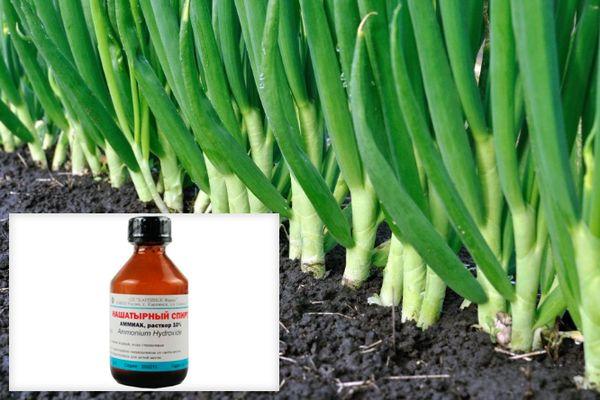
The use of the substance in agriculture occurs for the following reasons:
- For a plant to thrive, it needs to build up green mass. Only then can garlic produce the required amount of chlorophyll, bloom profusely, and produce ovaries and fruit. For this, the plant requires nitrogen; otherwise, the leaves on the seedlings will begin to yellow and dry out.
- Ammonium nitrate or urea are used as fertilizers to supply garlic with the necessary element. However, these substances contain relatively little nitrogen, so garlic may not have enough to produce chlorophyll.
- Ammonia contains the required amount of nitrogen compounds, which in solution can be 80-83%.
- However, it takes time for the seedlings to absorb the nitrogen they need. Due to the high concentration of nitrogen in alcohol, ammonia fertilizers for garlic should be applied in small doses.
- Ammonia is used not only as a fertilizer, but also as a preventative measure against certain diseases common to garlic.
It is recommended to water garlic with ammonia when the gardener notices symptoms of plant damage such as pale and yellow lower leaves, thin and brittle stems, and a decrease in the size of leaf blades.
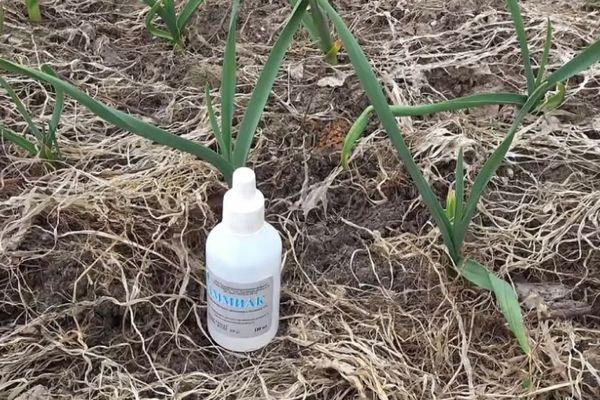
Ammonia is also used when flowers fail to bloom, when flowers are falling off, when seedlings are stunted, or when garlic growth has completely stopped. Farmers say that one bottle of ammonia is sufficient for treating small gardens. However, for larger areas, it is recommended to purchase ammonia in 20- or 50-liter containers. Store the solution in a dark place.
How to fight pests with ammonia?
There are many different recipes for making ammonia solutions. Gardeners need to know when and how to apply ammonia to garlic; the ratio of ingredients depends on the intended use.
If a plant is attacked by aphids, use a solution of half the contents of a medicine bottle in 10 liters of water to combat the pest. Mix the ingredients thoroughly, then add 0.1 kg of pre-crushed laundry soap. This ensures that the protective solution adheres to the garlic leaves and is not washed away by the first rain. After the soap has completely dissolved, stir the mixture and let it sit for 2 hours. Spray the seedlings early in the morning, before sunrise. The weather should be cloudy and windless.
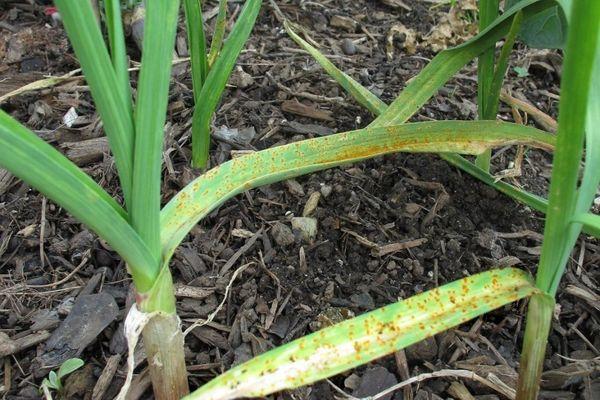
If ants are found on garlic leaves, water them with a different solution. These insects are dangerous because they can transmit a fungal infection to the seedlings. To kill these garden pests, it is recommended to dilute the contents of one medicine bottle in 1000 ml of water. Use the resulting solution to water the garlic leaves and any anthills located in the garden.
To do this, you need to remove the top layer of soil from the ants' home, find the place where the ant queens and eggs are located, and then fill everything with an ammonia solution.
Another insect that can be dangerous to garlic is the onion fly. To kill it, use a solution of 0.25 kg of salt, 10 liters of water, and 10 ml of ammonia. First, mix the water and salt, then add the required amount of ammonia from a medicine bottle. Mix thoroughly. Apply the solution to the garlic. After the insects have been partially eliminated, and the remaining ones have abandoned the plants due to the odor, the plants should be treated with plain water. As a preventative measure, repeat this process after 9-11 days.
When root knot nematodes appear on seedlings, prepare a weak solution. Use 10 liters of water, 3 drops of iodine, and 40 ml of ammonia. Using this amount of ingredients, the area to be treated is 2 m². Apply the solution to the soil in the beds beneath the plant stems. After a while, irrigate the soil. As a preventative measure, it is recommended to repeat the treatment after 10-12 days.
Fertilizing garlic with ammonia
Gardeners use several different solutions to apply this substance as a fertilizer. The most common recipe involves 60 ml of alcohol and 10 liters of water. The ingredients are mixed, and then the resulting solution is used to water all garlic plants.
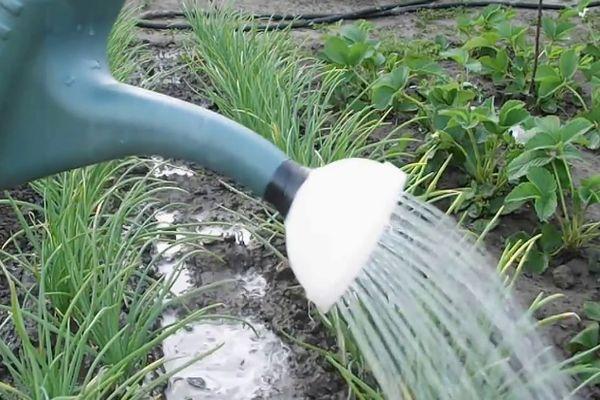
Plants should be fertilized using a watering can that produces a clearly visible spray. The difficulty of this treatment lies in the fact that ammonia is a highly volatile substance. Fertilizing is recommended late in the evening, after sunset, or early in the morning, before the sun appears above the horizon. Choose an overcast, windless day for this procedure.
To perform this procedure, you will need a watering can without a sprinkler. Direct the stream of solution directly under the garlic roots. The liquid should fall onto the soil from a low height. The gardener should be careful not to let the fertilizer drip onto the plant leaves. To prevent chemical burns to the bushes, irrigate the soil with clean water after applying ammonia.
What does a gardener need to know when working with the preparation?
When using the recipes described below, it is recommended to observe safety precautions. Ammonia is a fairly aggressive substance that can cause burns if it comes into contact with skin or eyes. If the chemical comes into contact with skin or eyes, immediately rinse the affected area with clean water. If the burning sensation persists, seek medical attention.
When fertilizing seedlings, it is recommended to wear gloves and a mask. It is important to strictly adhere to all ingredient ratios specified in the recipes, otherwise, crop loss may occur.
If a gardener is diagnosed with hypertension, he is prohibited from working with ammonia and its derivatives. The caustic fumes cause a sharp increase in blood pressure in the patient. The substance should be stored in areas inaccessible to children and animals. When inhaled sharply, ammonia fumes can cause respiratory arrest in some people. If the substance enters the mouth, a severe burn of the oral mucosa occurs.
When handled properly and safety precautions are followed, any ammonia mixture is virtually harmless to people and plants. Unlike other nitrogen fertilizers, ammonia does not accumulate in garlic or other crops when fertilized or sprayed on greenery to protect against pests.
Related posts:
 How to properly dry winter garlic after digging and where to store it at home
 Garlic diseases and pests and their control, treatment methods and prevention
 Description and cultivation of single-clove garlic, planting and care rules
 Winter garlic cultivation technology, large varieties and cultivation rules
 Garlic harvesting dates in the Urals in 2025, cultivation and care
 Description and yield of the Lyubasha garlic variety, planting and care
 How to properly plant garlic outdoors and prepare the soil
 The best eggplant varieties for growing in a polycarbonate greenhouse: planting and care
BioGrow This is an excellent product, which I was pleased with primarily because it allowed me to significantly increase my yield, so in addition to the treatment, I also use this product.