
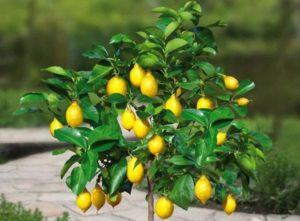
Lemon is a common houseplant in our climate, producing aromatic, healthy fruits under favorable conditions. Care for the plant should be meticulous, including maintaining optimal temperature and humidity, fertilizing, and pest prevention. If the plant is wilting and covered in dark spots, it's being attacked by scale insects, a dangerous sap-sucking pest. There are several methods for getting rid of scale insects on lemons.
Peculiarities and description of the pest
The scale insect is a pest with an unusual appearance, capable of careful camouflage. It is a small mealybug belonging to the family Leaf beetles, genus Shield-bearer. This pest is widespread.
There are about 50 species of scale insects in Europe, and three species usually attack lemons:
- ground bug;
- citrus coccida (second name: bitter orange);
- The false scale insect is a close relative of the true scale insect.
Appearance
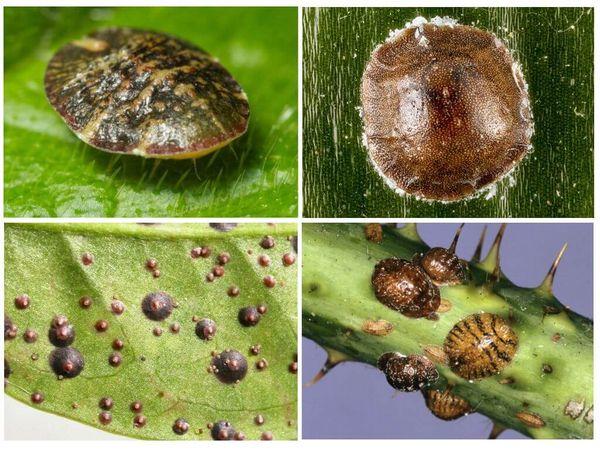
The scale insect resembles a bug in appearance. An adult is no more than 2 mm long. Its body is oval, with a convex, shield-shaped back, reddish-brown in color, and a dark abdomen. The head is fused with the thorax.
Females have no wings. The waxy shield easily detaches from the body. Females attach themselves to plants, remain motionless, and feed continuously on plant juices. Females outnumber males. Males are smaller and have wings.
Reproduction and development
Controlling lemon scale insects is challenging because this pest reproduces rapidly. Two generations occur each year. The female lays numerous eggs and covers them with her own shield. The hatched larvae crawl across the surface of the plant. They are active and mobile, which is why scientists have given them the nickname "wanderers."
The larval stage of development is the most favorable for dispersal. Larvae are capable of covering considerable distances relative to their size, invading other indoor plants.
Take a look Also
As they mature, the female larvae become immobile, attach themselves to the plant, and their vision, limbs, and antennae atrophy. The male larvae, meanwhile, stop feeding and develop wings.
Males live for only 3 days, during which time they manage to fertilize the female.
Lemon infection routes
The following can penetrate into the premises:
- with store-bought diseased flowers;
- with contaminated soil;
- with a stream of wind through the open window.
Scale insects primarily infest sick and weak houseplants. Therefore, diseased plants should be kept away from healthy ones.
What danger do they pose to the tree?
A lemon tree infested with scale insects is in serious danger. Scale insects feed on proteins found in the tree's sap. The affected lemon tree's internal chemical processes are disrupted, negatively affecting its health and appearance. Without prompt treatment, the lemon tree loses its leaves, followed by withering branches. Eventually, the tree dies.
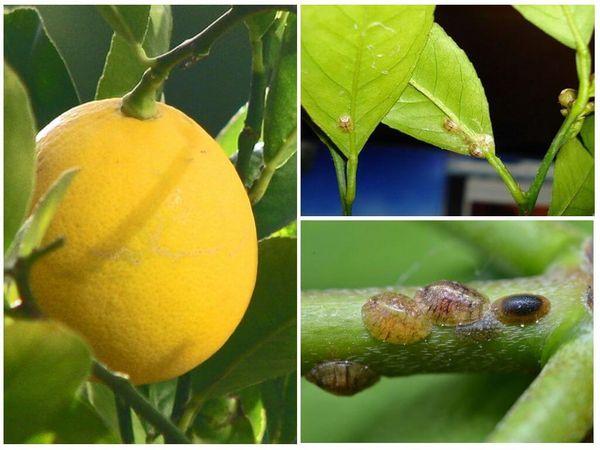
The sugars in lemon juice turn into honeydew in the scale insect's digestive tract. The insect doesn't stick to its own secretions, as it has evolved specialized glands that release the secretion. As a result, drops of honeydew can be seen on plants, flowerpots, even windowsills and glass, while the scale insect itself remains unharmed.
The sweet secretion attracts ants, and eventually they have to be dealt with. Honeydew is also a good breeding ground for saprotrophic fungal infections.
Scale insects inject toxins into plant tissue, which disrupts photosynthesis and stops the lemon's development.
Signs of pest damage
It's difficult to spot scale insect larvae on lemon trees; they're microscopic and move quickly. However, adult insects are easy to spot.
Signs of lemon damage by scale insects:
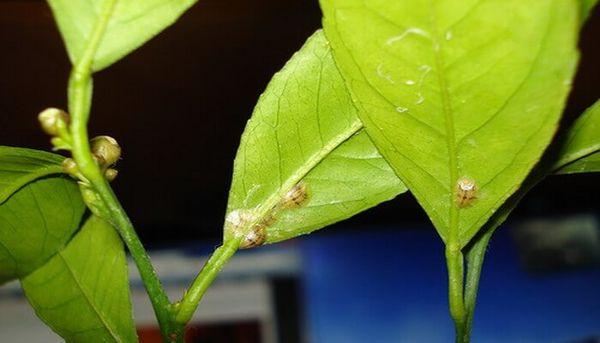
- covering the trunk and leaf blades with brown waxy scales;
- red and brown spots on the surface of the leaves are places where the scale insect sucked out the juices;
- sticky transparent drops on the leaves.
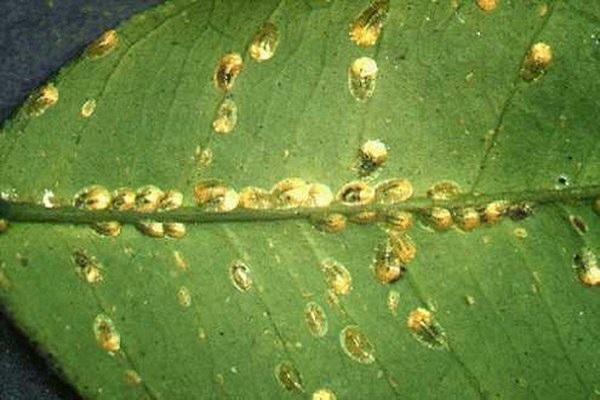
When scale insects proliferate, they completely cover leaf blades along the veins. When touched, the surface feels like it's covered in a slippery coating.
Methods of control
Scale insects on lemon trees can be controlled using mechanical, chemical, and folk remedies. Chemical treatments are the most effective, but also the most dangerous. Homeowners who don't want to inadvertently harm their lemon trees use more gentle folk remedies.
Chemicals
Chemicals are effective only against larvae and young, shell-less individuals. The shield covering the female's back reliably protects her from the harsh chemicals.
To treat lemon use:
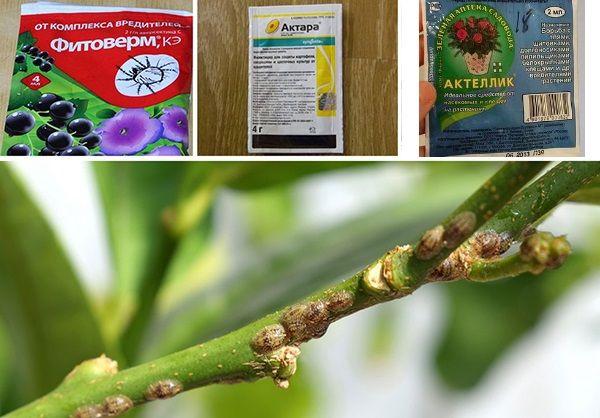
- Actellic is a highly effective product with a high toxicity level. Treatment should not be performed indoors, as this can cause intoxication, including headaches and dizziness. Lemon should be treated outdoors, wearing protective equipment.
- Aktara is a fast-acting product, with noticeable effects within 24 hours. It can be used as a crown spray or applied at the roots at a low concentration to kill pests hidden in the soil. The insecticide is harmless to humans.
- Fitoverm is a completely non-toxic product for humans and lemons, does not affect the quality of the soil, but is effective against pests.
Mechanical
This method is complex, time-consuming, and labor-intensive, but it's the only effective one against adult insects covered in a protective shell. You'll need rubbing alcohol, cotton pads, and a toothbrush.
A cotton pad is soaked in alcohol and carefully removed from the stems and leaf blades, removing any insects that have attached themselves to the plant tissue. This is a difficult task; some scale insects cling so tightly to plant tissue that they have to be removed with a toothbrush.
The process is labor-intensive—there are many insects, and they hide in hard-to-reach and closed places, so every centimeter of the bush must be carefully examined. This includes not only the trunk, branches, and leaves, but also the buds.
Folk remedies
Using folk remedies to combat scale insects on lemons is only acceptable at the beginning of an infestation. If the situation is severe, chemicals should be used immediately.
Below are listed the most popular folk recipes against pests.
We use tobacco solution
You can combat scale insects with a tobacco solution by spraying the crown and cultivating the soil. To prepare the solution, add 2 tablespoons of tobacco to a glass of hot water and let it steep for 2 days. Spray once a week.
We prepare a solution of ammonia
Used as a spray, it effectively kills larvae but has no effect on mature insects. Dissolve 5 ml of ammonia in a liter of water and spray the lemon.
Onion infusion
Grind the onion pulp and skin, add 2 cups of hot water, and let steep for 24 hours. Apply to the surface of the leaves.
Machine oil
To prepare, whisk 10 grams of soap in a glass of water until foam forms, then add 30 grams of machine oil. Cover the potting soil with plastic wrap. Spray the lemon generously with the prepared solution and leave for 12 hours. Then rinse the plant with warm water. Repeat this treatment twice a week.
Prevention
To prevent scale insects from appearing on lemon:
- trim off drying and damaged branches;
- keep purchased plants in quarantine;
- keep potting soil clean;
- keep plants in a ventilated area;
- control humidity levels;
- Wipe the leaves with a damp cloth weekly.
Prevention is not as difficult as pest control. To prevent the appearance of scale insects, it is important to maintain comfortable conditions for the lemon. The pot should be in a bright, cool place, the soil should be loosened, moderately watered and fertilized.
Related posts:
 Diseases and pests of home lemons, treatment options, and solutions
 What to do if your lemon tree is losing leaves, what causes it, and how to revive it
 How to grow a lemon from a seed at home, whether it will bear fruit, and care instructions
 The benefits and harms of lemon for the human body, the best recipes
 Rules for growing and caring for a lemon tree in a pot at home
 Growing indoor Pavlovsky lemon at home, describing the variety and caring for it
 Description of Meyer lemon, growing and caring for the variety at home
 Rules for pruning lemon trees for fruiting at home