
Evergreen houseplants like lemons often experience leaf curl. This leaf deformation is associated with both improper care and infestation by various pathogens or pests. Failure to address the causes of curling promptly can lead to weakening or even death of the tree.
Causes of sheet deformation
If the leaves of an indoor lemon tree curl into a tube, this can be caused by a variety of reasons – from mistakes in plant care to damage by various viral and fungal diseases and pests.
Mistakes in care
The main mistakes in care that cause both slight curling of leaves and severe deformation of leaf blades (boat-shaped upwards) are the following:
- Irregular watering. Watering frequency depends on the season, but avoid overwatering or drying out the soil.
- Failure to maintain the required indoor microclimate. Sudden temperature fluctuations, insufficient or excessive lighting, and low humidity are observed near the plant.
- untimely and incorrect feeding, its absence.
If you completely ignore the care rules, the leaves will not only curl, but also fall off in large quantities, which can lead to the death of the plant.
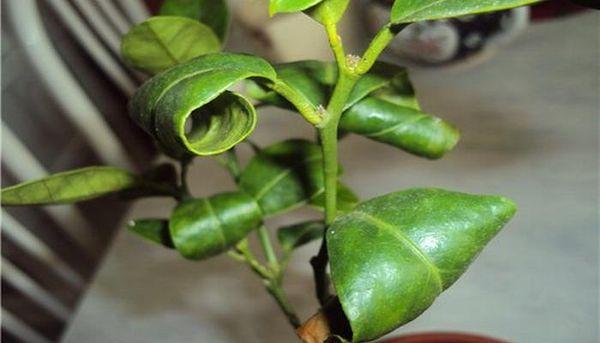
Low humidity and improper watering
If the air humidity near the plant isn't maintained at 70-75%, lemon leaves will wilt and curl. If humidity is low, place a small container of water near the tree and use humidifiers. To keep the leaves moist, periodically mist them with warm water.
Note: Frequent and excessive watering can kill the plant – all its leaves will fall off and the root system will rot.
In winter, lemon trees are watered once a week, and more frequently—three times a week—in spring. Avoid allowing the soil in the lemon tree's pot to dry out to a depth of more than 1 centimeter, otherwise the plant will begin to dry out. After a drought, water the lemon tree gradually, in small amounts.

Use only warm, settled water to water the plant and spray the leaves. To prevent overwatering and root rot, water the lemon tree along the sides of the container, away from the trunk.
Lack of fresh air and drafts
To prevent leaf curling due to fungal and viral diseases, lemon trees require fresh air. Ventilate the plant periodically by placing it on a balcony or outside, but avoiding drafts.
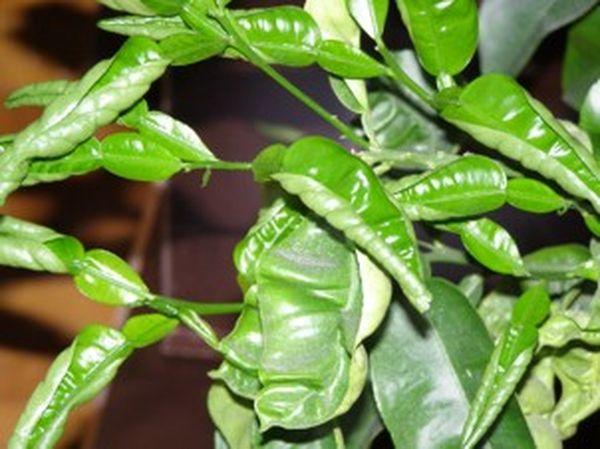
Excessive cooling of the tree by outside air, especially in winter, can kill it. To prevent this, insulate cracks in window openings. Maintain the temperature near the lemon tree at least 5°C lower than the room temperature.
It's important to maintain a specific temperature for each stage of a lemon's life. During the dormant period, it should be 12-15°C, during growth and flowering – 15-17°C, and during fruit formation – 20-23°C.
Unsuitable soil
Slightly acidic soil is used for growing lemons. Alkaline and highly acidic soils are not suitable for this plant. Soil pH can be adjusted by adding dolomite powder.
Mineral starvation
Lemon leaf curl can be caused by a deficiency of nitrogen, phosphorus, potassium, and trace elements (copper, calcium, magnesium, iron, and boron). The specific element the plant is deficient in can be determined by specific symptoms:
- Due to a lack of potassium and boron, the leaves lose color, young shoots curl downwards and gradually dry out.
- With a magnesium deficiency, leaves become pale and curl.
- With a lack of copper, the leaves darken, first the tips and then the leaf blades begin to deform.
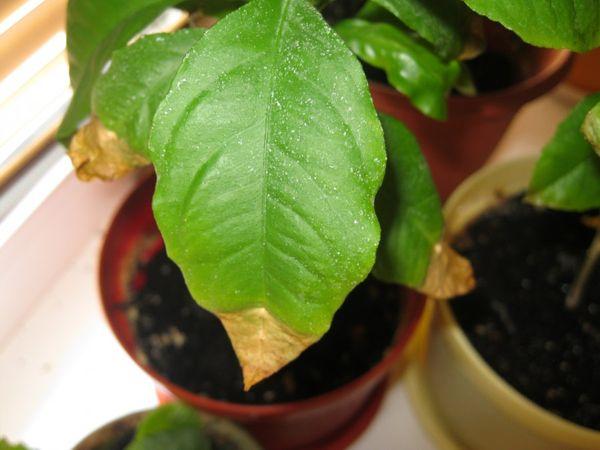
To avoid mineral deficiency, depending on the season, lemon is fed every 1-2 months. From April to August, use urea, superphosphate, potassium sulfate, and special fertilizers. complex fertilizers with microelementsOrganic materials are widely used: infusion of wood ash, nettle, crushed eggshells.
From October to March, the lemon is dormant, so to feed it, it is enough to apply a complex fertilizer for citrus plants.
Diseases that cause leaf curling
The following viral diseases can cause lemon leaf curl:
- sheet mosaic;
- citrus cancer;
- tristeza.
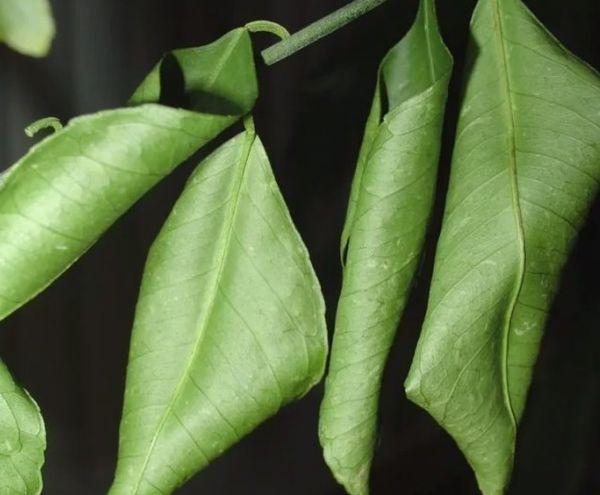
Fungal diseases that cause deformation of lemon leaf blades include:
- sooty mold (black mold);
- anthracnose;
- Melseco.
To combat fungal diseases, use fungicides approved for this indoor plant. If a plant is affected by viral diseases, it is destroyed along with its container.
Parasites
Curling of indoor lemon leaves can be caused by pests such as scale insects, thrips, aphids, whiteflies, citrus nematodes, and mealybugs.
Scale insect
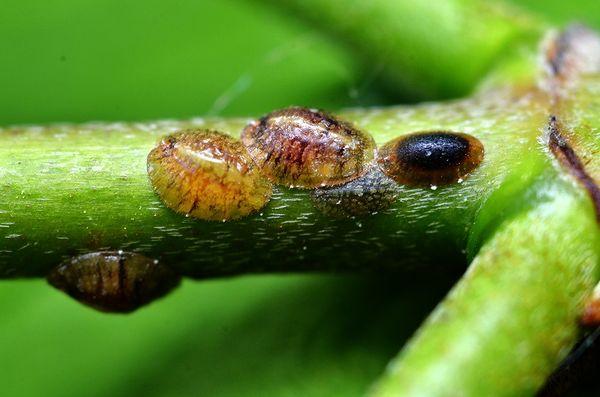
Inconspicuous scale insects accumulate on the underside of leaves, causing the leaf to become coated with a sticky coating and become shiny. The pest feeds intensively on leaf sap, causing the leaves to curl and fall off. If left untreated after detection, the extensive leaf drop will lead to plant distress and death.
Thrips and aphids
Numerous green pests, 1-3 millimeters long, infest young lemon stems and leaves, gradually destroying them. The leaves become deformed, fade, and dry out.
Spider mites
This pest is difficult to detect visually—it's only 0.5 millimeters in size. However, as soon as webbing appears on the plant, spider mites should be eliminated. Otherwise, the damaged leaves will gradually curl and fall off.
Whitefly
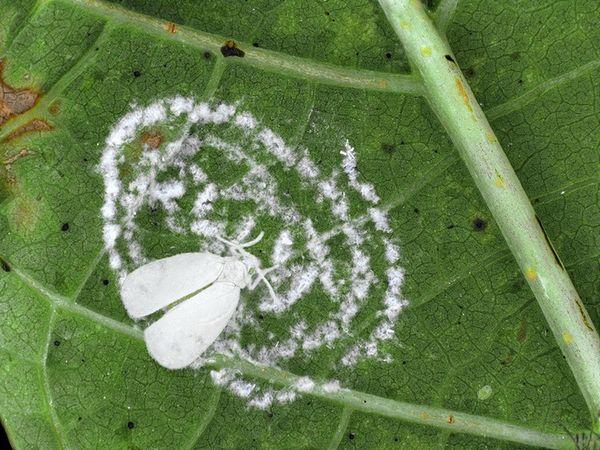
In appearance, the pest resembles a moth or a small butterfly. Detecting this pest is very easy: just touch a lemon infested with whiteflies, and the insects begin to fly. Whiteflies infest the undersides of leaves, their colonies forming a gray, mold-like coating.
Citrus nematode
If swellings and thickenings are found on the lemon tree's roots, the plant is infected with citrus nematodes. These tiny white worms enter the plant through the roots and feed on its sap. The foliage fades, curls, and dries up.
Mealybug
The pest is considered a type of scale insect, but larger in size (up to 5 millimeters). Its accumulation on leaves and stems resembles cotton wool particles. Lemon foliage turns yellow and curls, and the plant grows slowly.
To combat the above-mentioned pests, lemon trees are treated with insecticides such as Aktara, Actellic, Actofit, Tanrek, and Komandor. Simple but proven methods are often used: 1% Bordeaux mixture, Karbofos solution, garlic infusion, and soap solution.
Related posts:
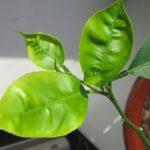 Diseases and pests of home lemons, treatment options, and solutions
 What to do if your lemon tree is losing leaves, what causes it, and how to revive it
 Soil composition for planting lemons at home, how to prepare the soil yourself
 Growing indoor Pavlovsky lemon at home, describing the variety and caring for it
 The benefits and harms of lemon for the human body, the best recipes
 The best eggplant varieties for growing in a polycarbonate greenhouse: planting and care
 Description of the Lunario lemon variety and care for the indoor plant at home
 Causes and treatment of eggplant pests and diseases, how to combat them at home