
- Pavlovsky lemon selection
- Description and characteristics
- Maximum size and annual growth
- Flowering and pollination
- Fruiting time and harvest
- Taste and beneficial properties of the fruit
- Is it possible to plant a lemon tree yourself?
- What you will need
- Planting material: cuttings or seeds
- Capacity
- Drainage and soil
- Timing and rules for planting citrus
- Planting seeds
- Planting cuttings
- Necessary conditions for germination and rooting of the sprout
- Temperature conditions
- Illumination of the place
- Humidity
- Further care
- Watering
- Fertilizer
- Transplanting and pruning lemon
- Wintering
- Prevention and treatment of diseases
- Pest control
- Methods of reproduction
- Reviews and recommendations
Pavlovsky is a variety of indoor lemon tree grown from cuttings brought from Turkey to the town of Pavlovo. Due to the plant's essential oils, it can be grown for room fragrance. The oils also disinfect the air when evaporated and reach the respiratory tract. This helps relieve tension and cleanse the lungs of harmful elements.
Pavlovsky lemon selection
The Pavlov lemon was bred by a merchant who brought cuttings from Turkey and grew them at home. This sparked a trend in the town of Pavlovo for growing indoor lemons. In 1930, a company was established to study this variety.
Description and characteristics
This lemon variety belongs to the Rutaceae family. The tree has large, dark green leaves. Some subspecies of this variety have thorns up to 2 centimeters long growing on their branches. Young saplings have green trunks. As they mature, the bark turns gray-yellow and develops longitudinal fissures.
Maximum size and annual growth
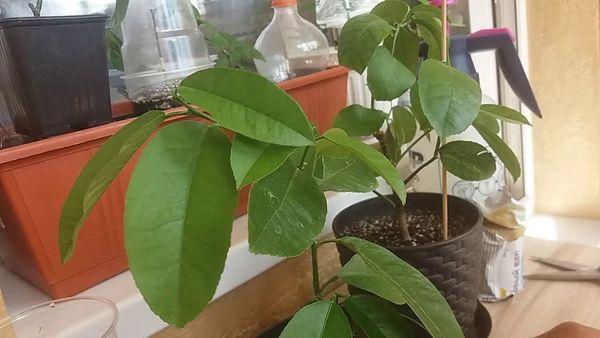
The Pavlovsky lemon tree grows up to 1.5 meters in height and has a rounded crown up to 1 meter in diameter. A mature tree resembles a bush consisting of 2-4 trunks. The leaves reach 15 centimeters in length and 8 centimeters in width. Within a year, the sapling grows up to 70 centimeters in height.
Flowering and pollination
This variety is evergreen and grows all year round.
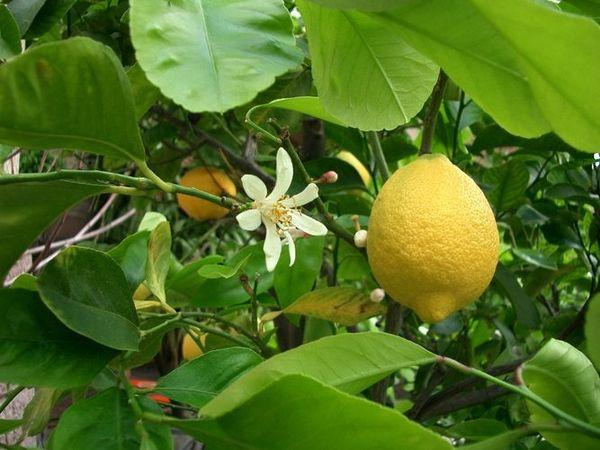
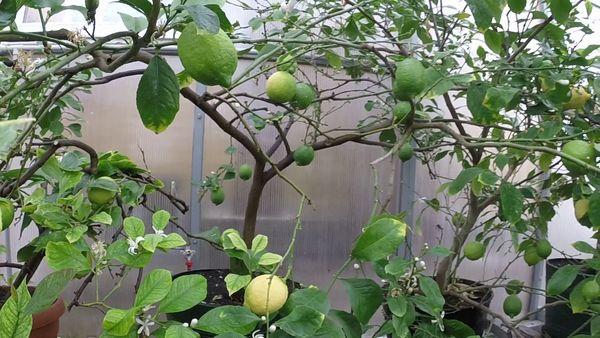
The main flowering period is March or September. A single bush may bear both buds and fruits during the growing season. Inflorescences contain 3 to 8 flowers. Of all the blossoms, up to 20% of the ovaries remain on the branches. The inflorescences of this variety are self-pollinating.
Fruiting time and harvest
The Pavlovsky lemon tree begins bearing fruit three years after planting. During the first two years, flowers appear on the plant, which should be removed. These flowers will not produce fruit but will hinder the tree's growth. It's also important to leave one fruit per 10 growing leaves on the plant. This will improve yields without weakening the bush.
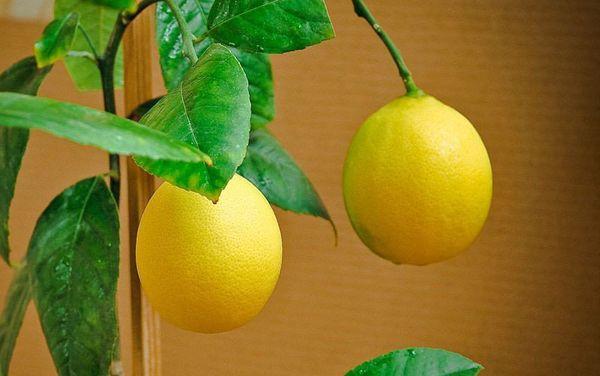
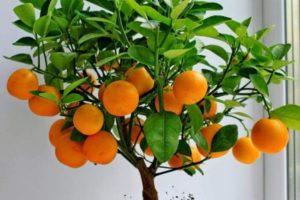
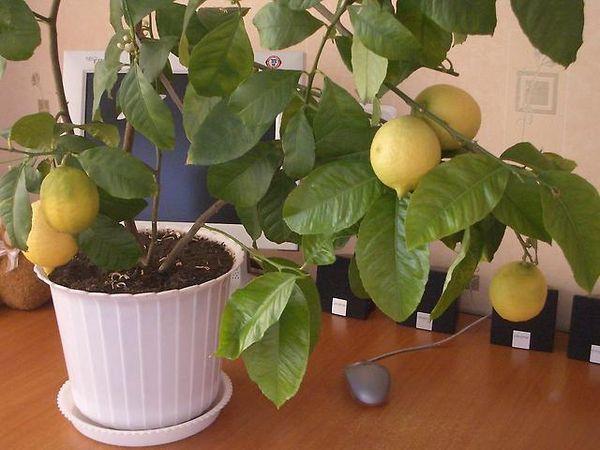
The Pavlovsky lemon tree begins to bear fruit at its peak after 20 years of growth. In one year, a tree can produce up to 50 fruits weighing up to 250 grams. The maximum fruit weight for this variety reaches 500 grams. Unharvested lemons can continue to grow for at least a year. During this time, their peel thickens, the flesh becomes coarser, and they lose their flavor. Therefore, the fruits should be harvested 30-35 days after ripening begins.
Taste and beneficial properties of the fruit
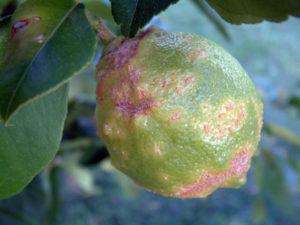
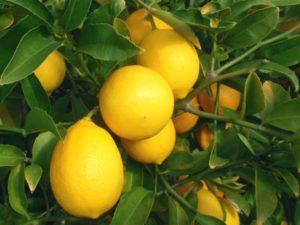
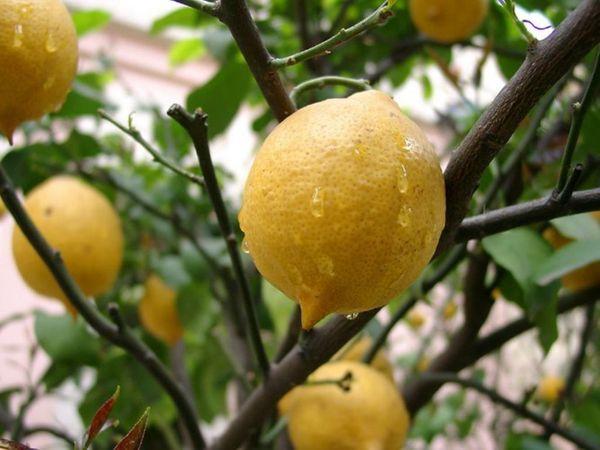
The fruits are moderately sour and suitable for tea. They have a distinct citrus aroma. The lemon peel is thin, reaching 3-5 millimeters in thickness. The fruits growing at the ends of the branches are more sour than those closer to the trunk. Depending on the variety, lemons can be seedless or contain 6-10 seeds. The fruits contain a large amount of vitamin C.
In the pulp, its concentration reaches 57 milligrams per 100 grams of fruit, and in the peel up to 120 milligrams.
Is it possible to plant a lemon tree yourself?
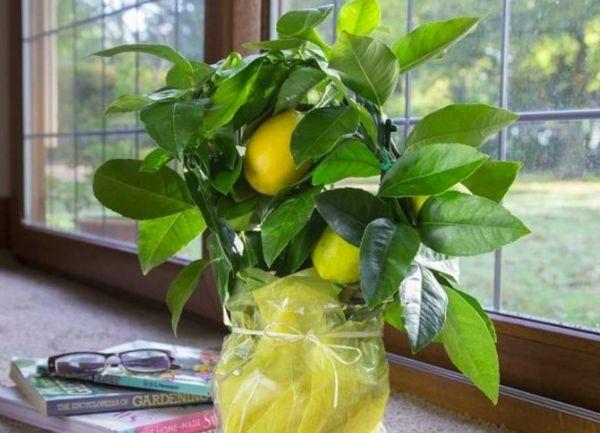
The Pavlovsky lemon is suitable for growing indoors. It is most often propagated by seeds or cuttings.
What you will need
To plant a plant at home, you need to choose a planting method, container, and soil, and carefully study the rules for caring for the seedling.
Planting material: cuttings or seeds
To select planting material, you need to decide on the type of cultivation. There are two main options:
- By seed. Such trees are more disease-resistant. They also grow and bear fruit better. The plant may differ from the parent plant in its characteristics. Fruiting in such trees begins 8-10 years after planting.
- Cuttings. This type of seedling is completely identical to the parent specimen and begins bearing fruit 2-3 years after planting. With this propagation method, the tree will be more sensitive to care and more susceptible to disease.
Capacity
Pots made from popular materials are suitable for growing lemon at home:
- ceramics;
- plastic;
- tree.
When planting a bush in an old wooden pot, the container is treated with alkali.
Drainage and soil
To ensure proper plant growth, use fertile soil with organic and mineral nutrients. To achieve this, create a mixture of the following ingredients:
- turf land;
- leaf humus;
- manure.
Place a 2-centimeter layer of drainage material at the bottom of the pot. Then add 1.5-2 centimeters of river sand. Place the prepared mixture on top of this.
Timing and rules for planting citrus
The timing and rules of planting vary depending on the chosen propagation method.
Planting seeds
Seeds are planted in late spring or summer. You'll need to prepare several of the largest seeds, which are removed from the lemon. For proper planting, you'll need:
- Take wooden containers for planting.
- Fill them with drainage and a mixture of peat and flower soil.
- Bury the seeds 1 centimeter into the ground.
- Spray with water.
- Keep in a warm, well-ventilated room away from drafts.
- Water the seeds regularly.
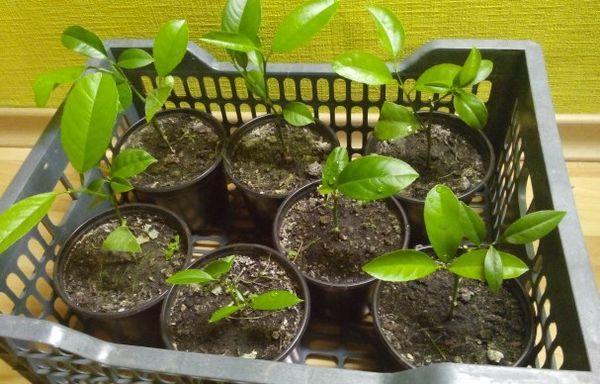
You can also create greenhouse-like conditions for the sprout. To do this, cover it with a glass jar. Remove it every day to allow the plant to air out and breathe.
After the first leaves appear, you can remove the jar and transplant the plant into a separate container.
Planting cuttings
To plant using cuttings you need:
- Cut a 10-13 cm long cutting in early March. To do this, select a branch with 5-6 leaves and make the cut with a knife at an acute angle.
- Remove the bottom two leaves from the cutting. The remaining leaves can be cut in half or left intact.
- Treat with a growth solution. To do this, mix 25 milligrams of indolebutyric acid and 10 milligrams of heteroauxin per 1 liter of water.
- Pour drainage and leaf soil into the bottom of the container.
- Place the cutting in the pot at a right angle and fill it with a mixture of sphagnum and sand.
- Grow for 2-3 weeks under a jar. Once the seedling has taken root, the jar can be removed.
Necessary conditions for germination and rooting of the sprout
In order to root indoor plants lemon at home, it is necessary to carefully follow the rules for caring for the seedling.
Temperature conditions
This variety requires year-round temperature control. In summer, it should be between 18 and 24°C. In winter, it should be reduced to 14-16°C.
Illumination of the place
Pavlovsky lemon does not tolerate direct sunlight.
The tree should be placed on an east or southeast side, as it can get sunburned in a south-facing location. In summer, diffuse the light source with a curtain or greenhouse film. In winter, provide the plant with an additional light source.
Humidity
Lemon trees require high humidity levels, ranging from 60-70%. To increase the humidity, place a container of water next to the plant. Excessive dryness causes the tree to drop its leaves and flowers.
Further care
To ensure proper care, you need to carefully familiarize yourself with the rules. Ensure timely watering and feeding, as well as disease and insect prevention.
Watering
Trees need to be watered:
- in summer – 2-3 times a week;
- in winter – once a week.
For watering, use room-temperature water that has been steeped for one day. In summer, you should not only water the plant but also mist the leaves. Do not use cold running water to moisten the soil.
The soil in ceramic containers dries out faster, so it requires watering more frequently than soil in plastic or wooden containers. Watering should be done in the morning or evening.
Fertilizer
If tree leaves begin to turn yellow, this is a sign of nutrient deficiency in the soil. To avoid this, carefully feed the seedling throughout the year. From January to September, the tree requires mineral fertilizer. A solution of ammonium nitrate is suitable for this: 3 grams of the substance per 1 liter of water. After two years of growth, the seedling is fertilized with a phosphorus-potassium solution consisting of:
- 4 grams of potassium salt;
- 3 grams of superphosphate;
- 1 liter of water.
The mixture should be applied twice a month. Water the soil before adding the solution. For organic fertilizer, mix 0.5 kilograms of bird droppings with 10 liters of water. The plant is also fertilized throughout the year with:
- ash - 1 teaspoon per 1 liter of water;
- boric acid – 5 grams per 1 liter of water;
- aspirin - 1 tablet per 2.5 liters of water.
Transplanting and pruning lemon
The Pavlovsky lemon tree should be repotted every two years. This is to ensure the roots don't take over the entire pot and have room to grow. When repotting, trim away any dried or diseased shoots. Add a layer of drainage material and the same potting mix used in the new container. In early spring, pinch new shoots 5 centimeters from the edge. Pruning this variety is done to give it a more attractive appearance.
Wintering
Because the Pavlovsky lemon blooms year-round, it requires additional lighting in winter. It also requires fertilizing and watering during this time.
Prevention and treatment of diseases
This variety is susceptible to diseases:
- gummosis;
- spotting;
- anthracosis;
- powdery mildew.
To prevent and treat these diseases, you need to use Bordeaux mixture or copper sulfate.
Pest control
This lemon variety is susceptible to attacks by spider mites, aphids, and scale insects. To protect against these insects, place indoor geraniums near the lemon tree. Their scent repels pests. Specialized insecticides are also used to treat the plant.
Methods of reproduction
This variety can be propagated by seeds, cuttings and air layering.
Reviews and recommendations
Elena, Moscow:
"I bought a Pavlovsky lemon six years ago from a nursery. The plant grew without any problems and now graces our office. When it blooms, it emits a strong citrus aroma."
Pavel, Yekaterinburg:
"I planted the seeds 15 years ago. Just eight years later, I was already tasting my first lemons. The tree has grown, and now we harvest about 30 fruits a year."
Related posts:
 How to grow a lemon from a seed at home, whether it will bear fruit, and care instructions
 What to do if your lemon tree is losing leaves, what causes it, and how to revive it
 Rules for growing and caring for a lemon tree in a pot at home
 Description of Meyer lemon, growing and caring for the variety at home
 Rules for pruning lemon trees for fruiting at home
 Diseases and pests of home lemons, treatment options, and solutions
 The benefits and harms of lemon for the human body, the best recipes
 What to do and how to make a lemon tree bloom, the best methods for improving fruiting