
- Brief description
- How the variety originated
- Cultivation area
- Varieties and description
- Pros and cons
- General characteristics of the Unshiu mandarin
- Size and annual growth
- Description of the crown
- Characteristics of flowering and pollination
- Features and value of fruits
- Specifics of indoor cultivation
- Choosing the optimal location for planting a tree
- Preparatory work
- Planting and germinating seedlings
- Necessary conditions for the growth of mandarin
- Further care
- Irrigation and fertilization
- Top dressing
- Crown formation
- Protection from pests and diseases
- Transfer
- How to care for crops in winter
- Graft
- Harvesting and storage
- Reproduction of Unshiu
- Problems in growing
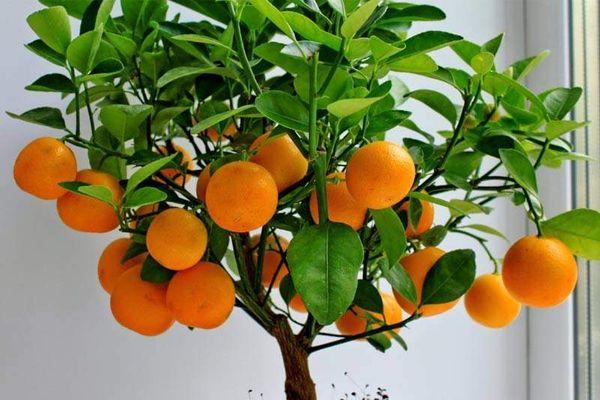
The Unshiu mandarin is a group of cultivars that differ in appearance and biological structure. Its name translates as "boneless." It differs from its subspecies in its cold tolerance. This variety is early ripening and is suitable for indoor and houseplant cultivation. Unshiu remains active for almost its entire life, with dormancy being virtually unnoticeable.
Brief description
This variety has been grown in Georgia since the 1930s. It became widespread after its seeds were brought to Japan. It is also part of the Satsuma group of Japanese varieties.
How the variety originated
The Unshiu mandarin orange is based on the Wase and Zairai varieties. It was originally grown in China but gained its popularity after being cultivated in Japan.
Cultivation area
Due to its cold tolerance, this variety is grown in Russia, Western Europe, Israel, and the Caucasus. Its primary growing region is East Asia, China, and Japan.
Varieties and description
The Unshiu Variegated Mandarin is part of the Satsuma group. It also includes the following groups:
- Vasya. Its unique feature is that all the varieties included in it ripen quickly and have low cold tolerance.
- Dzairai. One of the oldest representatives of the group. Some of its varieties are similar to Vasya in their early maturity.
- Owari. Distinguished by its increased fertility, it can also be classified as a Zairai.
- Ikeda. An endangered and rare species, it grows on the islands of Shikoku and Honshu.
- Ikiriki. A variety losing popularity. Grows in Nagasaki and Saga.
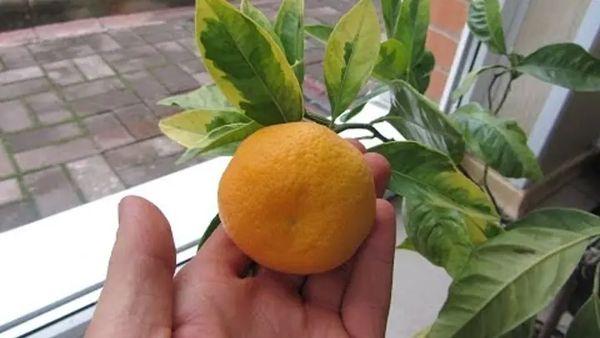
There's also a cultivar called Unshiu variegated. It differs from the regular variety with its yellow-edged leaves, larger fruits, and thicker skin.
Pros and cons
The advantages of this variety include:
- nutritional value and taste of fruits;
- high productivity;
- absence of seeds in fruits;
- attractive appearance of the plant;
- resistance to various diseases and pests.
The disadvantages of Unshiu include:
- demanding careful care;
- short shelf life;
- frequent transplantation.
General characteristics of the Unshiu mandarin
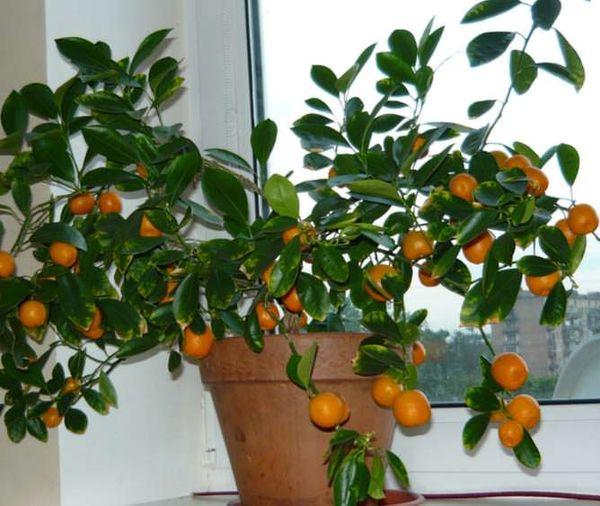
This variety looks like an evergreen bush with a spreading crown and has leathery to the touch foliage.
Size and annual growth
In the wild, the Unshiu mandarin grows up to 3 meters in height. Indoors, it reaches 1.5 meters. The tree produces its first growth in April, and the second in August. The mandarins ripen in mid-October to early November.
Description of the crown
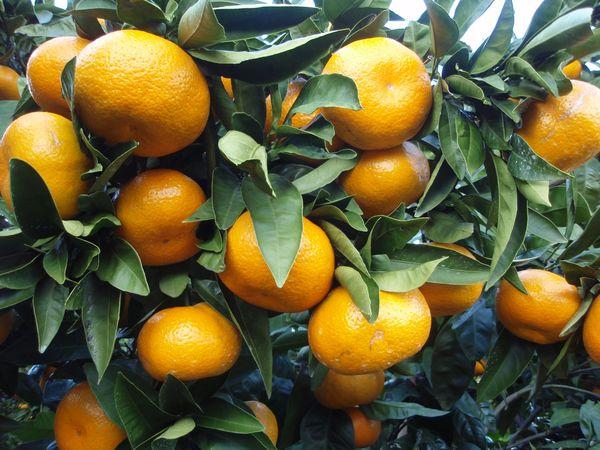
The crown of this variety consists of thin, drooping, thornless branches. The bark on the branches and trunk is green. The leaves of the Unshiu mandarin are a rich, dark green. They feel leathery to the touch, dense, and slightly textured. The leaves are oval in shape and taper toward the tips.
Characteristics of flowering and pollination
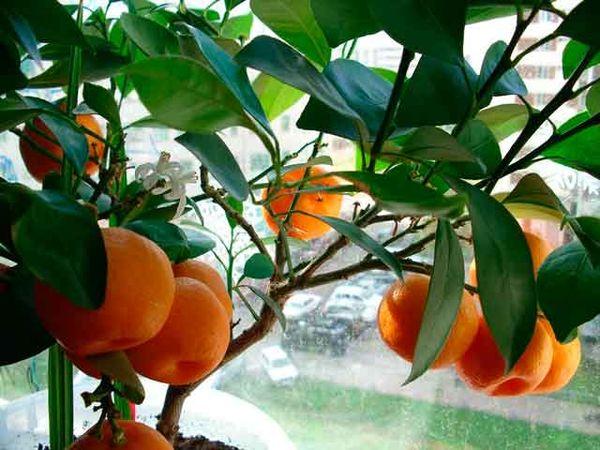
The Unshiu variety is self-pollinating. The tree begins blooming in May and produces small, fragrant inflorescences. A second bloom may occur in late summer, but there will be fewer flowers and no fruit will be produced.
Features and value of fruits
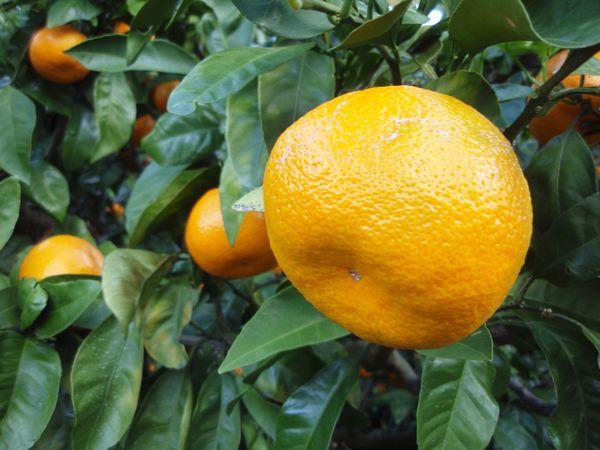
Tangerines are flattened and light orange in color. A single fruit can weigh up to 100 grams. The flesh has a sweet, slightly tart flavor. The skin is thin and easy to peel. Due to the variety's unique characteristics, the fruit is seedless. 100 grams of tangerines also contain 30-40% of the daily recommended intake of vitamin C.
Specifics of indoor cultivation
To grow this bush indoors, you must carefully follow all the requirements. This variety does not tolerate excess heat and moisture well.
Choosing the optimal location for planting a tree
When planting a tree indoors, choose a well-lit location. Avoid exposing the plant to extreme heat or cold. An insulated balcony is ideal. Locations with north- or southwest-facing windows are unsuitable. The plant should be shaded from 11 a.m. to 3 p.m. Place the tree on a south or southeast exposure, provided there are windows and curtains.
Preparatory work
Before planting, you should prepare the mixture. To do this, you will need:
- turf soil;
- leaf humus;
- sand;
- humus;
- Drainage. The layer should be up to 6 centimeters thick. It is placed at the bottom of the hole or pot.
Planting and germinating seedlings
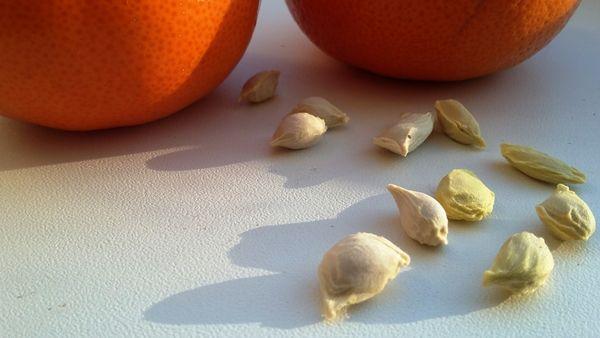
When planting or replanting trees, carefully monitor the root system. Damage to a single small shoot can lead to the death of the seedling.
Necessary conditions for the growth of mandarin
For normal mandarin growth, the air temperature should not exceed 18-19°C. This variety does not tolerate direct sunlight well, so it should be shaded with a curtain or greenhouse film.
The tree needs to be protected from strong gusts of wind.
Further care
The Unshiu mandarin requires careful care and temperature control year-round. It is highly dependent on moisture and indirect sunlight.
Irrigation and fertilization
This variety requires thorough watering in summer and spring. In hot weather, it needs watering daily, but only after the top 5 centimeters of soil have dried out. In moderate weather, watering should be done when the soil is completely dry. Avoid allowing the soil to dry out too much.
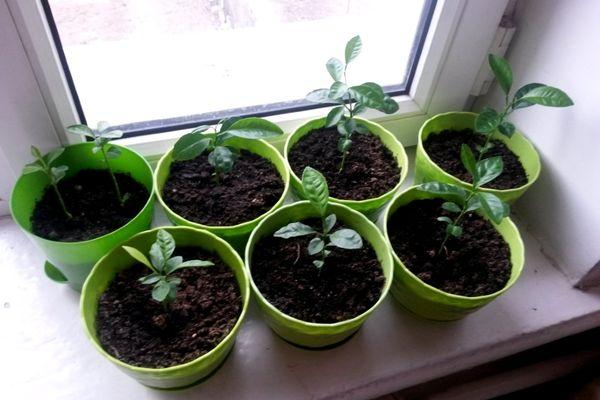
The soil around the plant should be thoroughly loosened. The tree's leaves need to be constantly misted with water. Humidity in the room should be high. To achieve this, place wet towels on pipes or heating systems near the tree.
Top dressing
This variety requires regular fertilizing. It should be done at a specific time and with the right composition. The first application should be one month after repotting. It can be either mineral or organic. Alternate between the two.
Organic fertilizer can be manure diluted in settled water at a ratio of 1:10. Any specialized citrus fertilizer can be used as a mineral supplement. Yellowing and drying of leaf edges is a symptom of potassium deficiency. If these symptoms are detected, additional foliar feeding should be performed. Chlorine-free fertilizers are suitable for this purpose:
- carbonate;
- sulfate;
- potassium;
- potash.
If the tree is dormant, it does not need feeding.
Crown formation
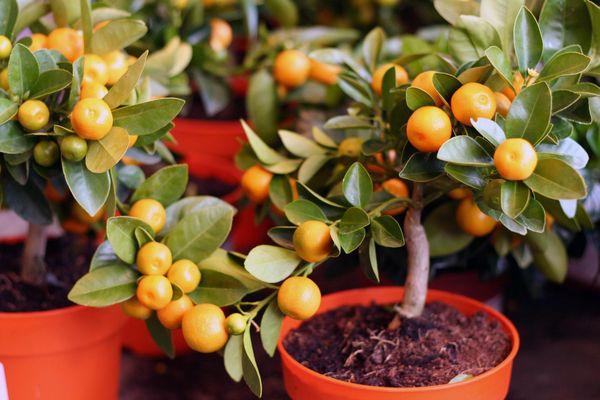
To prevent the tree from growing too tall, it's important to remove its top. This should be done regardless of whether the branches have leaves or flowers. In the wild, pruning is unnecessary; just remove old or dead branches. If an indoor mandarin tree isn't cared for properly, its fruits will be smaller than usual and taste bitter.
When removing the top or branches, use disinfected tools and treat the wounds with garden pitch or tree resin. After the first pruning, the top may begin to grow again. Therefore, it should be removed until the correct branches begin to grow.
Protection from pests and diseases
This variety is susceptible to scale insects and spider mites. An insecticide, acaricide, or insectoacaricide should be used against these insects. Also, before using these products, rinse the plant with water to reduce the insect population. If rot or mold appears, limit watering.
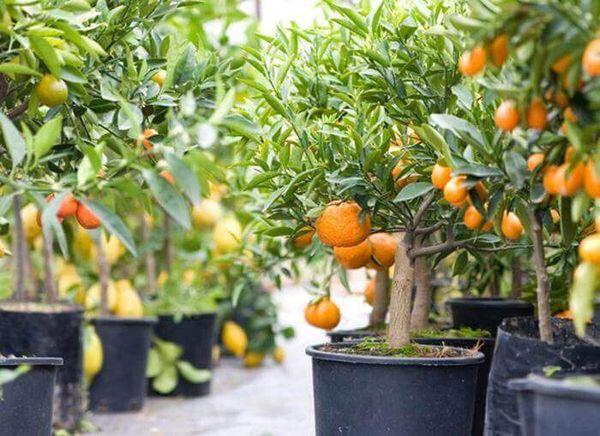
If the plant is affected by powdery mildew or another fungus, fungicides should be used. A copper sulfate solution or Topaz are suitable. If the tree is affected by an unknown disease, record the symptoms and consult experienced gardeners.
Transfer
Young seedlings should be repotted once a year. Once the tree has begun bearing fruit, repotting should be limited to once every three years. Between these intervals, the top layer of soil should be replaced. The new pot should be 4-5 centimeters larger than the old one. Once the tree has reached its full size, repotting is not necessary.
How to care for crops in winter
When keeping the plant in winter, it will be necessary to limit the air temperature to 6-10°C. The cooler the room, the more the plant should be exposed to sunlight.
If temperature control is unavoidable, the tree should be provided with more light. Fluorescent lamps in white or blue colors can be used, positioned at least 25 centimeters from the crown and illuminating the mandarins from all sides.
With this type of lighting, the duration of daylight for the plant should be limited to 12 hours.
Graft
Mandarin trees should be grafted only if the goal is to improve crop quality or accelerate fruiting. This method can also be used for propagation.
Harvesting and storage
A single tree can yield up to 10 kilograms of fruit. Because the skin is thin, transporting them can be challenging. When transporting large quantities, the fruit can become crushed under its own weight.
Under the right conditions, tangerines of this variety can be stored for up to 3 months.
Reproduction of Unshiu
The Unshiu variety is propagated using:
- vaccinations;
- cuttings are the most common method among gardeners;
- layering;
- seeds.
When grown from seeds, fruiting may begin only 7-10 years after planting.
Problems in growing
Growing this variety is fraught with numerous growth problems. If insects or diseases appear, the plant requires timely spraying with special products. If leaves begin to fall from the branches without cause, this is due to a drop in room temperature or overwatering. It could also be a sign of over-nutrients in the soil or a draft.
Related posts:
 The best eggplant varieties for growing in a polycarbonate greenhouse: planting and care
 The best grape varieties for growing in the Urals, planting and care rules in summer
 Descriptions of the 20 best cherry varieties for the Moscow region, their planting and care
 Description of 30 varieties and types of Muscat grapes, planting, cultivation and care
 80 Best Eggplant Varieties for Different Regions with Descriptions and Characteristics
 Description of the Red Early apple tree variety, agricultural technology and specific care
 Description of the Bryanochka cherry variety, planting and care instructions
 Description of the best varieties of black tomatoes for open ground and greenhouses