
Modern pesticides can address several issues simultaneously: restoring crops damaged by diseases, providing long-term protection against infection, and increasing the quantity and quality of harvests. Using the fungicide "Abacus Ultra" according to the instructions allows for this comprehensive effect after just one treatment.
Composition, release form and what it is used for
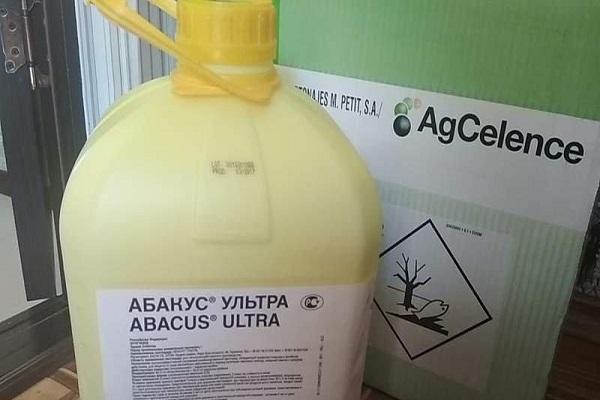
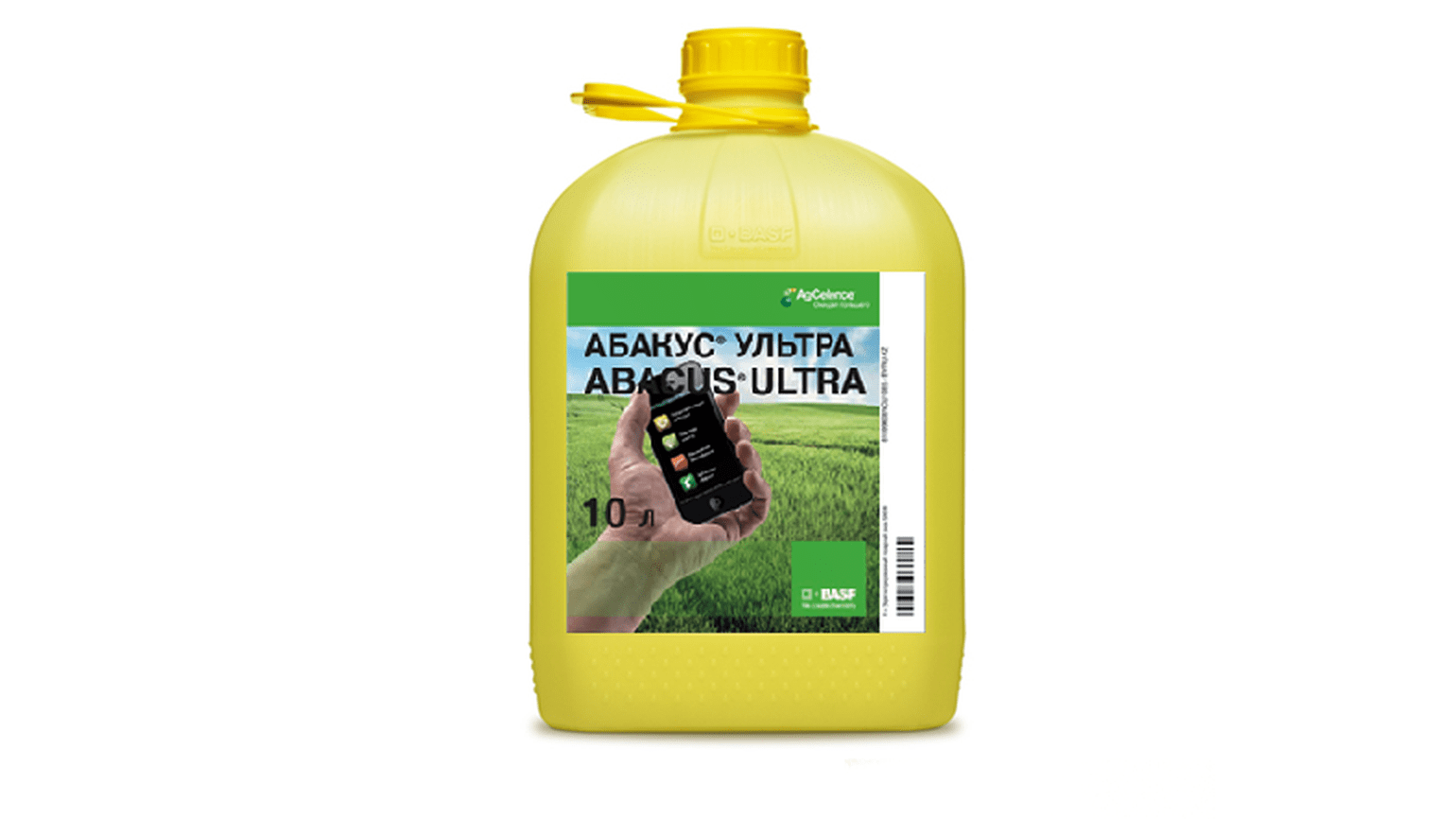
The product contains antifungal compounds from different chemical classes: pyraclostrobin and epoxiconazole. The concentration of each active ingredient is 62.5 grams per liter of molding mass. "Abacus" of the "Ultra" series is a suspension concentrate, packaged in 10-liter plastic screw-top containers.
Purpose of the product
This fungicide is intended for the curative and preventative treatment of cereal crops, sugar beets, soybeans, and corn against a number of common and specific diseases. Abacus Ultra is effective against the following plant diseases:
- powdery mildew;
- various types of rust;
- spotting;
- septoria;
- pyrenophorosis;
- Rhynchosporium;
- fusarium;
- Cercospora leaf spot;
- phomosis.
The drug also combats helminthosporiosis and rot.
Modes of action
Thanks to its combined composition, the fungicide "Abacus Ultra" has a multi-level eradicating and protective effect, penetrating plant tissues through systemic and contact routes. Epoxiconazole is a triazole compound with a broad spectrum of antifungal activity. It acts quickly and sustainably, providing protection to crops for up to 6 weeks. Epoxiconazole disrupts metabolic reactions in fungal cells, inhibiting mycelial growth.
This substance controls mitospore formation, prevents the proliferation of fungal agents, and inhibits their key cellular processes. Pyraclostrobin is a member of the strobilurin class with pronounced fungicidal activity and protective properties.
Pyraclostrobin has the ability to stimulate plant life cycles. The additional AgCelence effect of the Abacus Ultra fungicide improves nitrogen absorption by plant tissues, increases plant resistance to stress factors, and supports tissue respiration and photosynthesis.
Advantages and disadvantages
This fungicide restores crops affected by mycosis, providing long-term protection against reinfection. Its list of advantages distinguishes Abacus from the premium Ultra series among fungicidal products.
How to prepare a working solution
To treat crops, it is necessary to prepare a working solution, which is an aqueous dilution of a concentrated emulsion. The required amount of the preparation for a specific crop is diluted in water. The freshly prepared dilution is used for treatment.
Instructions for use
The working solution is used topically for spraying the above-ground parts of plants during the growing season. Directions for using Abacus Ultra for treating agricultural crops:
| Object | Disease | Dose, liter/1 hectare | Consumption of working solution, liter/1 hectare | Directions for use | Number of days of waiting |
| Wheat shoots (spring, winter crops) | Powdery mildew Rust Spotting |
1.0-1.5 |
300 (25-50 for aerial spraying) |
Spraying during the growing season or when signs of infestation appear |
At least 40 |
| Spring and winter barley | Powdery mildew
Rust White and bordered spots |
300 |
|||
| Spring barley | 1.5 | ||||
| Sugar beet | Powdery mildew
Fomoz Cercospora spots |
1.25-1.75 |
Not less than 50 |
||
| Corn | Fusarium
Rotten Helminthosporium Bladder smut |
1.5-1.75 |

For soybeans, the product is used at an average dose of 1.5 liters per hectare. In most cases, a single application is sufficient. Repeated treatment is usually required for beets and corn. Applications can be spaced 2-3 weeks apart.
Safety precautions at work
"Abacus Ultra" is classified as a Class 3 hazardous substance and is low-toxic when used safely. Basic personal protective equipment (closed suit, goggles, gloves, and a respirator) must be used during treatment. Direct contact with treated crops should be avoided for the first three days.
Phytotoxicity
The drug does not have a toxic effect on plants.
Possible compatibility
There is no detailed information on compatibility with other agents.
Storage rules and shelf life
The drug should be stored separately, in a cool place at a temperature from -5 °C to +40 °C, while maintaining the integrity of the packaging.
Best before date
2 years.
Similar means
The unique composition of "Abacus Ultra" has no complete analogues.
Related posts:
 Composition and instructions for use of the seed dressing agent Grandsil Ultra, analogues
 The best eggplant varieties for growing in a polycarbonate greenhouse: planting and care
 Instructions for use and composition of the fungicide Tersel, application rates and analogues
 Instructions for use of Gliocladin and the composition of the fungicide, application rates
 Nitrophoska composition and instructions for use of fertilizer, errors
 Methods for planting and propagating cherries at home
 Types of garden fungicides and descriptions of the top 24 best, instructions for use
 How to control carrot flies with medications and folk remedies