
Apple trees are planted on their plots by both summer cottage owners and farmers growing fruit for sale. Fungal diseases, including scab, significantly reduce harvest yields. Experts have developed chemical treatments to protect trees from pathogens. The fungicide "Merpan" not only kills scab pathogens but also improves the shelf life of the fruit during winter storage.
Composition, existing forms of release and purpose
The fungicide contains a single active ingredient, captan, which belongs to the phthalimides class of chemicals. One kilogram of the chemical contains 50 grams of the active ingredient. Merpan is produced as water-dispersible granules packaged in polyethylene bags. Each bag contains 5 kg of the product.
The fungicide "Merpan" was developed specifically to protect apple orchards from pathogens that cause diseases such as fruit rot and scab. The chemical can be used throughout the growing season, but gardeners' experience suggests it is most effective when applied during the fruit formation and ripening stages. This prevents the risk of storage diseases and improves the taste of the fruit.
In addition to apple trees, the fungicide is used to treat fields with soybeans and peas.
Mechanism of action
After spraying the trees, the fungicide reaches the leaves and fruits of the plant, quickly spreading throughout the tissues of the crop.
Pros and cons of Merpan
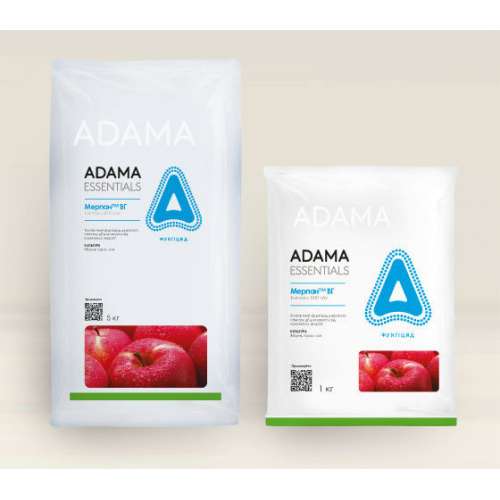
After using the fungicide in their gardens, farmers and summer residents highlighted several advantages of Merpan.
Among the disadvantages, gardeners note the need to conduct a compatibility test before using in tank mixtures.
Take a look Also

Calculation of consumption
To ensure the fungicide solution has the desired effect on pathogens, it is necessary to adhere to the manufacturer's recommended application rates. Calculations for different plants are provided in the table.
| Cultivated plant | Disease | Consumption rate | Frequency of spraying |
| Apple trees | Scab and fruit rot | From 1.9 to 2.5 kg per hectare of garden, depending on the degree of damage | No more than 3 per season |
| Peas | Fusarium and ascochyta blight | From 2 to 2.5 kg per hectare of field | No more than 3 per season |
| Soybeans | Fusarium and ascochyta blight | From 2 to 2.5 kg per hectare of plantings | No more than 2 times per season |

Preparing the working mixture and how to use it
The fungicide's instructions recommend preparing the working mixture before spraying to ensure its effectiveness. Prepare the solution using the following procedure:
- Take the recommended amount of the preparation and pour the granules into a separate bucket.
- Add 2-3 liters of clean water.
- Mix the solution thoroughly until the granules are completely dissolved.
- Fill the sprayer tank halfway with water and add the prepared solution.
- Turn on the stirrer and stir the mixture.
- After this, add water to the full volume and mix again.
- Plant treatment begins immediately so that fungicide particles do not have time to settle to the bottom.
Trees are sprayed either early in the morning or in the evening, after sunset. Suitable air temperatures are between 10 and 30 degrees Celsius, with wind speeds no greater than 4 m/s. Treatments can be repeated throughout the entire growing season.
Precautions for handling
When working with Merpan, adhere to safety regulations. Wear overalls and gloves, protect your respiratory system with a respirator, and wear a scarf or cap. Shower after use. Dispose of any remaining solution in accordance with safety regulations.


Phytotoxicity
If you adhere to the consumption rates specified in the instructions, phytotoxicity will not occur.
Possible compatibility
In tank mixes, Merpan can be used with most fungicides, pesticides, and adhesives. The only exception is highly alkaline chemicals.
How to store properly and expiration date
The fungicide's shelf life is 3 years if stored in its original packaging. Store the chemical in a utility room, protected from sunlight.
Similar means
If necessary, the fungicide "Merpan" can be replaced with a preparation such as "Malvin".
Related posts:
 Instructions for use and composition of the fungicide Fitosporin-M, application rates
 Instructions for using Falcon fungicide for treating grapes
 The best eggplant varieties for growing in a polycarbonate greenhouse: planting and care
 Instructions for use and composition of the fungicide Raek, application rates and analogues
 Composition and instructions for use of the fungicide Kumulus, application rates and analogues
 Instructions for use and composition of the fungicide Optimo, application rates and analogues
 Instructions for use and composition of the fungicide Zato, application rates and analogues
 Instructions for use and composition of the fungicide Teldor, application rates