
- Composition, existing forms of release and purpose
- How does the product work?
- Advantages and disadvantages
- Calculation of consumption for different plants
- Rules for preparing the working mixture
- Instructions for use
- Safety precautions at work
- Phytotoxicity
- Possible compatibility
- Storage conditions and periods
- Analogues
When gardeners plant fruit and vegetable crops in their gardens, they expect a bountiful harvest. However, in some cases, fungal diseases can destroy the plants. To prevent this, it's important to use chemical pesticides that not only treat existing diseases but also prevent the development of new ones. The fungicide "Saprol" is effective against most types of fungi that attack garden crops.
Composition, existing forms of release and purpose
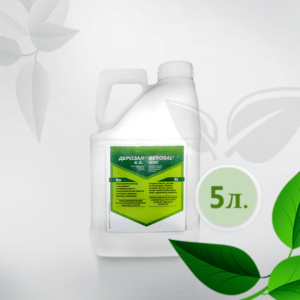
The systemic fungicide "Saprol" contains one active ingredient: triforine. One liter of the chemical contains 200 grams of triforine. It is produced as an emulsifiable concentrate. Dosages range from 10 to 100 ml. If the plot is small and several beds need to be treated, a smaller bottle is recommended.
The instructions included with the chemical indicate that Saprol is effective in combating pathogens of the following diseases: scab and powdery mildew, leaf spot and leaf curl, root rot and rust.
How does the product work?
Immediately after treatment of crops, the fungicide's active ingredient penetrates the root system and leaves, inhibiting fungal sporulation. Since triforine also penetrates the pathogen's cells, it slows mycelial growth. With frequent spraying, the chemical kills spider mites but has no harmful effect on other pests.
Advantages and disadvantages

Over the period of using the fungicide, gardeners have identified the main advantages of the chemical.
Having studied reviews from summer residents and farmers, we can conclude that the drug has no shortcomings.

Calculation of consumption for different plants
The instructions indicate the fungicide application rates for different crops. The dosage is presented in the table:
| Culture | Norm of the drug | Number of treatments |
| Vegetable plants | From 10 to 15 ml per 10 liters of water depending on the degree of infestation | No more than 3 |
| Grape | 10 ml per 15 liters of liquid | No more than 3 |
| Fruit trees | 15 ml of fungicide per 10 liters of water | No more than 3 |

Rules for preparing the working mixture
Pour half the recommended amount of water into a plastic bucket and add the recommended amount of fungicide. Stir with a wooden stick until the solution is completely dissolved. Then pour in the remaining liquid and stir thoroughly again.
Use the working solution immediately after preparation to maintain its effectiveness. Dispose of any remaining solution according to safety regulations. Do not pour the fungicide into nearby bodies of water or onto the soil.
Instructions for use
The fungicide can be used throughout the entire growing season—both in early spring and in summer (before and after flowering). When applying, spray the above-ground portion of the crop first, then apply a small amount of the solution to the roots. Three applications are permitted per season, spaced 20 days apart. The final application is 25-30 days before harvest.

Safety precautions at work
Prepare in advance for working with chemicals. Wear protective suits and rubber gloves. Use a respirator or mask to prevent inhalation of solution vapors.
Phytotoxicity
If the application rules and application rates of the preparation are followed, there will be no phytotoxicity.
Possible compatibility
The fungicide "Saprol" is approved for use in tank mixes with other chemicals. Before mixing, conduct a test; if a flocculent precipitate appears, discard the mixture to avoid harming the plants.
Storage conditions and periods
When stored properly and in its original packaging, the fungicide has a shelf life of 3 years from the date of manufacture. Store the chemical in a utility room protected from sunlight and at temperatures below 30 degrees Celsius.
Analogues
The fungicide "Saprol" can be replaced with preparations such as "Funginex" or "Denarin".
Related posts:
 Instructions for use and composition of the fungicide Fitosporin-M, application rates
 Instructions for using Falcon fungicide for treating grapes
 Instructions for use and composition of the fungicide Optimo, application rates and analogues
 Composition and instructions for use of the fungicide Kumulus, application rates and analogues
 Instructions for use and composition of the fungicide Teldor, application rates
 Instructions for use and composition of the fungicide Ferazim, application rates
 Instructions for use and composition of the fungicide Raek, application rates and analogues
 Instructions for use and composition of the fungicide Zato, application rates and analogues