
Grain crop diseases significantly reduce harvest volumes and impact their quality. Farmers growing grain for market use chemical pesticides to prevent infection by pathogenic microorganisms. The fungicide Soligor is a systemic agent and, in addition to its preventative effect, also has a therapeutic effect. Before using the chemical, read the instructions.
Composition, existing forms of release and purpose
Multi-component chemical plant protection products are more effective against pathogens because the active ingredients affect them differently. The systemic fungicide "Soligor" contains three active ingredients: propiconazole at a concentration of 53 grams per liter, spiroxamine at a concentration of 224 grams per liter, and tebuconazole at a concentration of 148 grams per liter.
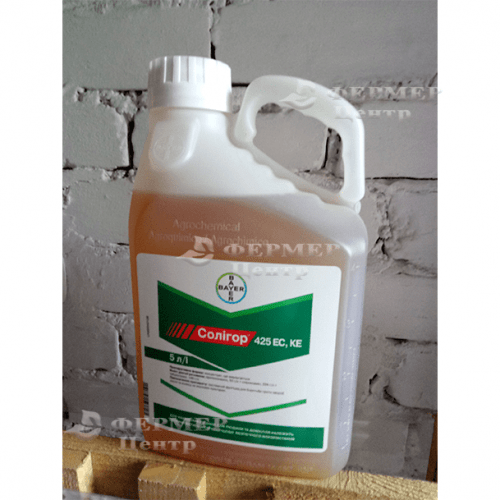
The fungicide is produced by the German company Bayer as an emulsifiable concentrate. It is sold in 5-liter plastic canisters. The instructions for use state that Soligor is intended for the treatment and prevention of a range of grain plant diseases, including pyrenophorosis, septoria leaf spot, fusarium wilt, and early head blight.
Mechanism of action
The principle of action of the systemic fungicide is based on the influence of three active components on pathogens:
- Tebuconazole disrupts the integrity of fungal cell walls. Due to its rapid spread, it has an effective therapeutic and prophylactic effect.
- Spiroxamine penetrates the vital components of the fungal cell and stops the development of mycelium.
- Propiconazole affects the pathogen's vegetative organs and inhibits fungal growth two days after spore germination. Furthermore, the active ingredient enhances photosynthesis in the plant's green mass and stimulates crop development.
Pros and cons

A minor disadvantage of the drug is its high cost.
Calculation of consumption
In order for the drug to have the desired effect, it is necessary to adhere to the dosage indicated in the instructions for use.
The fungicide consumption rates are shown in the table:
| Cereal crop | Disease | Consumption rate for treatment/prevention | Number of treatments per season |
| Winter wheat | Powdery mildew, septoria and rust | From 600 to 800 grams per hectare/from 400 to 600 grams | 2 |
| Spring and winter barley | Rhynchosporiosis, powdery mildew and dark brown spot | About 600 to 800 grams per hectare/400 to 600 grams | 2 |
| Winter rye | Stem rust and powdery mildew | From 600 to 800 grams per hectare/from 400 to 600 grams | 2 |
How to prepare the working mixture and application instructions
Prepare the working solution immediately before treating the plants. Pour half the total amount of water into the sprayer tank and add the recommended dose of fungicide. Turn on the agitator and wait until the chemical is completely dissolved. Then add the remaining solution and mix thoroughly again.
Any remaining solution after spraying must be disposed of according to safety requirements. The instructions for use prohibit pouring the substance into bodies of water or onto the ground.
Take a look Also


Safety precautions
When working with chemicals, adhere to safety regulations. Wear protective clothing and gloves. To prevent inhalation of fumes, use a respirator. After finishing treatment, shower and wash clothes, then hang them outside. If the product accidentally gets into your mouth or eyes, seek medical attention, taking the fungicide label with you.
Possible compatibility and how toxic is it?
It is permissible to use the Soligor fungicide in tank mixtures with other chemicals, but a compatibility test must be performed first. If sediment appears, do not use this combination.
Soligor has a toxicity rating of 3 and is low-hazard to humans and insects. However, the chemical poses a risk to aquatic life, which must be taken into account during treatment.
Expiration dates and storage
The fungicide's shelf life is 2 years from the date of manufacture. Store the chemical in utility rooms at a temperature no higher than 30 degrees Celsius.
Similar means
"Soligor" can be replaced with a drug such as "Impact".
Related posts:
 Description of the best pepper varieties for greenhouses and open ground in 2025
 Instructions for use and composition of the fungicide Fitosporin-M, application rates
 Composition and instructions for use of the fungicide Kumulus, application rates and analogues
 Simple step-by-step recipes for making lingonberry jam for the winter
 Instructions for use and composition of the fungicide Teldor, application rates
 TOP 11 Best Recipes for Canned Radishes for Winter and Storage
 Instructions for use of the fungicide Input, its composition and application rates
 Instructions for use and composition of the fungicide Oxyhom, application rates