
Fungal diseases can cause significant damage to grain crops, particularly wheat. Plants will not thrive and will produce low yields. Specialized products can effectively combat fungi. Let's look at the composition and action of the fungicide "Input," its purpose, instructions for use, dosage, and consumption calculations. How toxic is the product, can it be combined, and how to properly store it, and how long should it be stored?
Composition, active substance and release forms
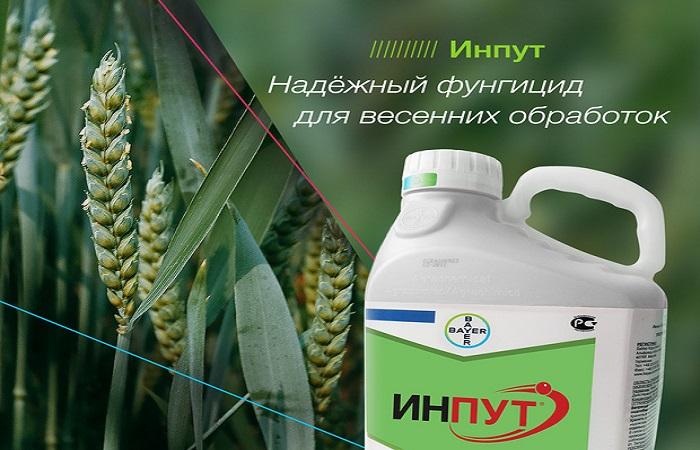
"Input" is produced by Bayer in 5-liter canisters. It contains two active ingredients: spiroxamine at a concentration of 300 g per liter and prothioconazole at a concentration of 160 g per liter. It is formulated as an emulsifiable concentrate. It is a systemic fungicide in terms of penetration and protective and immunizing action.
What plants is it used for?
"Input" is used to treat winter wheat during the growing season to prevent disease or to cure plants at the first signs of illness. It is used against yellow, stem, and brown rust, powdery mildew, pyrenophorosis, septoria leaf spot, and cercospora leaf spot. Fusarium head blight is treated at the heading stage and early flowering.
The fungicide "Input" is intended for treating wheat in spring and autumn at temperatures no higher than 15 °C, at which triazole fungicides are not active enough.
Mechanism of operation
Input contains substances from different chemical classes. Spiroxamine inhibits the growth of fungal mycelium and blocks the synthesis of ergosterol, a component of fungal cell walls. This pesticide is highly active at temperatures of 12-15°C and is effective against powdery mildew.
Prothioconazole inhibits sterol synthesis, disrupting the permeability selectivity of fungal cell membranes and inhibiting mycelial growth. In addition to its fungicidal action, prothioconazole stimulates seedling growth and the development of a robust root system.
The substance increases tillering in grain crops, improves their drought resistance, and enhances the quality of the grain obtained from treated plants. With increased tillering, drought resistance increases by 25-35%, and the plants' uptake of moisture and nutrients increases. Stem thickness increases, making the wheat stronger and more resistant to damage.
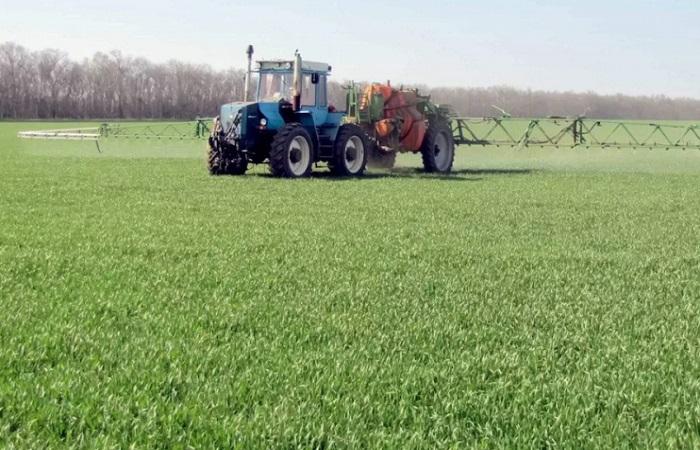
The fungicide is economical to use; according to the instructions, the application rate per hectare is only 300 liters. "Input" begins to act quickly and can protect wheat for up to four weeks. It is highly effective against cercospora, at least 90%. Tests conducted with "Input" have revealed no cases of phytotoxic effects or their consequences. The fungicide does not have a detrimental effect on wheat; its substances do not accumulate in the stems or grain, leaving the grain completely environmentally friendly.
Calculation of consumption and rules of use
The dosage of the fungicide "Input" for treatment against rust, powdery mildew, septoria leaf spot, pyrenophorosis, and cercospora is the same: 0.6-0.8 liters per hectare; for fusarium head blight, 1 liter. In autumn, it is recommended to use a dosage closer to the maximum permissible. The number of sprayings per growing season is 1 or 2, and against fusarium, 1. The waiting period in all cases is 21 days.
Precautionary measures
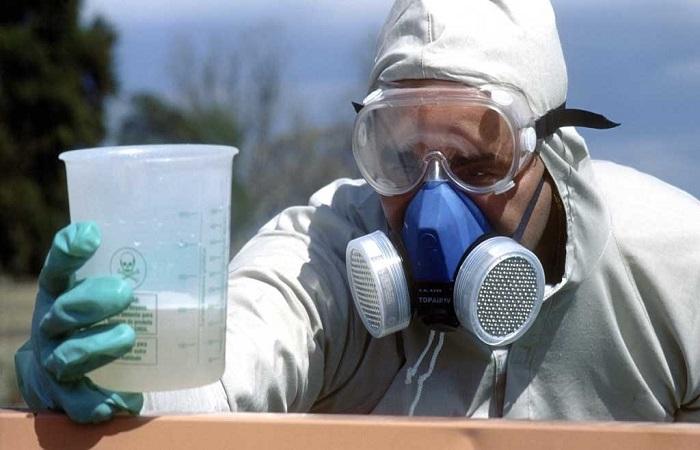
The fungicide "Input" is quite toxic to humans, so when working with it, wear gloves, goggles, and a respirator. Wear outerwear that protects your skin from any drops of the solution.
If the Input solution does come into contact with your face, hands, or other parts of the body, rinse it off with clean water. Do the same if the solution comes into contact with the mucous membranes of your mouth or eyes.
Degree of toxicity and whether compatibility is possible
The fungicide "Input" is classified as a hazard class 2 for humans and a hazard class 3 for bees. Due to its toxicity, handling it requires protective equipment. Do not use near flowering gardens or in water protection zones of bodies of water, as fungicidal substances may be hazardous to insects and fish.

Input is compatible with many types of insecticides and fungicides. However, the manufacturer recommends testing new products to determine their compatibility before mixing them. To do this, pour a small amount of each solution into a common container and mix. If there is no strong chemical reaction, the products can be mixed. Otherwise, do not use the combined solution.
How and how long can it be stored?
Input has a shelf life of two years from the date of manufacture. During this time, it should be kept in its original canisters with lids. To properly store the product, maintain a moderate temperature and humidity, and protect the concentrate from moisture and light.
It is not recommended to use the product after the expiration date. The diluted concentrate should only be stored for 1 day; after that, it loses its properties and becomes ineffective.
Substitute products
Input has spiroxamine-based analogues, including Soligor and Falcon. Similar products containing prothioconazole are also used: Prozaro Quantum, Propuls, Lamador, Fandango, Atlant, Redigo Pro, Scenic Combi, Soligor, Redigo M, Delaro, Bariton Super, Lamador Pro, Bariton, Prozaro, Emesto Silvero, and Quartet. All of these are used in agriculture and are not intended for use on private plots.
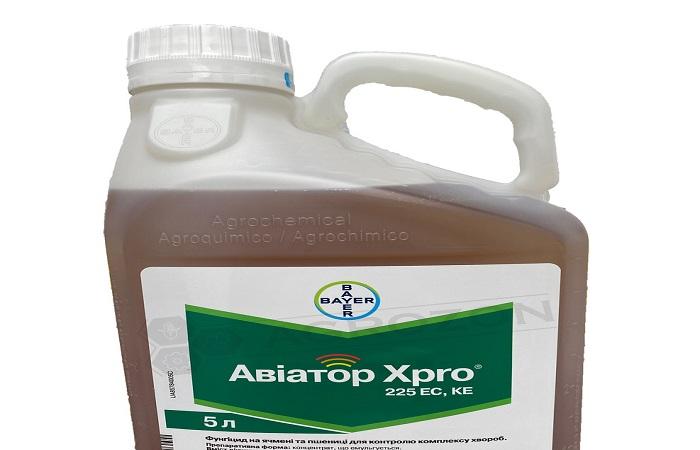
Input is an effective fungicide that prevents wheat from becoming infected with a variety of fungal diseases or cures it once infection has occurred and symptoms have begun to develop. The product's complex composition, which includes two chemically distinct substances, effectively combats common wheat diseases.
According to the instructions, the solution has a low dosage and consumption rate, making it suitable for agricultural use on large fields sown with wheat. The fungicide is sold in standard agricultural canisters and has a long shelf life, so almost all of it is used as directed.
Related posts:
 Instructions for use and composition of the fungicide Teldor, application rates
 Instructions for use and composition of the fungicide Raek, application rates and analogues
 List of the top 16 fungicides for grapes and instructions for their use
 Types of garden fungicides and descriptions of the top 24 best, instructions for use
 Instructions for use and composition of the fungicide Metaxil, application rates
 Instructions for use and composition of the fungicide Fitosporin-M, application rates
 Instructions for use and composition of the fungicide Carbendazim, application rates
 Composition and instructions for use of the Bravo fungicide, application rates and analogues