
Without fungicides, it's difficult for both farmers and small-scale gardeners to grow a bountiful harvest. Fungal and viral pathogens reduce fruit set, weaken crops, and ultimately lead to their death. Ditan M-45, a contact fungicide, has many advantages, making it a popular choice for use in fields and gardens.
What is included in the composition, forms of release and who produces it
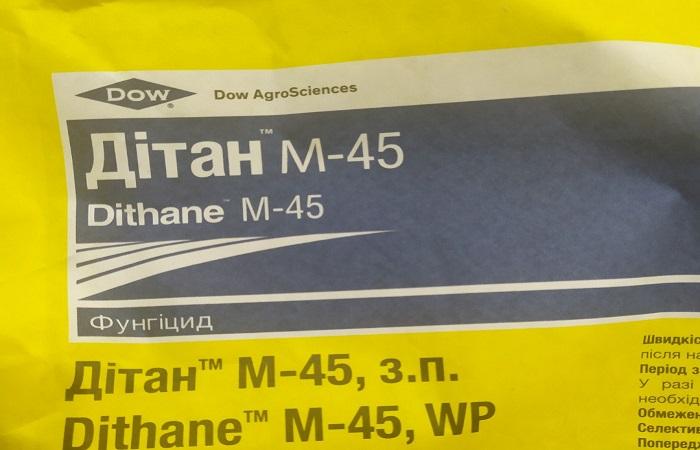
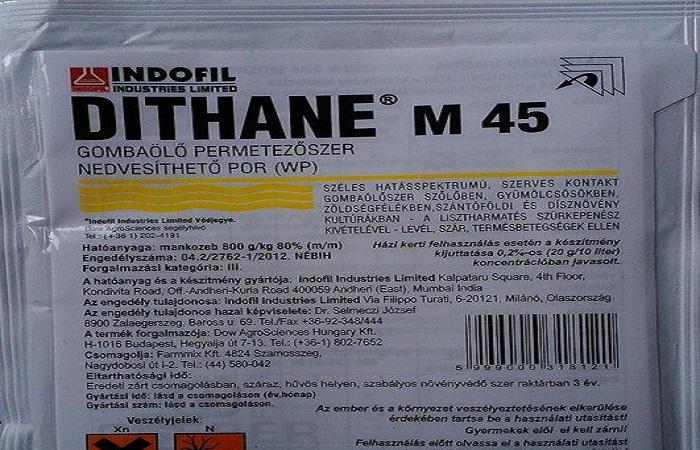
This organic fungicide, characterized by contact action, contains a single active ingredient, mancozeb, which belongs to the chemical class of dithiocarbamates. One kilogram of the chemical contains 800 grams of the active ingredient.
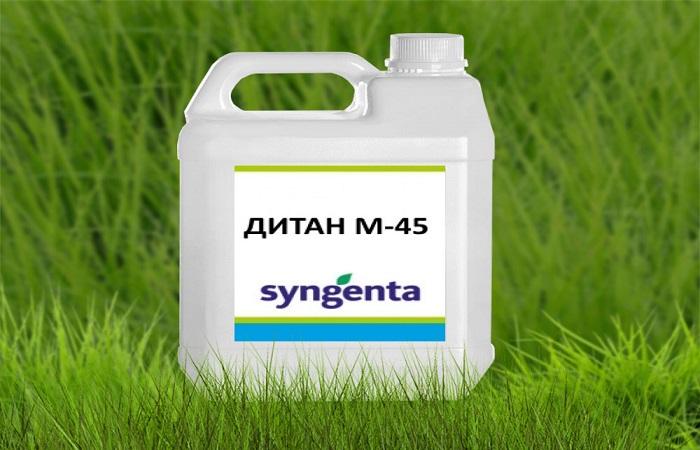
The fungicide is sold as a grey-yellow wettable powder, packaged in 25 kg bags. Syngenta is the manufacturer of the chemical.
How it works and what it is used for
The fungicide "Ditan M-45" is designed to protect and treat the following diseases:
- mildew and anthracnose of grapes;
- Alternaria and late blight of nightshade crops;
- black rot, rubella and phomopsis.
The contact fungicide works by inhibiting the metabolism occurring in the cells of germinating pathogen spores, ultimately leading to the complete death of the fungi. Furthermore, the active ingredients zinc and manganese have a beneficial effect on photosynthesis. This accelerates the development of leaf blades in treated crops.
Farmers who tested the organic fungicide on their fields noted several positive aspects of the product.
They listed the following as advantages of the chemical:
- Highly effective in destroying both downy mildew and late blight fungi.
- Non-specific effect on pathogen cells, which helps prevent the development of resistance even when using the product for several seasons in a row.
- Resistance of treated crops to adverse weather conditions and accelerated growth.
- Long period of protective action – up to 2 weeks.
- When used in vineyards – to control spider mite numbers.
- Resistance to atmospheric precipitation – 4 hours of dry weather is enough for the fungicide to penetrate into plant tissue.
- No phytotoxicity even if the recommended dosage is accidentally exceeded.
- Possibility of joint use in tank mixtures with other fungicides, growth stimulants and insecticides.
- The preparation is of little danger to bees and other beneficial insects, as well as microorganisms living in the soil.
The only drawback of contact fungicidal preparation is the large packaging in which it is sold, which is disadvantageous for owners of small garden plots.
Flow calculation and instructions for use
The application rates for the chemical are specified in the manufacturer's instructions. Do not exceed the recommended dosage, as this may harm the crops.
The table shows the dosages of the preparation for different plants:
| Culture | Fungicide consumption | Working fluid consumption |
| Tomatoes grown in open ground | From 1.2 to 1.6 kg per hectare of field | From 300 to 500 liters per hectare |
| Potato | From 1.2 to 1.6 kg per hectare of plantings | From 300 to 500 liters |
| Grape | From 2 to 3 kg per hectare of plantation | From 800 to 1000 liters |
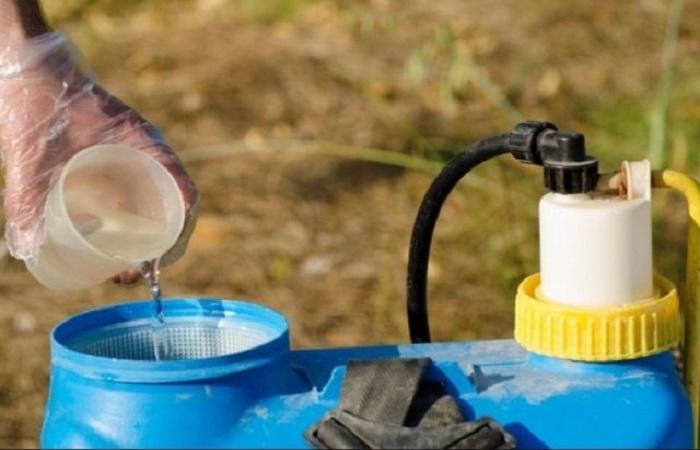
The working solution is prepared immediately before plant treatment. First, make a stock solution by dissolving the specified amount of the product in 1-2 liters of water. Once the liquid has a uniform consistency, pour it into a sprayer tank half-filled with water and turn on the stirrer. Once the two liquids are completely mixed, add water to fill the tank and turn on the stirrer again.
Features and frequency of application of the fungicide:
- Potatoes. The first treatment is carried out during the growing season as a preventative measure, preferably after using translaminar sprays. A second spray is carried out 10-12 days later.
- Tomatoes. Apply as a preventative measure during the second half of the growing season, after using products such as "Skor" or "Revus." Repeat spraying is recommended after 10 days.
- Grapes. The first treatment is carried out between bud break and flowering. A second treatment will be necessary after 1-2 weeks.
All work in the field is recommended to be carried out either in the morning or in the evening, when the wind speed is minimal.
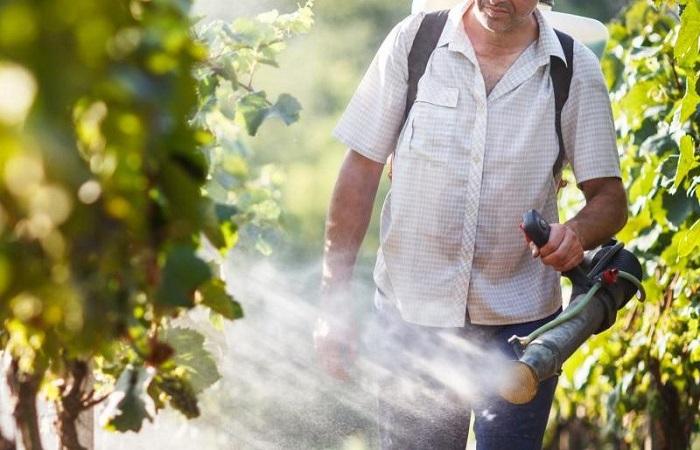
Safety precautions
This contact fungicide belongs to Class 2 toxicity for humans, so safety precautions must be followed when handling it. Protective clothing and rubber gloves are required, as well as a respirator to prevent droplets from coming into contact with the respiratory tract and mucous membranes.
After spraying the plants, all clothes are washed and the farmer takes a shower with detergent.
Is compatibility possible?
The fungicide "Ditan M-45" is compatible with most growth regulators and insecticides, but a test is required before use. Do not use with alkaline products or oil-based chemicals.
How and how long to store
Keep the storage area where the product is to be stored out of the reach of small children and pets to prevent poisoning. The recommended temperature is 0 to 35 degrees Celsius. If the original packaging is intact, the fungicide has a shelf life of 3 years.
What can be used as a replacement?
If necessary, Ditan M-45 can be replaced with drugs such as Manzat, Penncozeb or Manfil.
Related posts:
 The best eggplant varieties for growing in a polycarbonate greenhouse: planting and care
 Instructions for using Falcon fungicide for treating grapes
 Instructions for use and composition of the fungicide Fitosporin-M, application rates
 Types of garden fungicides and descriptions of the top 24 best, instructions for use
 Instructions for use of the fungicide Topaz for plants, composition and analogues
 Composition and instructions for use of the fungicide Kumulus, application rates and analogues
 Instructions for use and composition of the fungicide Raek, application rates and analogues
 Instructions for use and composition of the fungicide Optimo, application rates and analogues