
Not only fruit and ornamental plants but also cereal crops require disease protection. They are just as susceptible to fungal diseases as other crops. Winter and spring cereal crops can be saved by using Tilt, an effective systemic fungicide. It performs both therapeutic and preventative functions and can be used on grapes, rapeseed, sugar beets, fruit trees, and shrubs.
What is included in the composition and dosage form
Tilt contains 250 grams of propiconazole, a triazole, per liter. It is available as an EC (emulsifiable concentrate).
Tilt Turbo, considered the most effective powdery mildew control product, is also available. It differs from the standard product in its composition:
- 125 grams per liter of propiconazole.
- 450 grams per liter of fenpropidin.
Thus, this product is a combination fungicide containing two active ingredients from the piperidine and triazole classes. This product has proven effective when applied at low temperatures—down to 6 degrees Celsius. It is formulated as an EC (emulsifiable concentrate).

Mechanism of operation
Tilt has proven itself to be highly effective against a group of fungal infections affecting cereal crops and a number of fruit, berry, and vegetable plants. It spreads acropetally, that is, from the bottom up, across the treated plant. This provides reliable protection not only to the shoots and leaves directly exposed to the product during spraying, but also to young shoots that were still growing at the time of Tilt application.

What is it used for?
The fungicide has a broad spectrum of action against pathogens of the following plant diseases:
- Powdery mildew.
- Oidium.
- Peach leaf curl.
- Gray rot.
- Spotting.
- Rust.
- Septoria and so on.
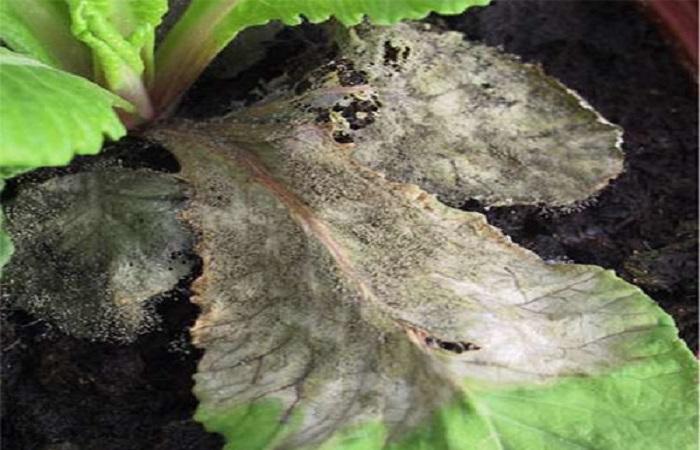
The product provides results lasting up to 3-4 weeks.
Instructions for use
Tilt is used on the following crops:
| Plants | Spectrum of action | Processing phase | Consumption rate, in liters per hectare | Processing frequency and waiting time |
| Spring and winter rapeseed | Increased resistance to weather conditions, growth stimulation | 5 leaves | 0.5 | 2 / 30 |
| Wheat | Powdery mildew, rust, septoria leaf and ear blight, alternaria leaf spot, fusarium head blight | Growing season | 0.5 | 2 / 30 |
| Barley | Spots (net, striped, dark brown, bordered), rust | Growing season | 0.5 | 2 / 30 |
| Winter rye | Brown rust, stem rust, septoria leaf spot, rhynchosporium leaf spot, cercosporella leaf spot, powdery mildew
|
Growing season | 0.5 | 1 / 40 |
| Oats | Crown rust, red-brown spot
|
Growing season | 0.5 | 1 / 40 |
| Rice | Blast disease | Growing season | 0.5 | 2 / 30 |
| Grape | Powdery mildew, oidium | In spring – early summer | 0.5 | 2 / 40 |
| Fruit crops | Fusarium, powdery mildew, rust, rot, septoria, cercospora | Growing season | 0.5 | 2 / 40 |


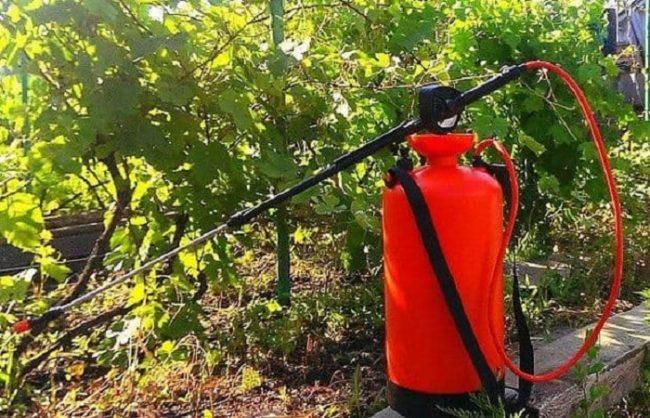

When using on grapes, it is recommended to apply the treatments at the beginning and middle of the growing season, as the waiting period is 30-40 days. The same applies to other fruit and berry crops.
If Tilt is used on tomatoes, it is recommended to supplement it with other fungicides.
Precautionary measures
Tilt is classified as a hazard class 3 product. This means it is moderately hazardous to humans and slightly hazardous to bees. However, when using the fungicide, the following safety precautions must be followed:
- Wearing protective clothing, closed shoes, and headgear.
- Use of personal protective equipment: goggles, mask or respirator, rubber gloves.
- Spraying should be done in the morning or evening hours, before the mass flight of bees.
- Treatment must not be carried out near hives or apiaries.
- During spraying, do not drink, eat, smoke, or talk to avoid ingesting the fungicide.
- After completing work, take a shower and change clothes. Hands, face, and other exposed body parts should be thoroughly washed with soap.



If the product comes into contact with your body or eyes, rinse thoroughly with clean running water. If you experience any deterioration in your condition, you may need to seek medical attention.
What to do in case of poisoning
If accidentally swallowed, induce vomiting immediately by drinking large amounts of water. Although Tilt is not highly toxic, it can cause poisoning, so seek medical attention and undergo an examination. The victim should be given 1 gram of activated charcoal per kilogram of body weight and referred to a doctor. If the victim's condition worsens, call an ambulance.

Is compatibility possible?
Tilt can be used in tank mixes, but only if only one other component is added. Tilt Turbo can be combined with the morphoregulator MODDUS.
If you want to combine a fungicide with another product, conduct a test mix using small amounts of both products. If there are no adverse reactions, the mixture can be used to treat plants.

Expiration date and storage conditions
Tilt is available in 5-liter canisters and has a shelf life of 36 months. Store sealed containers in a dark, ventilated area, away from direct sunlight. Storage temperatures should not fall below 0 degrees Celsius or rise above 30 degrees Celsius.
Do not store the fungicide near food, beverages, animal feed, or medications. Store Tilt in labeled containers, preferably the original ones, out of the reach of children, pets, and other people.
The prepared working mixture must be used within an hour after dilution.

What to replace it with
Triazole-based fungicides can be used as substitutes for Tilt. The best alternatives are Tilat, Milanit, Ekhion, and T-Rex. When choosing substitutes, keep in mind that they will differ in composition and effectiveness from the original product.
You should also be wary of counterfeits and only purchase the genuine product from the Swiss company Syngenta.
When used correctly, the product causes no side effects, and plants are freed from the disease. Protection lasts for a month after treatment.
Related posts:
 The best eggplant varieties for growing in a polycarbonate greenhouse: planting and care
 Instructions for using green soap against plant pests and its composition
 Powdery mildew control measures on roses, using medications and folk remedies
 The best way to treat cabbage for flea beetles at home: medications and folk remedies
 Causes and treatment of eggplant pests and diseases, how to combat them at home
 Instructions for use of the fungicide Cideli Top, dosage, and analogues
 Instructions for use and composition of the fungicide Fundazol, dosage and analogues
 Instructions for use and composition of the fungicide Abiga-Peak, dosage and analogues