
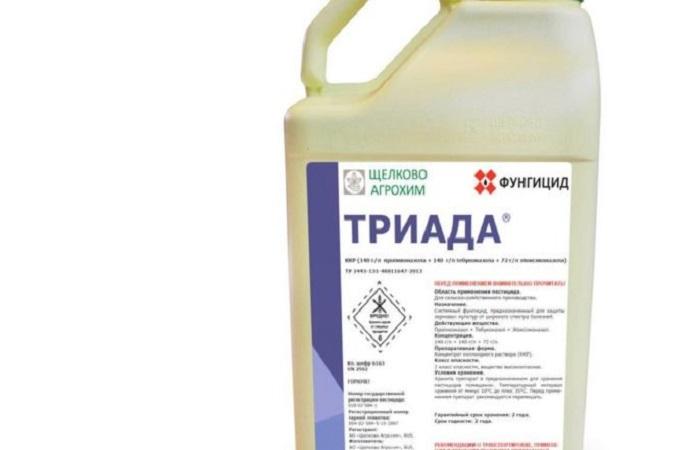
To protect and treat grain crops, specialized products are essential. They protect plants from the earliest stages of development, preserving growth energy and ensuring a high-quality harvest. Using Triada, a modern three-component systemic fungicide, allows you to combat several dangerous diseases simultaneously.
Composition and release forms
The fungicide "Triada" is produced in the form of a colloidal solution concentrate and consists of three active components:
- Propiconazole – 140 grams per liter.
- Tebuconazole - 140 grams per liter.
- Epoxiconazole – 72 grams per liter.
This product belongs to the triazole class of chemicals and is a protective and therapeutic fungicide designed to combat shoot and foliar diseases of grain crops. It is effective against the most dangerous and common infections.
Mechanism of action
A distinctive feature of the Triada fungicide is its nano-formula, which allows the solution to penetrate pathogen cells very quickly. The colloidal formula allows the plant to absorb the solution through all its organs, from shoots to ears and grains.
Once inside the plant, the Triad components inhibit sterol synthesis, which disrupts the pathogen's penetration of the cell membrane. This halts cell renewal, or cell division, which gradually leads to the pathogen's death.
The use of three active ingredients in nano-form in the fungicide enhances their synergy and increases the active impact on the source of the disease, leading to faster elimination of the disease and improved crop health.
Purpose
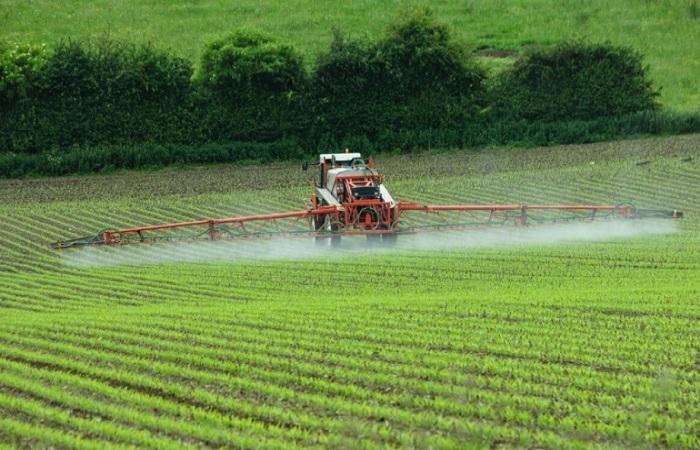
Triada is used to treat winter and spring grain crops against most fungal diseases. Crops are treated by spraying a working solution formulated specifically for each crop.
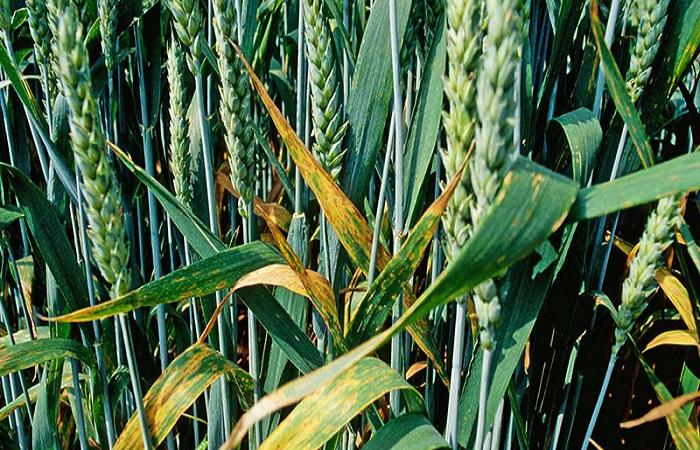
The drug is used against a wide range of fungal infections:
- Rust.
- Powdery mildew.
- Septoria.
- Pyrenophora.
- Spotting.
- Rhynchosporium.
- Fusarium stem and ear rot.
Flow calculation and instructions for use
| Grain crop | Disease | Processing method | Application rate | Waiting periods | Working fluid consumption |
| Winter and spring wheat | Powdery mildew Brown and stem rust Septoria leaf and spike blight Pyrenophora |
Spraying during the growing season | 0.5-0.6 | 30 days | 300 liters per hectare |
| Fusarium head blight | Spraying at the end of earing – beginning of flowering | 0.5-0.6 | 30 days | 200-300 liters per hectare | |
| Spring barley, including varieties for brewing | Powdery mildew
Dark brown and netted spot Rhynchosporiosis |
Spraying during the growing season | 0.6 | 30 days | 300 liters per hectare |
Triada is most often used on wheat, both spring and winter. In most cases, a single spraying is sufficient to achieve a lasting effect. In cases of extensive or repeated infestation, crops can be treated a second time, but no later than 30 days before harvest.
Precautionary measures
The fungicide "Triada" is classified as hazard class 2 for humans and class 3 for animals and insects. This means it is dangerous to humans and requires the use of special protective equipment. The pesticide should not be used in water protection zones of bodies of water or during the summer season of pollinators, especially bees.
Triada is used morning and evening in dry, windless weather. The worker must follow these rules:
- Wearing special protective clothing, footwear and headgear.
- Use of a mask, respirator, goggles and rubber gloves.
- During treatment of plants, do not eat, drink, smoke or talk to avoid the fungicide coming into contact with mucous membranes and respiratory organs.
- After spraying, you need to wash your face and hands with soap, take a shower and change into clean clothes.
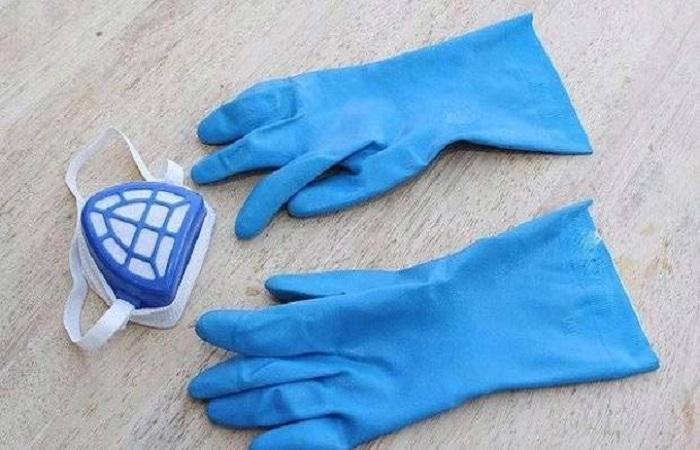
Deterioration of health, the appearance of irritation and rashes, nausea, weakness, and a drop in blood pressure should be grounds for seeking medical help.
Is compatibility possible?
Triada is considered compatible with most pesticides. However, when creating tank mixes, care must be taken to ensure the working solution does not change its properties. To achieve this, a test mix should be performed before preparing a large volume.
How and how long can it be stored?
The shelf life of Triada is 36 months from the date of manufacture. Store the fungicide in its original container—5- and 10-liter plastic canisters or in a tightly sealed, labeled container.

Keep the pesticide away from food, beverages, medications, and animal feed. Store in closed, ventilated areas. Protect from direct sunlight, store in a cool, dark place at temperatures between 0 and 35 degrees Celsius.
What to replace it with
If the fungicide "Triada" is unavailable, you can replace it with the following preparations:
- "Agrotech-Garant-Super".
- Altazol.
- "Alto".
- "Amistar".
- "Bumper Super".
- "Virtuoso".
- "Calibel".
- Peony.
- Propi Plus.
- "PropiShans".
- "Pro".
- "Scythian".
- Tilt.
- Thymus.
- "Titanium".
- "Fungisil" and so on.

Triada is highly effective. The effect appears within 2-3 hours after application and lasts for over a month, depending on weather conditions. Its properties have made it popular and in demand in agriculture.
Related posts:
 How to control onion flies using natural and chemical methods
 How to plant grapes step by step, with a description of the process and care
 How to propagate and grow peas, cultivation technology, and care in open ground
 How to properly plant peas in a greenhouse and open ground
 Causes and treatment of anthracnose on grapes, how to treat and combat it
 Instructions for use of Fitosporin for grape diseases and dosage
 How to combat powdery mildew on onions using folk and chemical remedies
 Causes of phylloxera in grapes, control measures with drugs and folk remedies