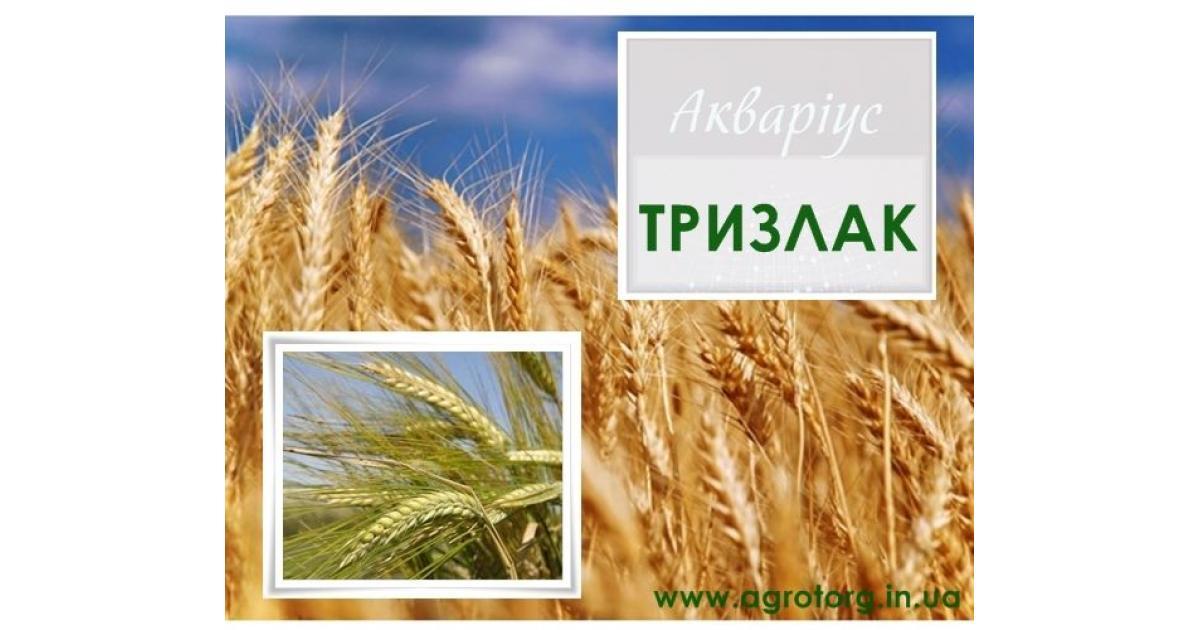
Treating grain crops with herbicides helps keep crops free of weeds. Treatment is carried out using soil-applied or post-emergence pesticides. Among the second group of products, the herbicide Trizlak stands out, designed for spraying wheat, barley, and oats. Let's look at its composition, action, pros and cons, preparation, and application rates. What other products can Trizlak be combined with, and what alternatives can it be used with?
Composition and dosage form
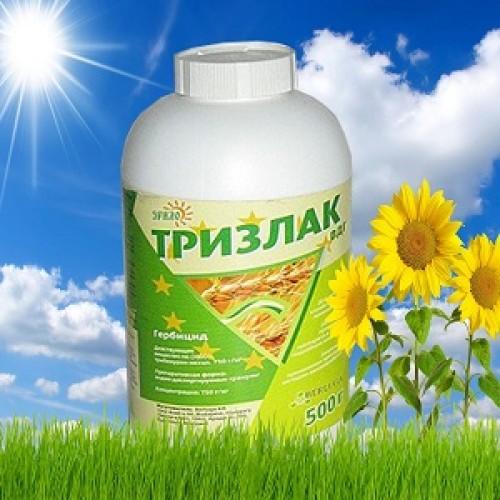
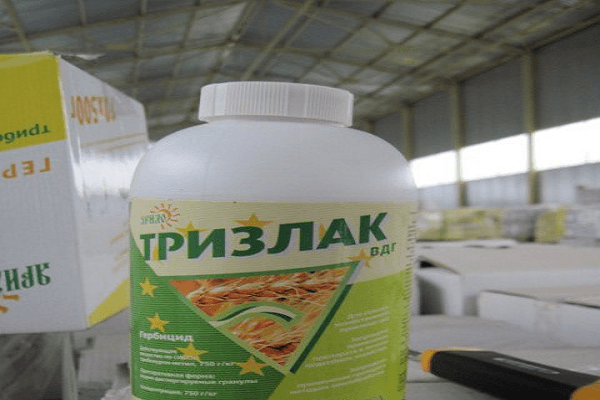
Trizlak is available as water-dispersible granules, containing the active ingredient tribenuron-methyl at a concentration of 750 g per kg. Based on its penetration into weeds, it is classified as a systemic herbicide, but its mode of action is selective. It is produced by Garant Optima in 0.5-liter plastic bottles.
What plants does it affect?
Trizlak is used on grain crops to control dicotyledonous weeds, both annual and perennial. It destroys many species, including chamomile, poppy, cleavers, field violet, Sophia's scaly-leaved ...
How it works
Tribenuron-methyl penetrates weeds through green parts—leaves and stems—and stops cell division by blocking acetolactate synthase, an enzyme involved in the production of essential amino acids. As a result, plant growth stops, and then they die. Its action is rapid, with growth inhibition observed within a few hours of application. Signs of weed suppression are observed after 1-1.5 weeks, and weed death occurs after 2-3 weeks.
Pros and cons
Calculation of consumption
For spring wheat, barley, and oats, the application rate of Trizlak is 0.015-0.02 kg per hectare, and for winter crops, 0.02-0.025 kg per hectare. Spraying is carried out during the 2-3 leaf formation phase, the beginning of tillering, and the early stages of weed development. Winter crops are treated in the spring. It controls annual and perennial weeds resistant to 2,4-D and 2M-4X.
The application rate for spring and winter crops is 200-300 liters per hectare. The application is done once, two months before harvest.
Preparation of the working mixture
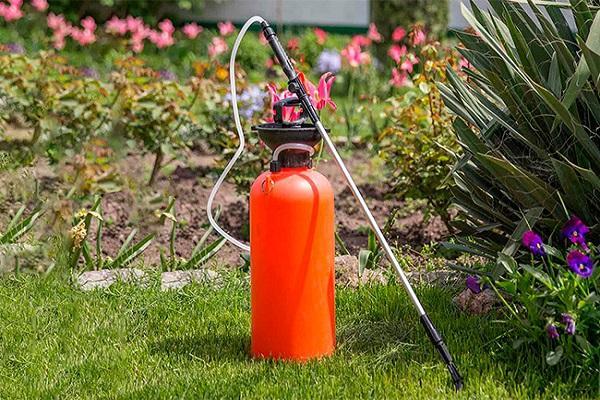
Preparation: Fill the sprayer tank with 1/3 of the water, add the recommended amount of granules, and stir until dissolved. Add the required amount of water and stir again. Stir the Trizlak solution throughout the spraying process to ensure it is uniform.
How to use correctly
Trizlak can be used on barley, from the 2-3 leaf stage until booting, and on winter wheat, until flag leaf formation. It is most effective against first-year weeds at the 2-4 leaf stage. According to the instructions, this herbicide should not be used on millet, nor should it be applied to crops located near water bodies. Application can be made by aerial application.
Precautionary measures
The herbicide is classified as a Class 3 hazard for humans and bees. When working with low-hazard substances, wear protective clothing, gloves, a respirator, and plastic goggles. Protective equipment is required to protect the skin, eyes, respiratory tract, and digestive tract from contact with the herbicide. It must not be removed during work.
After spraying, wash your hands and face with soap and warm water. Rinse the solution off your skin if it accidentally comes into contact with it. In case of poisoning, take activated charcoal tablets and drink plenty of water. In case of severe poisoning, seek medical attention immediately.
Possible compatibility
Trizlak can be combined with many liquid pesticides and fertilizers. However, it is recommended to conduct a preliminary compatibility test by combining a small amount of both solutions. If there is no significant reaction, the products can be combined.
It is not advisable to use Trizlak with organophosphate insecticides, as this may cause plant intoxication.
How long and how to store it properly
The herbicide should be stored in a dry, dark warehouse. Temperature range: -20°C to +30°C. Keep away from food, medications, and animal feed. Store the herbicide in its original, tightly sealed packaging for three years from the date of manufacture. After the expiration date, the herbicide loses its effectiveness and should not be used. Store the prepared solution for no more than one day, diluting it to the amount needed for the day of application.
Similar drugs
Trizlak contains tribenuron-methyl, the same compound found in Agrostar, Alfa Star, Argamak, Bomba, Hextar, Grand Prix, Granat, Granilin, Gray Forte, Gromstor, Gyurza, Kalibr, Magnum Super, Mortira, Sanflo, Status Max, Tandem, Terrastar, Tribel, Tribun, Trisil, Ferat, Himstar, Express, and Ellay Light. These products can be used as substitutes for the main herbicide if necessary.
Trizlak herbicide is used to treat grain crops against many types of weeds. It acts quickly, effectively kills weeds, and can be mixed with other pesticides. It can be used over a wide range of timeframes and is economical.
Related posts:
 Instructions for use and composition of the herbicide Axial, dosage and analogues
 Composition and instructions for use of the herbicide Ballet, application rates and analogues
 Instructions for use and composition of the herbicide Galigan, dosage and analogues
 Grenader herbicide instructions for use, dosage, and analogues
 Instructions for use and composition of the herbicide Helios, dosage and analogues
 Top 10 Systemic Herbicides and How to Choose the Right One
 Quickstep herbicide instructions, dosage, and analogues
 Instructions for use and composition of the herbicide Harness, dosage and analogues