
For those growing Podarok cabbage for the first time, a description of the variety and its basic requirements will help you get a good harvest without much hassle. The variety's distinctive features include its extreme undemanding nature and adaptability to virtually all climate zones in Russia. This has helped Podarok cabbage remain popular with gardeners for over 50 years.
Main characteristics of the plant
The Podarok white cabbage was bred in Russia back in 1961. Since then, it has gained recognition among vegetable growers in the southern regions, Siberia, and the Urals. The Podarok variety easily tolerates both short-term drought and prolonged precipitation. It is virtually immune to slug infestations, thanks to its raised leaves. The dense waxy coat prevents bugs and aphids from accessing the sweet juices. Seedlings planted outdoors in spring easily withstand short-term frosts down to -3°C.

The plant prefers light, permeable, fertile soils and grows well in loose loams. It is not recommended to plant cabbage in areas with dense, heavy, or acidic soils. In such areas, the Podarok variety develops a root disease commonly known as clubroot.
The bush has large rosette leaves with short petioles. A mature plant can form a rosette up to 1 m in diameter, but this characteristic doesn't prevent cabbage from being planted quite closely, with 4-5 seedlings per square meter. The root system is shallow and not well developed enough to support the heavy weight of the leaves and the large head of cabbage. To prevent the bush from toppling over during the growing season, the plants require hilling.
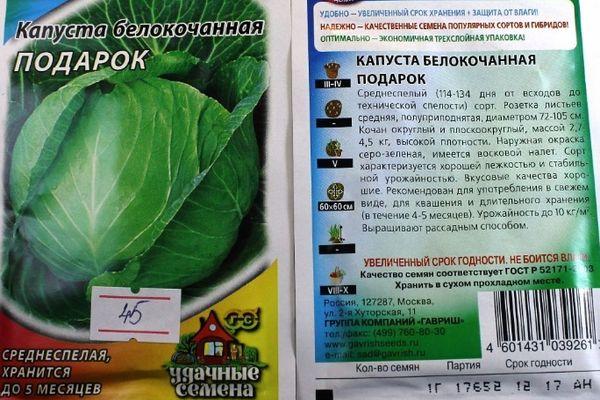
Like any cabbage variety, Podarok requires plenty of moisture. This is especially important in the first few weeks after transplanting to the garden, while the root system is still developing. Once fully grown, the plants can survive for some time without watering. For a busy gardener who visits their plot once every 5-7 days, Podarok can be very convenient, as it can thrive between waterings.
Consumer qualities of vegetables
The Podarok variety's characteristics highlight its mid-late ripening period. The first harvest can be collected 135-140 days after sowing. Podarok cabbage heads are virtually unsplit after ripening and can be harvested in about three weeks.
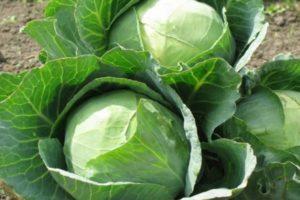
The vegetable is round, sometimes slightly flattened. The head is covered with one to two layers of tightly packed green leaves, which protect the inner layers from damage during transportation, wilting after harvest, or frost. The edges of these leaves are slightly curled, giving the vegetable a decorative appearance. The average weight of a head of cabbage, stripped of its rosette leaves, is 2.5-5 kg; the heads are dense and firm to the touch.

The inner part of the cabbage is often white when cut, turning creamy toward the center. Near the outer leaves, the head may have a greenish tint. The inner part of the stalk reaches the middle of the head, but is not too thick. A small amount of waste is produced when shredding.
The taste is excellent. Fully ripened cabbage, which has reached its technical stage, contains a large amount of sugars and is sweet without bitterness. The aroma is pleasant and distinct.
The Podarok cabbage variety is versatile. It's used in fresh salads, hot dishes, and for winter storage. This variety is considered one of the best for pickling and winter storage.
The parts of the larger stalks adjacent to the stem may remain tough when shredded. For delicate appetizers, it's best to use the top part of the stalk, while the bottom part is suitable for hot dishes. Cabbage is convenient for making cabbage rolls, as the tough parts are small and can be left in place.

Traditional pickling of cabbage uses the sugars contained within the vegetable itself. Therefore, varieties with a high sugar content are considered the best for this method of preserving the harvest. Gardeners praise the sweet flavor of Podarok cabbage, calling it ideal for pickling. The resulting cabbage will be moderately crisp and juicy.
In addition to traditional pickling, Podarok cabbage is used to make marinades from shredded or sliced cabbage, preserved salads, and appetizers using various vegetables. Large leaves can be used to make semi-finished cabbage rolls, freezing them in a freezer. The Podarok variety stays fresh almost until spring if the heads are stored in a cold cellar.
Agrotechnical requirements
Mid-late varieties can be sown 45-50 days before planting. This will allow the heads to ripen by early September and be harvested within another 2-3 weeks.
Podarok cabbage seeds may be treated by producers against diseases. In this case, they are coated with a colored compound. However, most often, the seeds are untreated and sold in their natural state. These seeds are soaked for 30-40 minutes in a solution of potassium permanganate or Fitosporin before sowing.

The soil is prepared from equal parts humus, sand, and garden soil. To reduce acidity, add 2 tablespoons of chalk, gypsum, or dolomite flour per 10 kg of the mixture. The soil is scattered into boxes and then soaked in a hot solution of potassium permanganate (dark pink). Sowing can begin immediately after the soil has cooled to room temperature.
Scatter the seeds over wet soil and cover them with a thin layer of sand or dry soil (no more than 0.5 cm). Then cover the containers with glass or film to retain moisture. Germinate the cabbage in a warm place (+25°C). Under these conditions, the first sprouts appear very quickly—in 2-4 days. After the seedlings emerge, remove the film.
For the first few days, the plants will have sufficient moisture in the soil. You can determine when to water when the top 0.5-1 cm of soil has dried out. The water should be warm and can be slightly tinted with potassium permanganate to prevent fungal diseases.
Cabbage seedlings can be placed in a cool location (around 18°C). Young seedlings require plenty of light, so it's best to choose a south-facing window to grow strong and well-developed seedlings. When they have 2-3 true leaves, transplant the seedlings, burying the stems in the soil up to the cotyledons. By the time they're ready to be planted in the garden, the seedlings should have 3-5 well-developed leaves.
Prepare the soil in the fall by adding one bucket of compost, 1-1.5 kg of dolomite or chalk, and a complex fertilizer with potassium and phosphorus per square meter of cabbage per planting area. Plant the seedlings in a 40x70 cm pattern, making a small hole near the bush for watering. During the first few days and during extreme heat, water daily in the evenings using warm, settled water. The watering rate is 1-1.5 liters per bush.
Seedlings should be earthed up 3-4 weeks after planting and watered with approximately 5 liters of water per plant. Intervals between waterings can be as long as 3-4 days. By the time the cabbage heads begin to form, they can tolerate slight dryness in the soil, but they still need to be watered generously, at least 20 liters per root.
Related posts:
 Description of the Podarok Nesvetaya grape variety, planting and care
 Description of the apple tree variety "Gift to Gardeners" and the subtleties of growing it
 Description and cultivation of the grape variety "Gift to Irina"
 Description of the best cabbage varieties for 2025 for different regions
 Description of the Gift of Moldova sweet pepper and its cultivation using seedlings
 Description of the Gift for a Woman tomato, growing and caring for the hybrid
 The best grape varieties for growing in the Urals, planting and care rules in summer
 Descriptions of the 20 best cherry varieties for the Moscow region, their planting and care
I've been planting this variety for many years now because of its productivity and ease of maintenance. In our climate zone—central Russia—it's the best choice for growing.