
The Podarok Moldovy sweet, or Bulgarian, pepper was bred by the Moldovan Research Institute of Vegetable Growing over 40 years ago. To this day, this variety has retained its appeal among both vegetable growers and private farms. The secret to its long-lasting popularity lies in its exceptional undemanding nature and high yield.
General characteristics of the plant
The Podarok Moldovy pepper variety description emphasizes the compact growth habit. The plant is standard, reaching a height of 50 cm. The root system is well developed and securely anchors the bush, which bears ripening fruits. The distances between nodes are small, which not only makes the plants compact but also allows the branches to withstand weight. Ovaries form in the leaf axils every 1-2 nodes; often, several buds form within an axil, blooming successively.
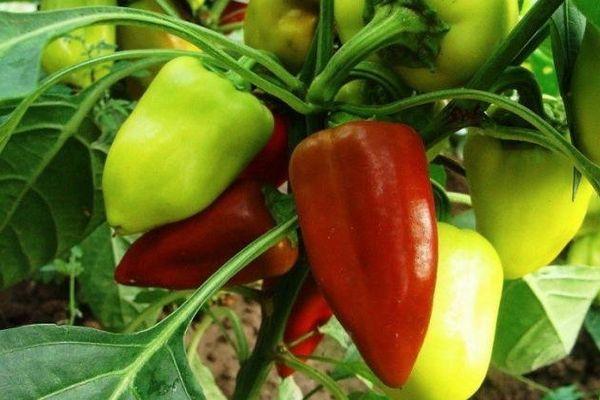
The Moldovan variety does not require staking. Despite the size of the ripening fruits, bell peppers are light in weight. A bush can bear up to 9-10 fully mature ovaries at a time, each weighing up to 100 g. As these fruits are harvested, additional ovaries begin to grow on the plant.
The Podarok Moldovy pepper has a long fruiting period. The first technically ripe (green) fruits can be harvested 95-100 days after sowing. After 2-3 weeks, the fruits can reach biological maturity even in the conditions of Southern Siberia and Altai when grown outdoors.
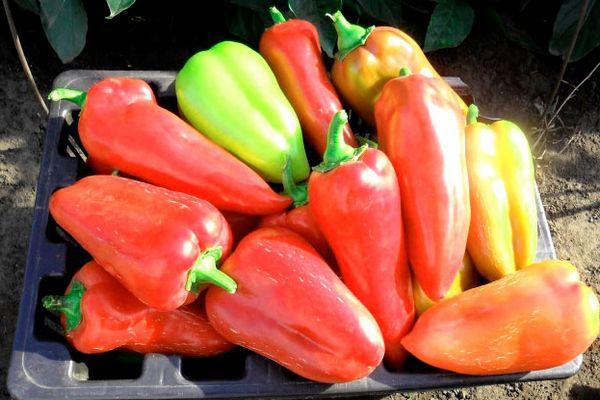
The average yield of this variety is approximately 10 kg per square meter. In greenhouses, ripe fruits can be harvested until late autumn, but in open ground, peppers can only be harvested before frost, in early September.
The number of peppers hardly decreases even during difficult weather conditions, although in such cases some of the fruits have to be picked unripe.
The Podarok Moldovy pepper is resistant to most fungal diseases that affect nightshade crops. In excessively wet years, crops may be damaged by late blight in late summer, but this has virtually no impact on the harvest, as it can be processed even when not quite ripe.

Consumer qualities of fruits
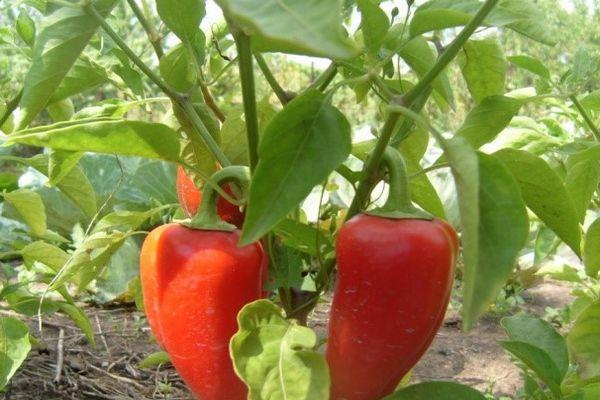
The fruit of the Gift of Moldova variety is cone-shaped, with a pointed tip. There is a shallow depression near the stalk; three symmetrical ribs often run along the fruit. At technical maturity, the pepper is light green; in sunny areas, the fruit may have a yellowish blush. As it ripens, the fruit's coloring becomes uneven, becoming covered with wide stripes of yellow and red. At biological maturity, the color is an intense red.
The pepper's skin is quite tough and dense; when ripe, it acquires a pleasant shine. It does not crack during cooking or heat treatment, reliably protecting the flesh from wilting after harvest. Peppers store well and ripen in a warm place, even when picked at the ripeness stage.
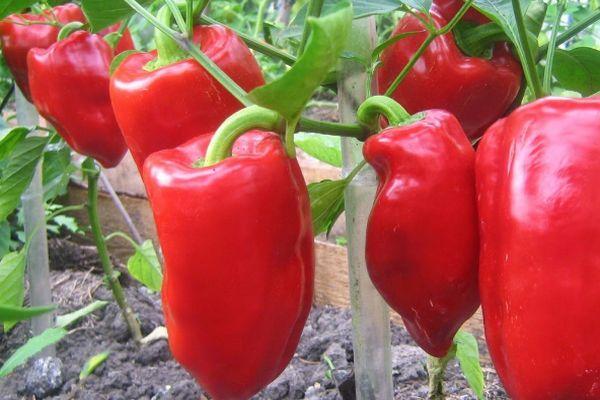
The flesh is dense, juicy, and crisp. The wall thickness reaches 0.5-0.7 cm. At biological maturity, the flesh is bright red, matching the skin tone.
The flavor profile highlights the pepper's sweet flesh, completely lacking any spicy or bitter notes. The aroma is distinct, typical of bell peppers.
This variety is recommended for fresh consumption. The Podarok Moldovy sweet pepper contains high amounts of vitamin C and beta-carotene, making it a healthy vegetable for both children and adults. The crispy rings can be included in summer salads—the pepper's spicy aroma perfectly complements the flavor of tomatoes and cucumbers, adding a touch of sophistication to the dish.
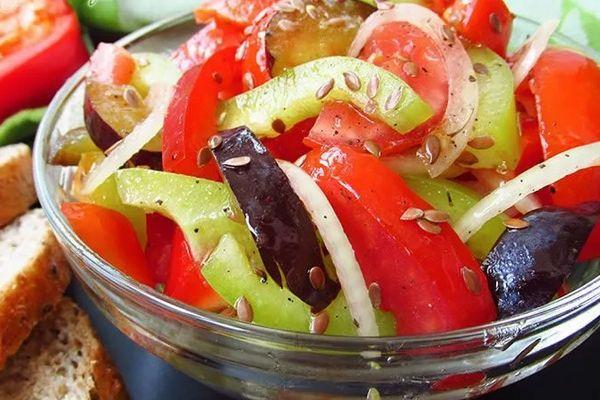
Peppers can be used to create beautiful and delicious appetizers, filling the cones with salads and vegetable fillings. Neat, uniformly sized, and small cones are selected for baked stuffed peppers, and when chopped, this vegetable is an essential part of Asian, Caucasian, and Mediterranean dishes.
The bell pepper "Gift of Moldova" can be included in vegetable platters not only as a spice but also as a tasty vegetable. Its rings make a beautiful addition to canned salads, and authentic lecho is simply impossible to make without it. Besides canning, excess peppers can be stuffed with ground meat and frozen. Even the smallest peppers, the last ones picked, can be used: minced and frozen, they can be used as a flavorful addition to borscht dressing or as an ingredient for traditional dishes.
Pepper cultivation techniques
Growing peppers from seedlings is the only viable method for this heat-loving plant. Seeds should be sown so that they will be 90-day-old by the time they are planted in the garden. In Russia, peppers are sown starting in late February.
To grow seedlings, prepare a loose, permeable, and fertile mixture of equal parts humus, sand, and garden soil. To disinfect, soak it in a hot solution of potassium permanganate, and the seeds can be sown as soon as the soil cools.
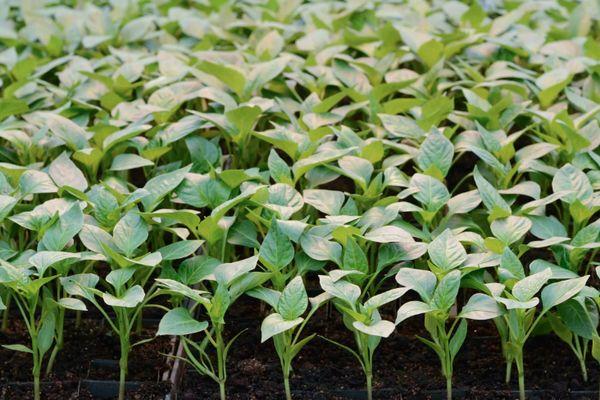
The seeds are spread over the soil and covered with a layer of dry soil or sand. The layer should be 0.5-0.7 cm thick. The box is then covered with glass or plastic and placed in a warm place to germinate. At a temperature of 25°C, seedlings appear in 7-10 days. The plastic is removed from the box, but the young plants should be kept in a fairly warm place until transplanting.
Seedlings are pricked out when they have 2-3 true leaves. Peppers are less demanding in terms of space than eggplants or tomatoes, so they can be planted in a common container using a 7x7 cm pattern. Regular watering is the primary care during seedling growth.
Peppers require a sunny, well-heated area, protected from northerly winds by buildings or other plantings. To ensure large, thick-walled, and juicy peppers, amend the soil with a complex fertilizer containing potassium, phosphorus, and nitrogen (Signor Pomidor, Agricola, Kemira Lux, etc.), add one bucket of compost, and add dolomite flour at a rate of 1-1.5 kg per square meter.
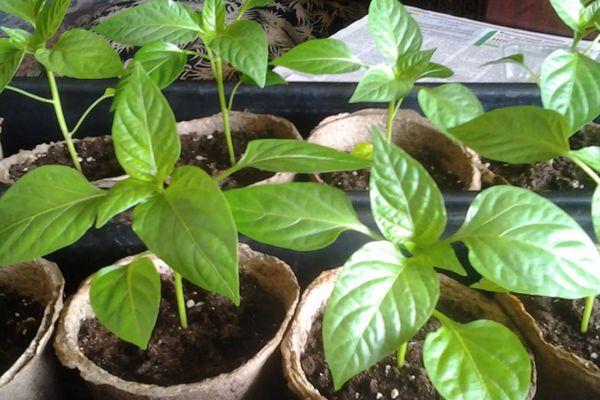
In their permanent location, seedlings should be planted using a 30x40 cm pattern. Gardeners note that it's not advisable to plant the seedlings too deeply; 10-20 cm above the root collar is sufficient. Peppers are conveniently grown in narrow beds (according to the Mittlider method), planting them in two rows along a long ridge about 30 cm wide.
The main care for peppers is ensuring they have sufficient soil moisture. You can tell when to water them by the top layer of soil drying out: it shouldn't be completely dry to a depth of more than 1 cm. When watering, you need to pour at least 2 buckets of water per 1 m².
To speed up the first harvest, experienced vegetable growers recommend removing the first fruit formed at the fork of two stems. The first pepper may appear while the seedlings are still growing, and an inexperienced gardener will cherish it, hoping to enjoy a fresh vegetable sooner. However, it's better to sacrifice this fruit so the plant can begin to bloom and produce fruit on other branches.
Related posts:
 Planting, growing, and caring for bell peppers in open ground
 Planting, growing, and caring for peppers in open ground in the Moscow region: the best varieties
 Sweet pepper pests and how to control them, what to do and how to treat them
 How to grow peppers from seeds at home: choosing a variety, planting, and care
 TOP 12 recipes for making lecho from bell peppers for the winter. You'll lick your fingers.
 Description of the best varieties of ornamental peppers, growing and caring for them at home
 Why are pepper leaves turning white? What to do and how to feed them in a greenhouse and in the ground.
 Causes of pepper diseases in greenhouses, their description and treatment
I love eating this pepper fresh; it's very sweet and juicy, and perfect for salads. The peppers grow quickly, and I use the product "BioGrow".